
The Complete Guide to Estimating Foundation Repair Costs
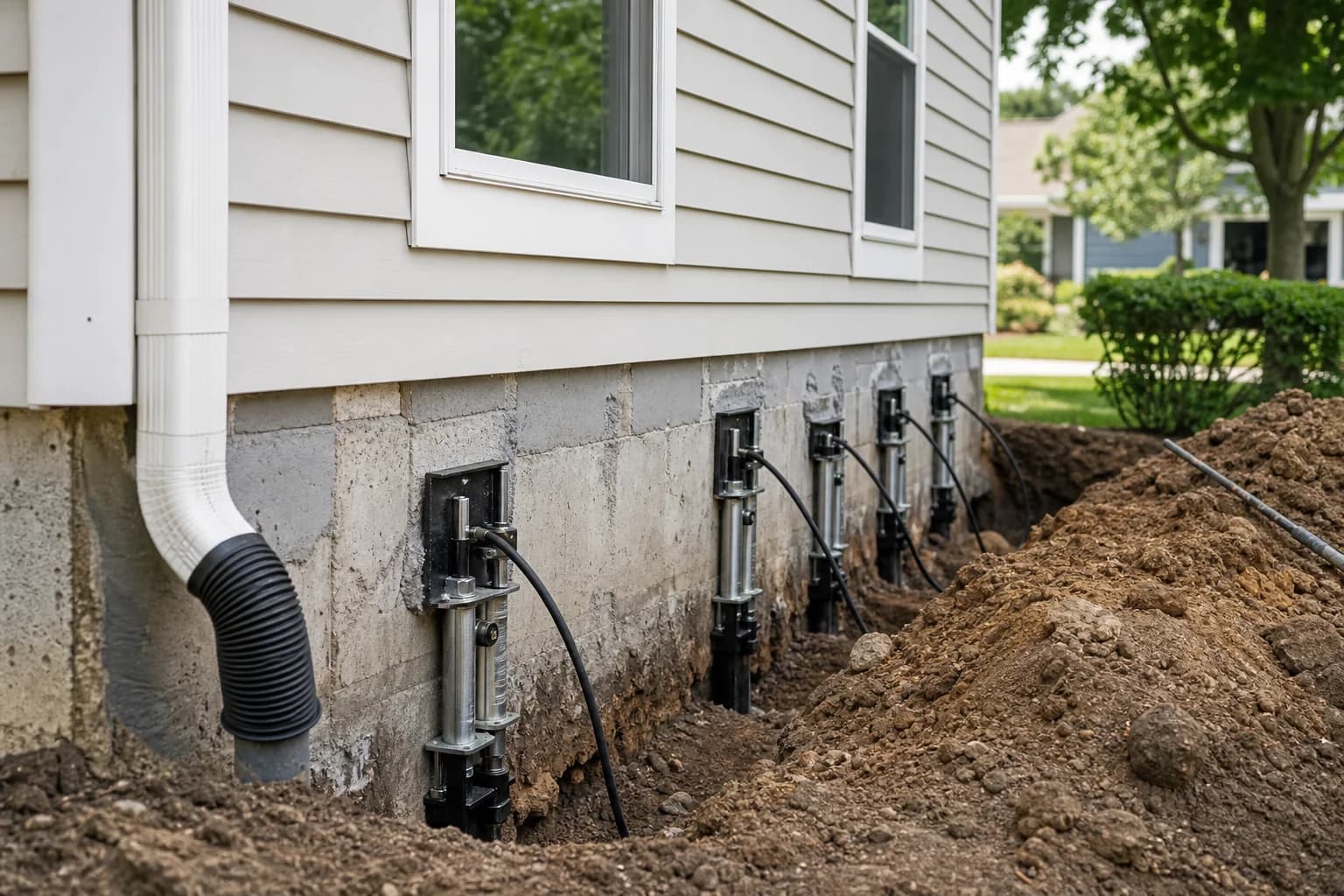
Foundation problems are among the most stressful — and expensive — issues a homeowner can face. Cracked basement walls, uneven floors, sticking doors, and visible settlement can signal serious structural movement beneath your home. Before you call a contractor, you need a realistic cost range so you can budget, compare bids, and avoid overpaying for work you do not need.
Foundation repair pricing varies wildly depending on the repair method, the severity of damage, your soil type, regional labor rates, and how difficult the site is to access. This guide breaks down the six most common repair types, explains what drives the price, and shows you how to use our Foundation Repair Cost Calculator to get a ballpark estimate in seconds.
How to Estimate Foundation Repair Cost: The Manual Formula
Foundation Repair Cost Formula
Total Cost ≈ Scope × Unit Rate × Severity × Region × Access
Scope is linear feet, pier count, or square footage depending on repair type. Add 10% contingency for unknown soil and hidden damage.
Common Foundation Repair Types and Typical Costs
Not every crack requires $30,000 in piers. Understanding which repair method applies to your situation is the first step to an accurate estimate. Here are the six categories our calculator covers, with 2026 US average pricing for moderate damage in the Midwest:
1. Crack Injection / Epoxy Repair ($150 – $600 per linear foot)
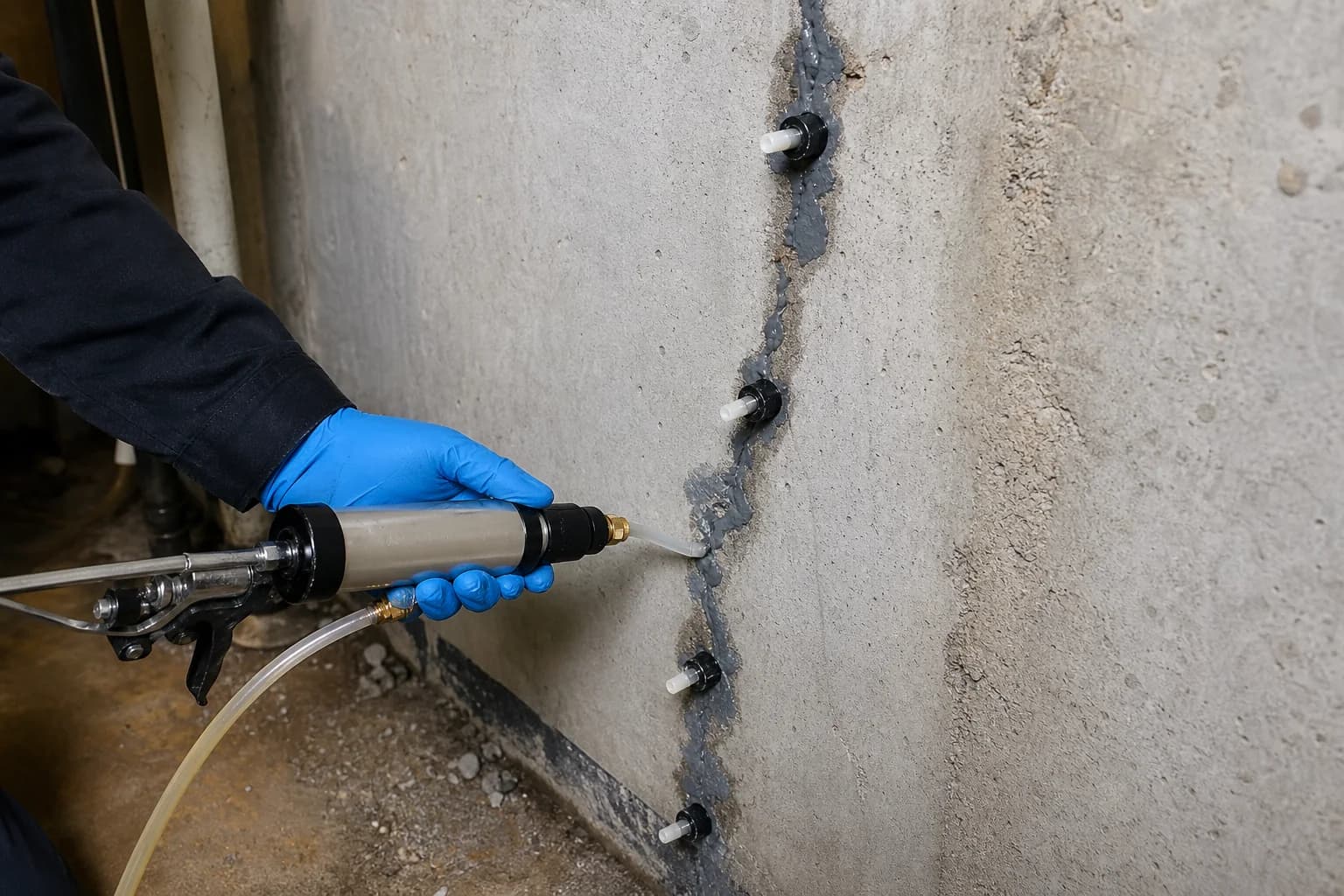
Hairline and moderate vertical cracks in poured concrete walls are often repaired by injecting epoxy or polyurethane resin under pressure. The material fills the void and bonds the concrete back together. This is the least expensive repair option and works well when the wall has not moved significantly. Typical jobs range from $1,500 for a single crack to $5,000+ for multiple cracks around a basement.
2. Push Pier / Helical Pier Installation ($1,200 – $3,000 per pier)
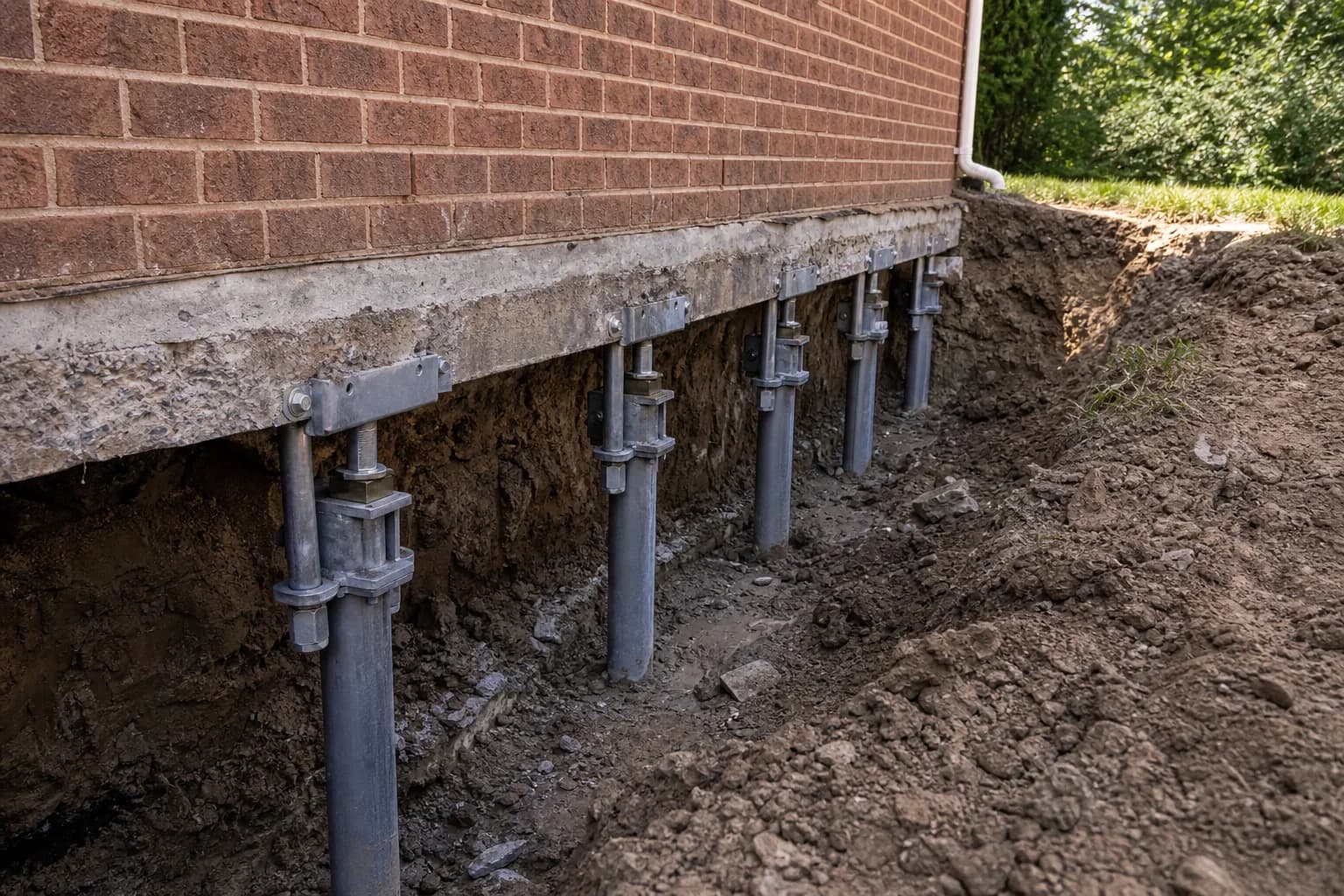
When a foundation is actively settling — causing sloping floors, widening cracks, or separation at the sill plate — piers are driven deep into stable soil or bedrock to permanently support and potentially lift the structure. Most homes need 6 to 12 piers along the affected wall, putting total costs between $8,000 and $25,000. Soil type, pier depth, and whether lifting is required all affect the final price. Use our Foundation Calculator to estimate concrete volumes if footing replacement is also needed.
3. Mudjacking / Slabjacking ($3 – $12 per square foot)
Sunken concrete slabs — driveways, garage floors, and slab-on-grade foundations — can often be lifted by pumping a grout mixture beneath the slab. This is far cheaper than tearing out and replacing the concrete. A 400 sq ft garage slab typically costs $2,400 to $4,800 to lift. Mudjacking does not address wall cracks or deep settlement; it only corrects surface-level slab drop.
4. Bowing Wall Stabilization ($350 – $900 per linear foot)
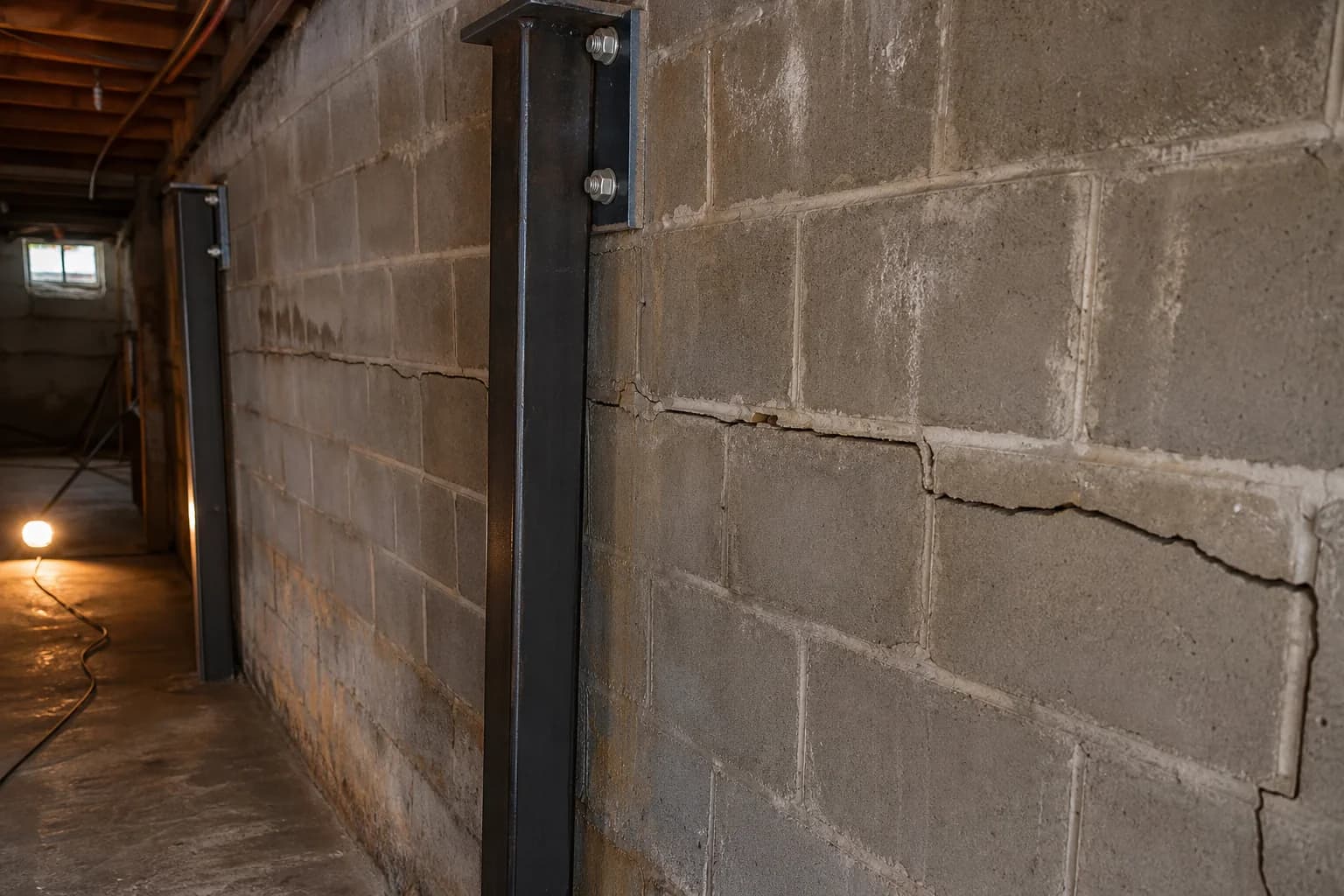
Horizontal cracks and inward bowing of block or poured walls are caused by hydrostatic pressure from saturated soil outside the foundation. Steel I-beams, wall anchors, or carbon fiber straps are installed to halt further movement. A 24-foot wall with three I-beam braces typically runs $8,000 to $15,000. Carbon fiber is less invasive and cheaper but only works for walls with less than 2 inches of bow.
5. Exterior Waterproofing & Drain Tile ($80 – $200 per linear foot)
Water intrusion through foundation walls requires exterior excavation, application of a waterproof membrane, and installation of a perforated drain tile system to redirect groundwater to a sump pump or daylight drain. Pricing depends heavily on excavation depth, landscaping restoration, and whether a sump pump must be added. A full perimeter waterproofing job on a 1,200 sq ft ranch can cost $15,000 to $30,000.
6. Underpinning / Partial Wall Rebuild ($500 – $1,500 per linear foot)
When a section of foundation wall has crumbled, rotated, or failed completely, partial demolition and rebuild with new concrete and rebar is required. This is the most invasive and expensive repair short of a full foundation replacement. Costs escalate quickly when the house must be temporarily shored and supported during construction.
Pro Tip: Get a Structural Assessment First
Before committing to any repair, hire a licensed structural engineer ($500 – $1,500) for an independent assessment. Engineers identify the root cause — poor drainage, expansive clay soil, tree roots, or original construction defects — and specify the correct repair method. Paying for an engineer report prevents contractors from overselling piers when a $2,000 drainage fix would solve the problem.
What Drives Foundation Repair Pricing?
- Soil conditions: Expansive clay, poorly compacted fill, and high water tables increase pier depth and excavation costs.
- Severity of damage: Hairline cracks cost a fraction of active settlement with measurable floor slope.
- Access difficulty: Finished basements, tight crawlspaces, and landscaping that must be removed and restored add 12% to 28% to the base price.
- Regional labor rates: Northeast and West Coast markets run 20% to 30% higher than the Midwest and South.
- Number of piers or linear feet: Most contractors offer volume discounts above 10 piers, but each additional pier still adds cost.
Hidden Costs to Budget For
The repair itself is rarely the full bill. Homeowners frequently overlook these additional expenses:
- Structural engineering report: $500 – $1,500 (often required for permits and insurance claims)
- Building permits: $200 – $800 depending on municipality
- Landscaping restoration: $1,000 – $5,000 after exterior excavation
- Interior finish repair: Drywall, flooring, and trim damaged during pier installation or wall stabilization
- Sump pump installation: $1,500 – $3,000 if waterproofing requires active water removal
For interior finish restoration costs after repairs, use our Drywall Calculator and Labor Cost Estimator to plan the follow-up work.
Foundation Repair vs. Full Replacement
Full foundation replacement — lifting the entire house, demolishing the old foundation, and pouring new footings and walls — costs $30,000 to $100,000+ depending on home size. Targeted repairs using piers, wall stabilization, or crack injection solve 90% of residential foundation issues at a fraction of that cost. Replacement is reserved for catastrophic failure where large sections of the foundation have lost structural integrity.
Planning new construction instead?
Estimate concrete volumes for footings and foundations before you build.
Disclaimer: This calculator provides conceptual cost estimates based on national averages. Actual foundation repair pricing depends on site-specific soil analysis, structural engineering requirements, local permitting, and contractor availability. Always obtain multiple written bids from licensed foundation repair specialists and consult a structural engineer before authorizing work.