
The Pro Guide to Estimating Drywall and Sheetrock
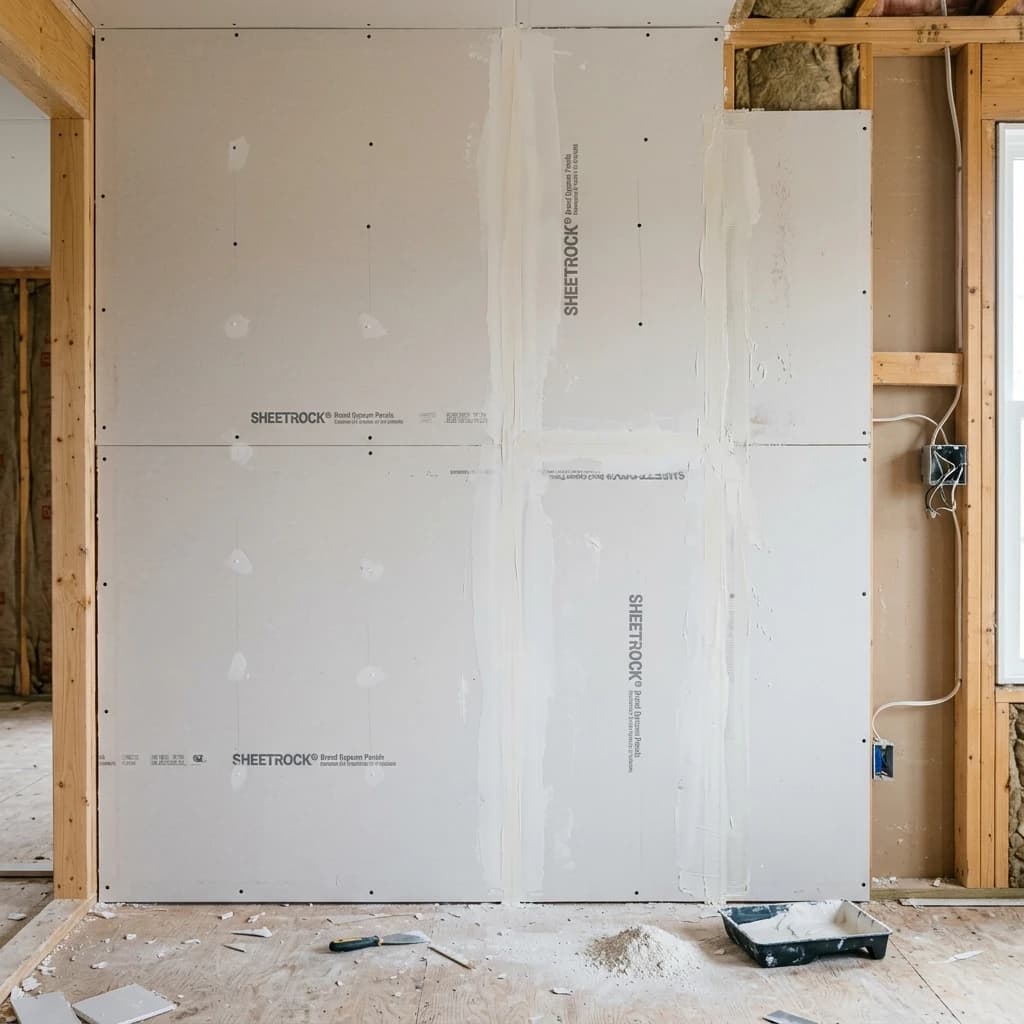
Whether you're finishing a basement, repairing a ceiling, or building a new home, drywall is the backbone of your interior finish. However, estimating the materials needed for a drywall project is more complex than just measuring wall area.
To get a perfect finish, you need more than just the sheets of gypsum board. You must account for joint compound (mud), seam tape, and thousands of specialized screws. This Drywall Estimator helps you calculate everything you need to avoid multiple trips to the hardware store.
How to Calculate Drywall: The Manual Formula
To estimate drywall manually, you need to calculate the area of all walls and ceilings, then divide by the square footage of your chosen sheet size.
Drywall Sheet Formula
Sheets = (Total Area ÷ Sheet Area) × 1.10
Where Total Area is the sum of all wall and ceiling square footage, and 1.10 represents a standard 10% waste factor.
Understanding Board Sizes and Coverage
Drywall is manufactured in standard widths of 4 feet, but the lengths vary to accommodate different ceiling heights and to minimize vertical seams.
- 4' x 8' Sheet (32 sq ft): The industry standard. Easy to transport and install by one or two people.
- 4' x 10' Sheet (40 sq ft): Ideal for 9-foot or 10-foot ceilings. Hanging these horizontally eliminates a horizontal seam at the 4-foot or 8-foot mark.
- 4' x 12' Sheet (48 sq ft): The professional's choice for large rooms. Fewer sheets mean fewer joints to mud and sand.
Pro Tip: Avoiding the "Short Load" of Mud
Unlike paint, where you can often "stretch" a gallon, joint compound is consumed heavily during the first and second coats (the bedding and filling stages). For a professional Level 4 finish on new construction, always budget for one 5-gallon bucket of joint compound for every 10 sheets of drywall.
Estimating Joint Compound (Mud)
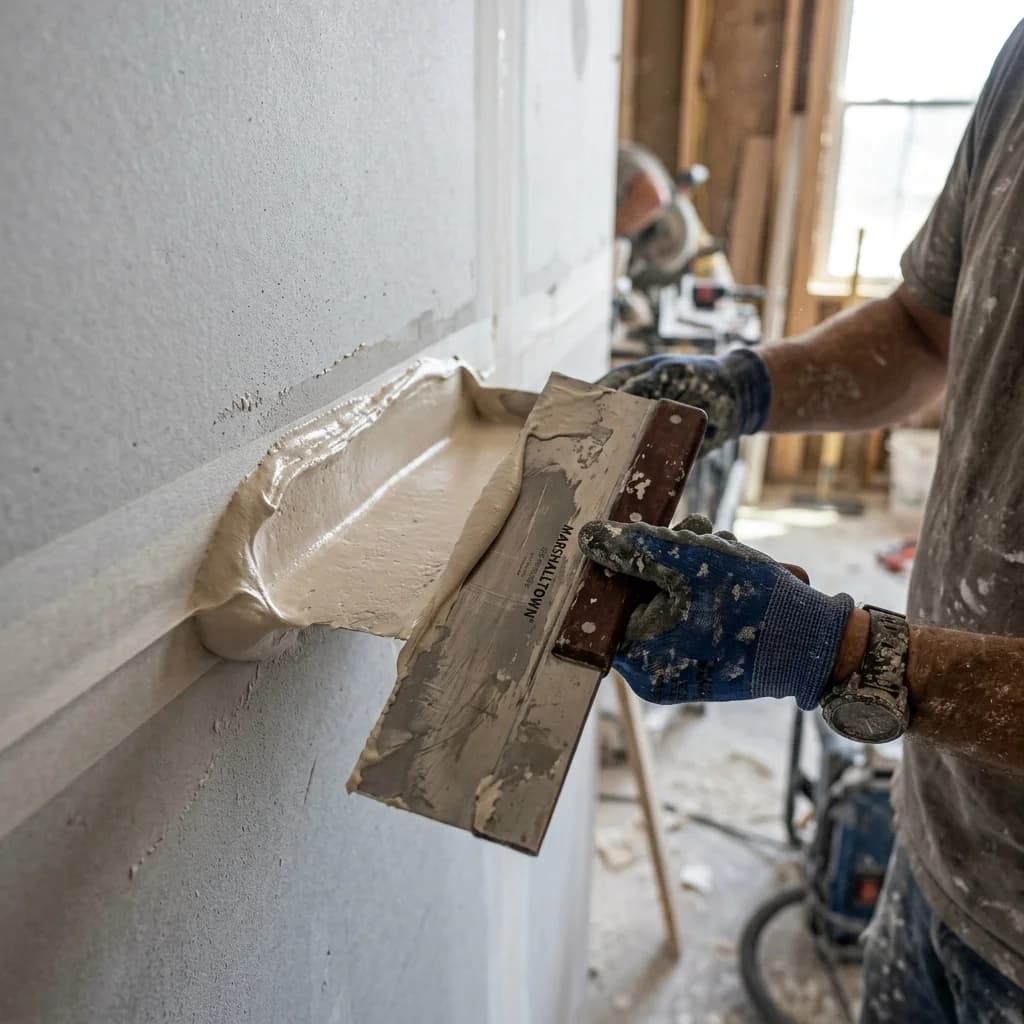
Joint compound is used to "glue" the tape over the seams and create a smooth, paintable surface. A general professional rule of thumb is that you need approximately 0.05 gallons of joint compound for every 1 square foot of drywall.
While this sounds small, it adds up quickly:
- A 500 sq ft room requires approx. 25 gallons (or roughly five 5-gallon buckets) of mud for a standard 3-coat finish.
- For a Level 5 "Skim Coat" finish, you may need up to double this amount.
The "Screws per Sheet" Formula
Modern building codes generally require screws to be spaced every 12 inches on walls and every 12 inches on ceilings (sometimes closer for fire-rated assemblies).
You can estimate your screw count by assuming 1 screw per square foot of drywall. If you are using standard 4x8 sheets, expect to use about 32 to 35 screws per board. For a typical 12x12 room, you will likely need a 5lb box of 1-1/4" drywall screws.
Joint Tape: Paper vs. Fibermesh
Every seam where two drywall sheets meet must be taped. You'll need roughly 0.35 feet of tape for every square foot of drywall.
- Paper Tape: The industry standard. Higher strength for corners but requires a "bedding" layer of wet mud.
- Fibermesh Tape: Self-adhesive and easier for DIYers, but generally only recommended for flat seams, not inside corners.
Summary Table: Drywall Material Per 100 Sq Ft
| Material | Quantity (Per 100 sq ft) |
|---|---|
| 4x10 Drywall Sheets | 2.5 Sheets (plus waste) |
| Joint Compound | ~1.2 Gallons |
| Joint Tape | ~35 Feet |
| Screws | ~100 Screws |
Want the full estimation walkthrough?
Read our step-by-step guide to estimating sheets, mud, tape, and screws for any room.
Need budgeting help for your walls?
Read our comprehensive pricing breakdown: The Cost of Drywall per Square Foot.
Note: These are estimates for a standard finish. Difficult room shapes, vaulted ceilings, or high-level smooth finishes (Level 5) will increase material consumption significantly. Always verify requirements with local building codes.