
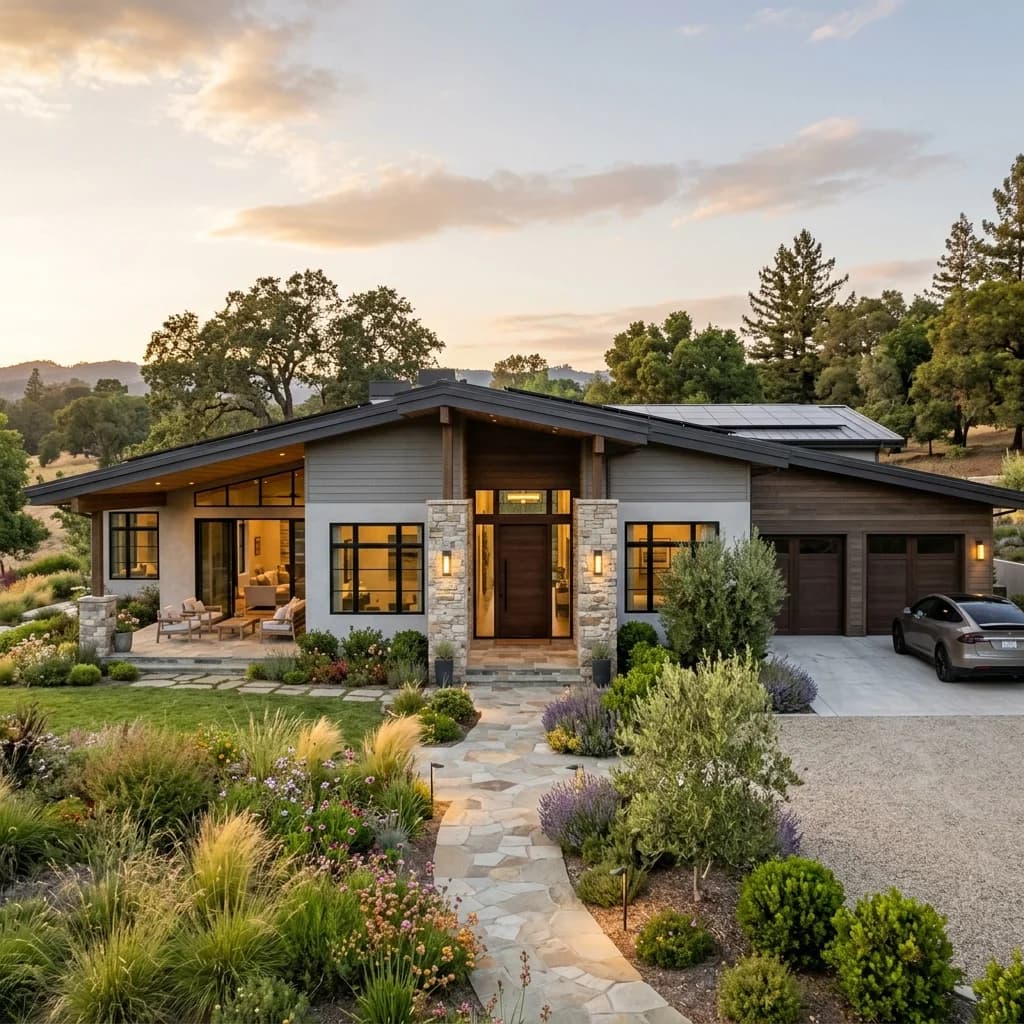
3000 Sq Ft Ranch Home Plans: Designing Spacious and Accessible Single-Story Layouts
Thinking about building a 3000 sq ft ranch home? Learn how to choose the right floor plans, compare single-story ranch vs. two-story layouts, estimate construction costs, calculate concrete slab volumes, and find the right builders.
Single-story living has evolved from simple post-war housing to modern, premium residential design. Today, 3000 sq ft ranch home plans are highly sought after by homeowners who want to balance grand, open-concept living with complete everyday accessibility. A 3,000-square-foot home represents a generous layout footprint. It offers ample space for four or five bedrooms, luxurious bathrooms, dedicated home offices, and multi-car garages, all without the inconvenience of stairs.
Whether you are looking to build a forever home for aging in place, or a spacious environment for a growing family, 3000 sq ft single story house plans provide a flexible canvas. By laying out this entire square footage on a single level, you create a home that feels connected, enjoys abundant natural light, and offers seamless access to outdoor living spaces. However, planning a single-story home of this size requires careful attention to site design, material estimation, and partnering with experienced single story home builders.
1. Why Choose a 3,000 Sq Ft Single-Story Layout?
A 3,000-square-foot home is large by any standard. Stacking this space into a two-story design is common, but placing it on a single level offers several distinct architectural benefits:
- Universal Accessibility: The most obvious benefit is the complete absence of stairs. This stepless design ensures safety for toddlers, convenience for anyone with mobility challenges, and peace of mind for homeowners looking to retire in place.
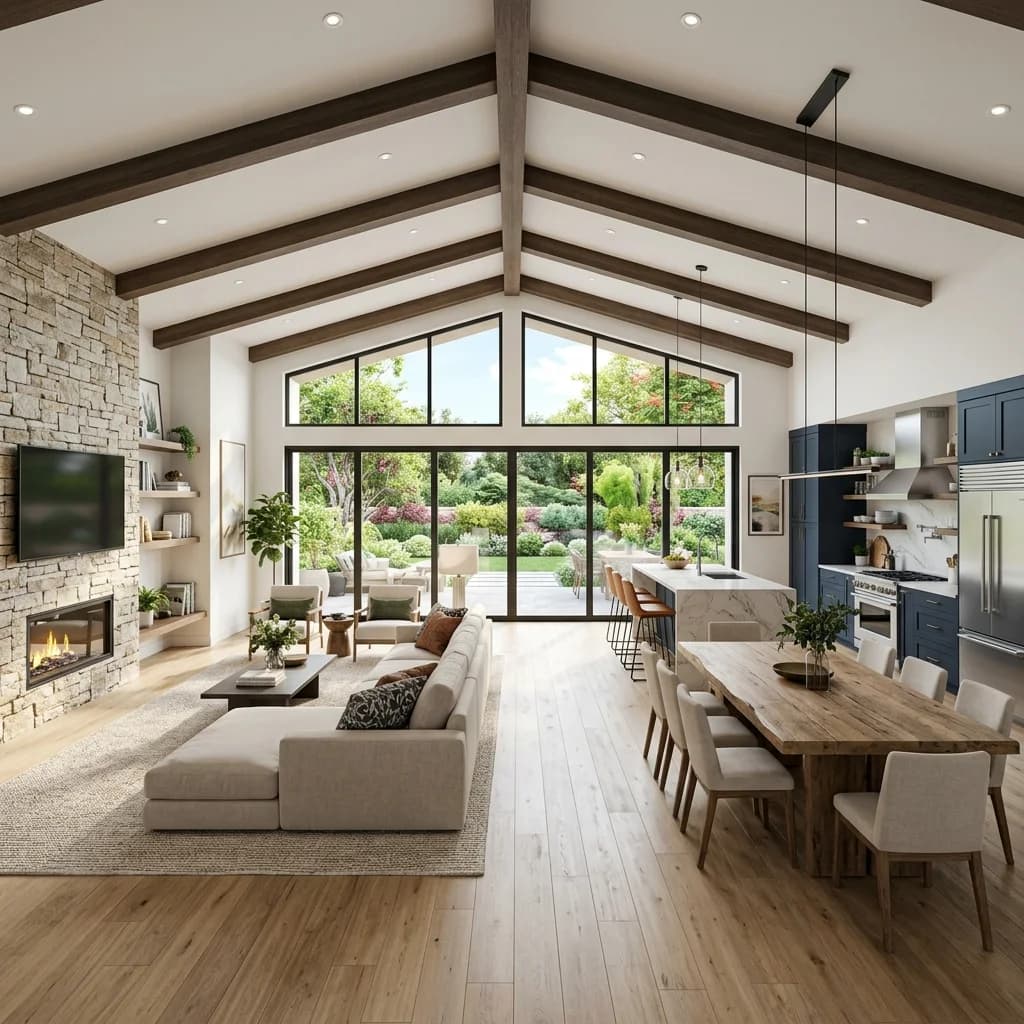
- Enhanced Open-Concept Flow: Without structural staircase columns or load-bearing stairwells, the central living areas can merge seamlessly. A 3,000 sq ft layout allows for a massive great room, a premium kitchen, and a dining area to share a single, light-filled space.
- Architectural Design Details: Ranch homes are perfect for vaulted ceilings, exposed timber trusses, and skylights. Since there is no second floor above, you can raise the ceilings to 12 feet or more in shared spaces, creating a dramatic sense of scale.
- Indoor-Outdoor Living: A large single-story footprint maximizes contact with the surrounding yard. You can design the layout with wrap-around porches, sliding glass doors from multiple rooms, and a central courtyard.
2. Designing the Floor Plan: Space & Privacy Zoning
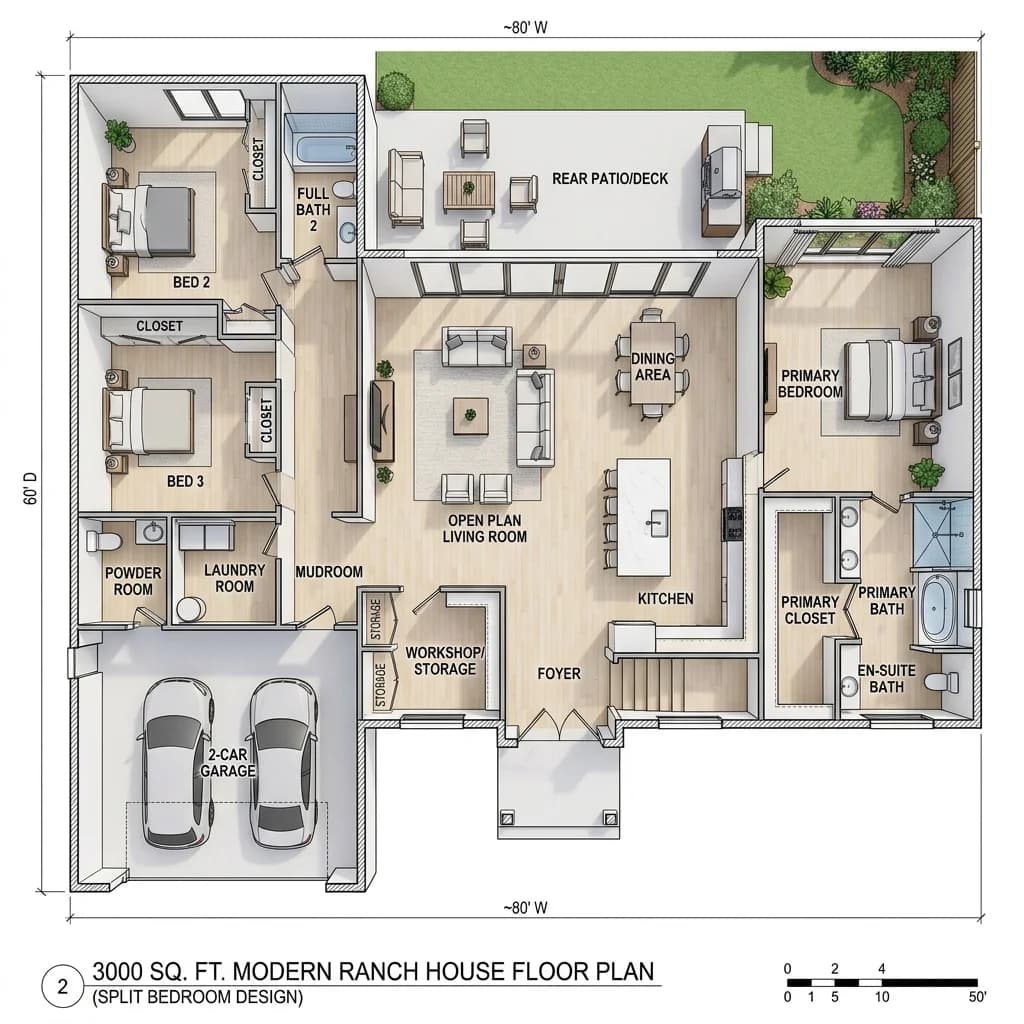
One challenge of designing a large single-story house is preventing the layout from feeling like a maze or losing privacy. When laying out 3,000 square feet, layout zoning is key. Most premium 3000 sq ft single story house plans utilize a split-bedroom layout (or zoned design) to solve this:
- The Central Hub: The foyer, kitchen, dining area, and main family room form a central gathering space. This is where the family interacts, dines, and entertains guests.
- The Primary Suite Wing: The primary bedroom suite is placed on one far end of the house, complete with a walk-in closet, primary bath, and perhaps a private patio access. This ensures maximum privacy away from noise.
- The Guest & Secondary Wing: Secondary bedrooms, kid rooms, and guest bathrooms are located on the opposite wing. This separation ensures quietness and privacy for parents and guests alike.
- Service & Flex Zones: The laundry room, mudroom, pantry, and garage entry are clustered near the kitchen or rear entry. Placing these utility areas carefully prevents clutter from entering the main living spaces.
3. Construction Realities of Ranch Homes New Construction
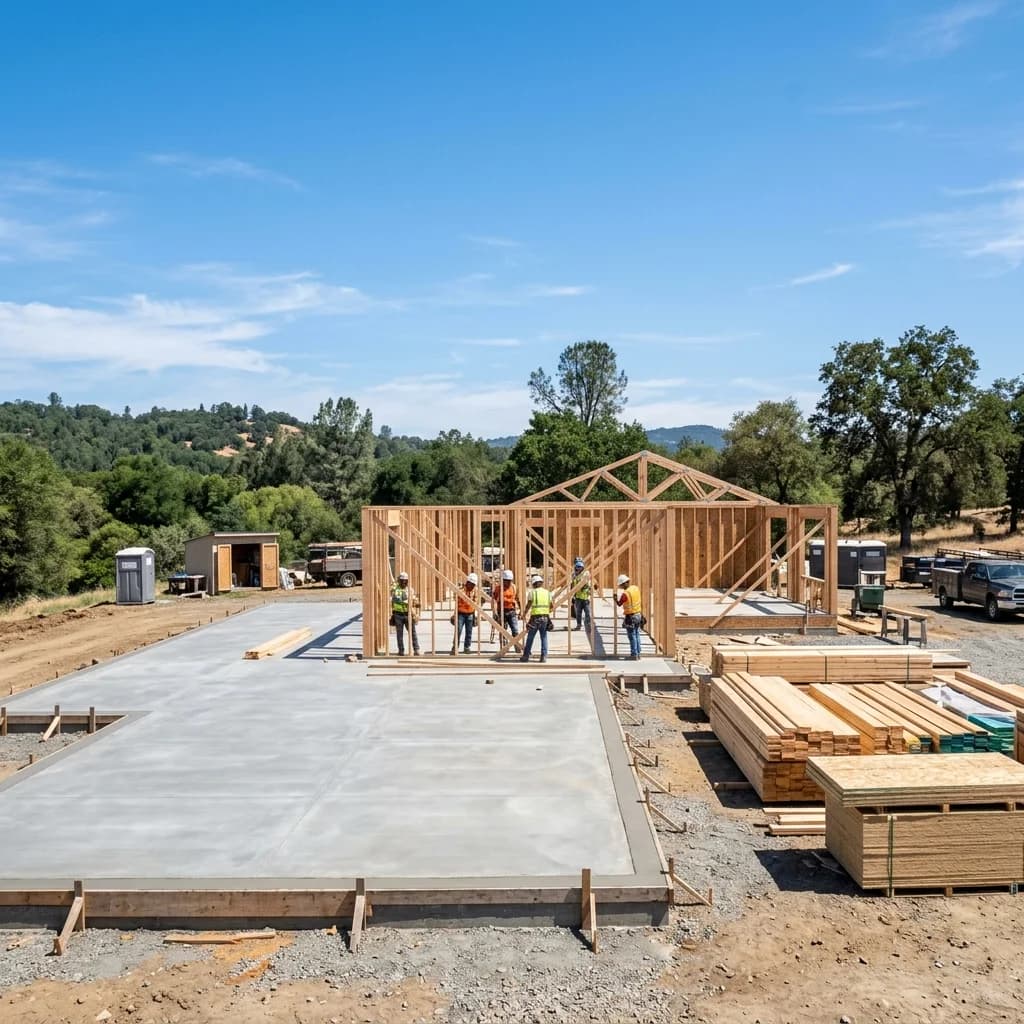
Building a ranch style home is structurally different from building a multi-story home. When embarking on ranch homes new construction, you must account for the physical footprint. A larger footprint means that two of the most expensive components of a house—the foundation and the roof—are twice as large as they would be for a 3,000 sq ft two-story home. Let's look at the critical material requirements:
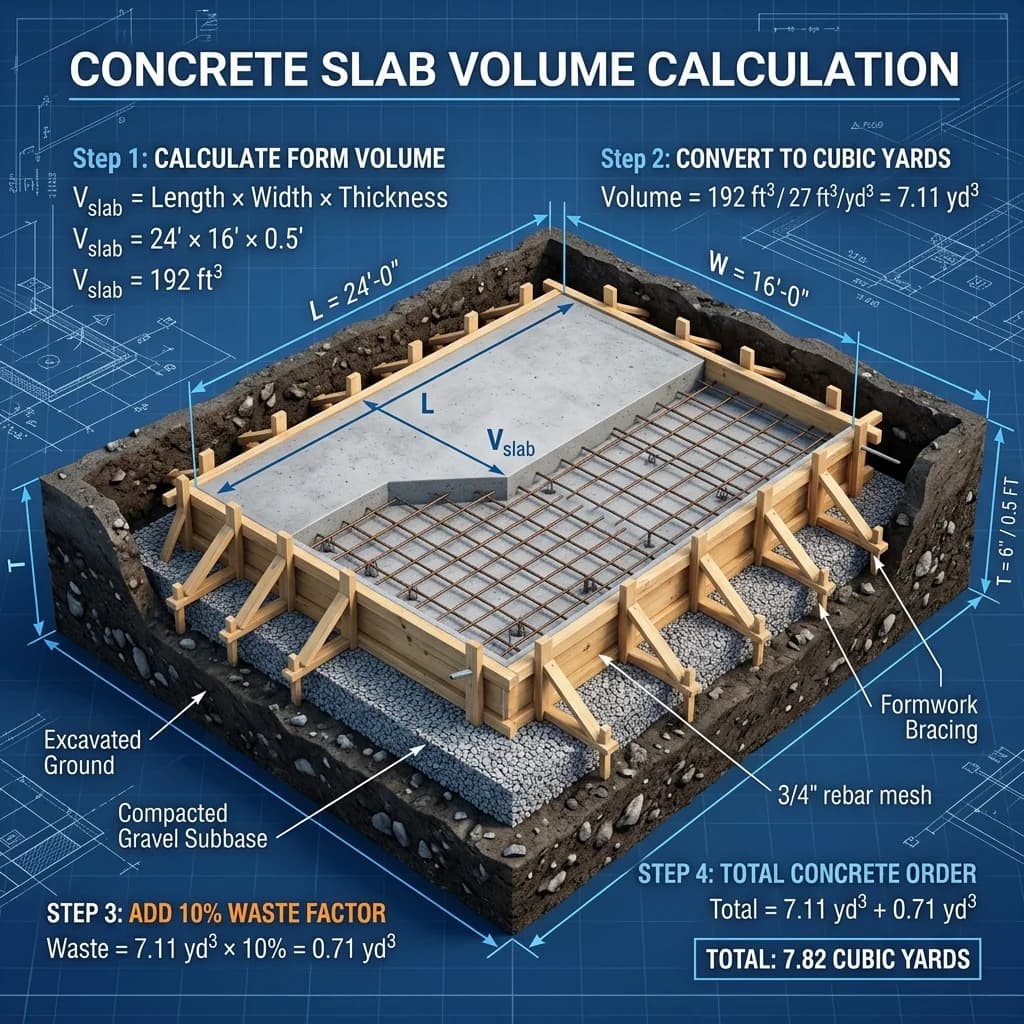
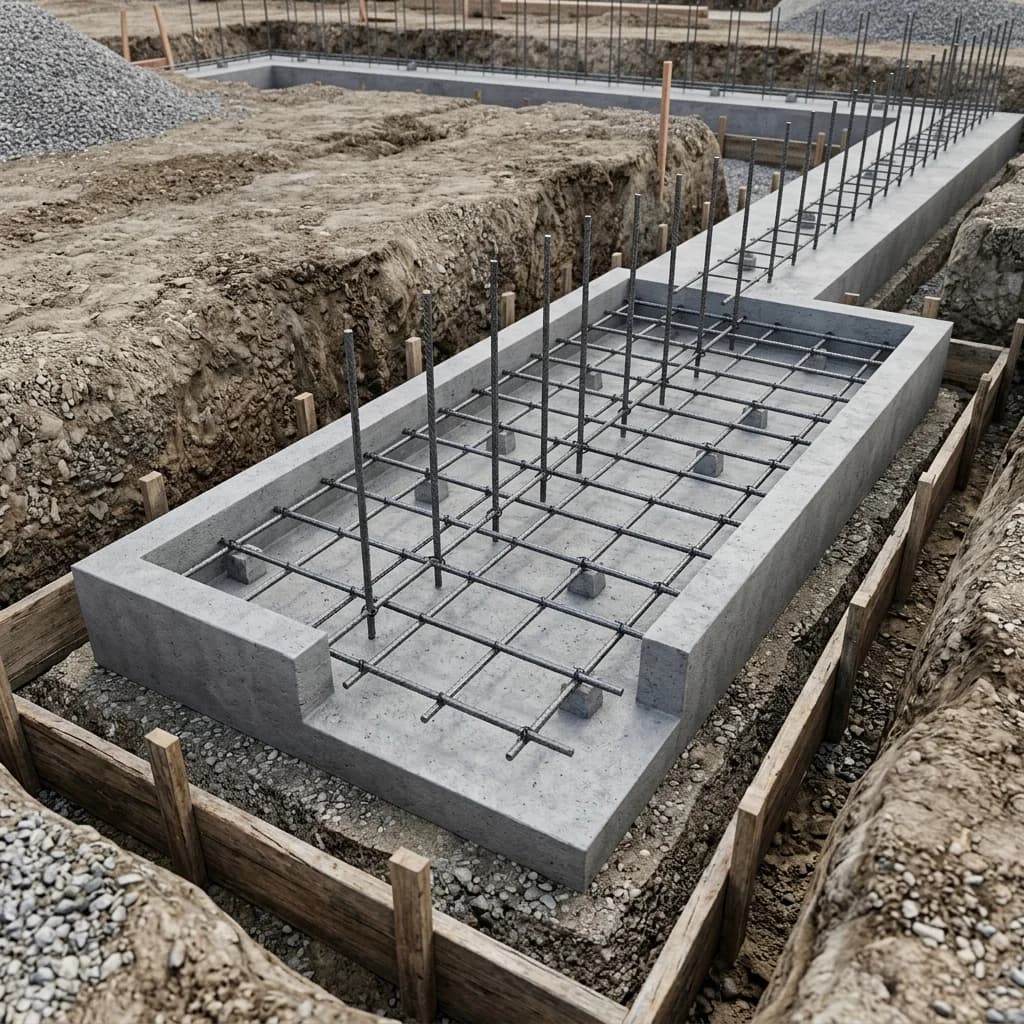
- The Large Concrete Slab: A 3,000 sq ft ranch home requires a concrete slab foundation of approximately 3,000 sq ft for the living space, plus additional area for a two- or three-car garage (typically 400 to 700 sq ft). This represents a massive concrete volume. To calculate the concrete required, use our Concrete Slab Calculator or the comprehensive Foundation Calculator.
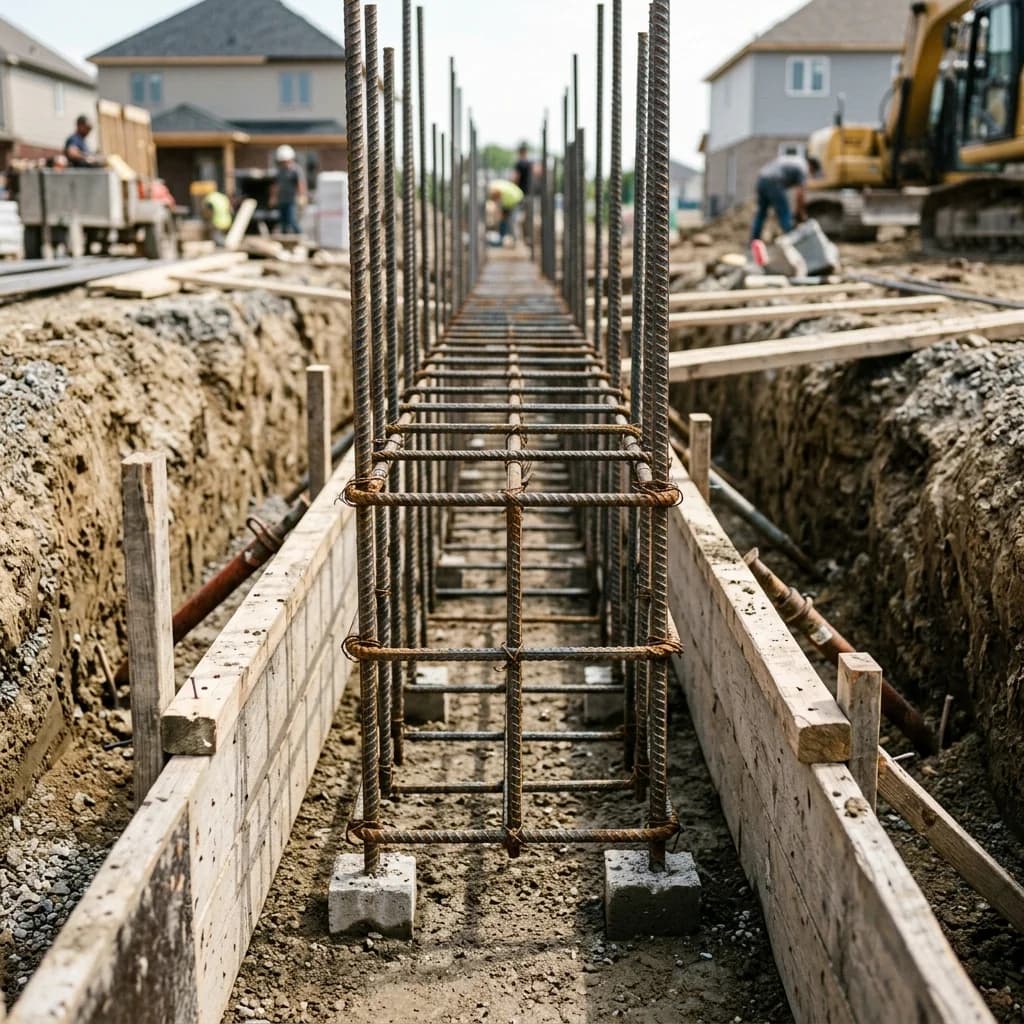
- Reinforcing Steel: A concrete slab of this size is prone to shrinkage cracking without proper reinforcement. You will need to calculate the weight and spacing of rebar grids or wire mesh. Consult our Steel & Rebar Calculator to ensure you order the correct quantities of steel reinforcement.
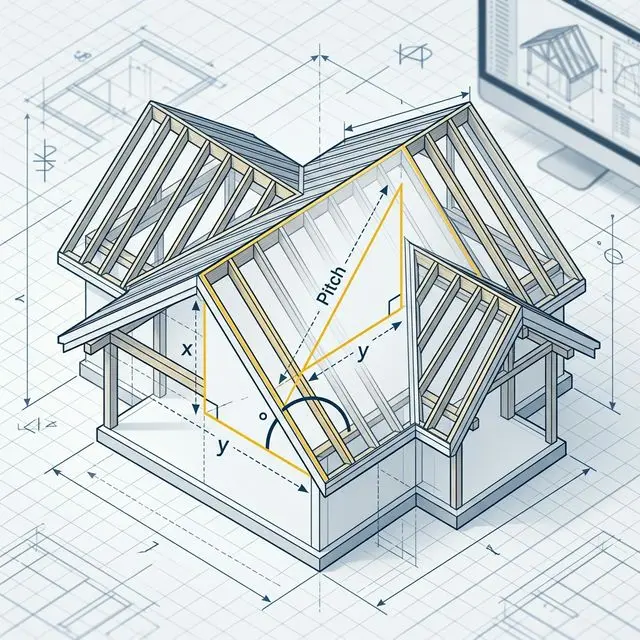
- Roofing Systems & Rafters: Just like the foundation, the roof area of a ranch home is exceptionally large. A larger roof requires more rafters, decking, underlayment, and shingles. Additionally, the slope or pitch of the roof will increase the total surface area. You can determine the total roof area and rafter lengths using our Roof Pitch Calculator. If you are planning the overall house shape, the Area & Perimeter Calculator is also useful to determine external walls and boundary distances.
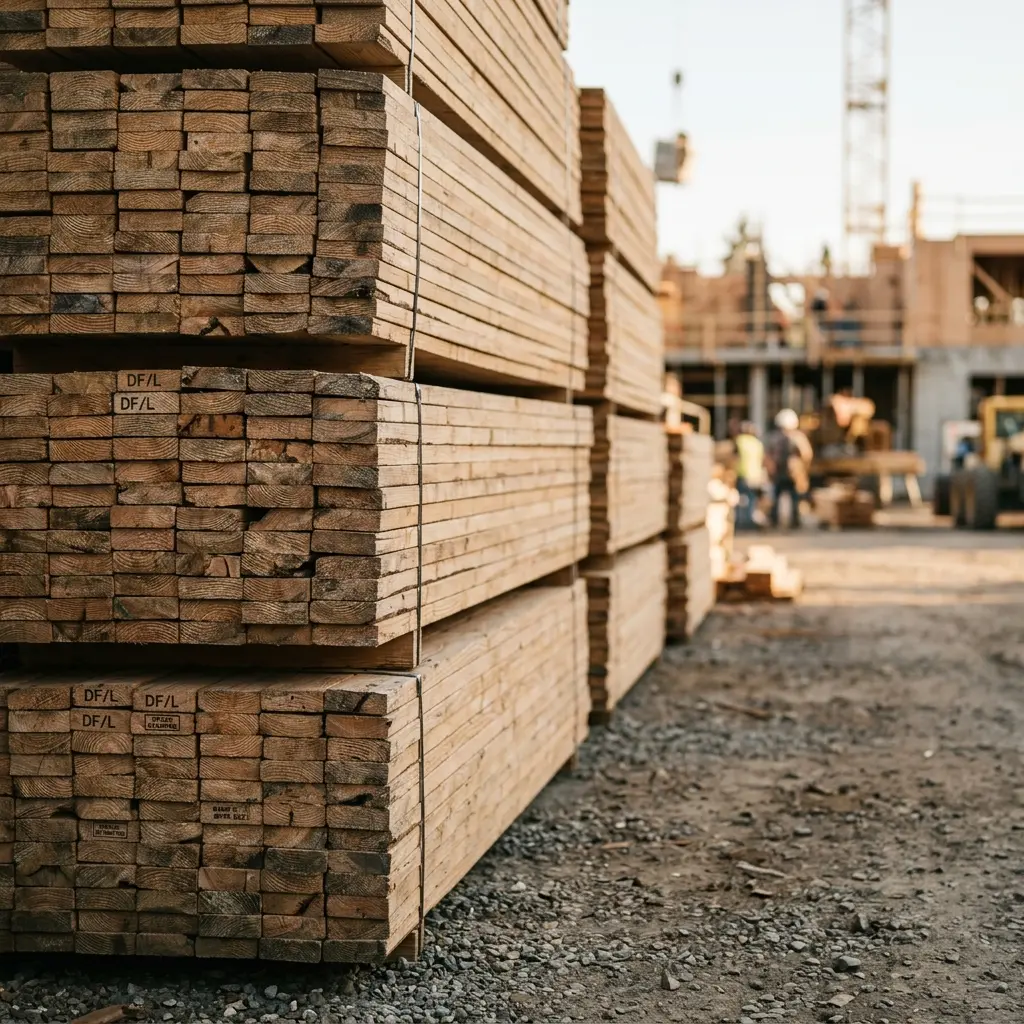
- Wood Framing & Siding: Framing a ranch home requires a large amount of dimensional lumber for exterior and interior walls. Since the house stretches outward, the perimeter is longer than a compact two-story layout. This means more plates, studs, headers, and siding materials. Use our Lumber & Wood Calculator to estimate your board feet requirements. Remember that lumber always includes cutting waste; make sure to read about The 10% Construction Waste Factor to prevent running short.
Concrete Slab Volume Formula
Where Vconcrete is the concrete volume in cubic yards, A is the slab area in square feet, and T is the slab thickness in inches. The constant 324 is the conversion factor (12 inches/foot × 27 cubic feet/cubic yard).
Example: For a 3,000 sq ft ranch home slab that is 4 inches thick: V = (3,000 × 4) / 324 = 37.04 cubic yards. Adding a 10% waste factor (about 3.7 cubic yards) means you should order approximately 41 cubic yards of concrete.
4. Single-Story vs. Two-Story Cost Comparison
To help you budget, here is a breakdown of how structural costs compare between a single-story ranch and a two-story home of the same 3,000 sq ft size:
| Layout Feature | Single-Story Ranch (3,000 Sq Ft) | Two-Story Traditional (3,000 Sq Ft) |
|---|---|---|
| Foundation Footprint | Large (~3,000 sq ft - higher excavation & concrete cost) | Compact (~1,500 sq ft - lower excavation & concrete cost) |
| Roof Surface Area | Double the area (More shingles, rafters, trusses, & labor) | Half the area (Lower roofing material and installation cost) |
| Staircase Space Usage | None (Saves ~120 sq ft of floor space) | Required (Eats into livable area on both floors) |
| Framing Complexity | Easier (Single-level framing, lower scaffolding height) | Complex (Requires second floor joists, rim boards, taller walls) |
| Plumbing & HVAC Runs | Longer horizontal runs (May require multiple HVAC zones) | Vertical stacks (Shorter pipe runs, but heat rises issues) |
To estimate your total project cost, consult our Construction Cost Calculator to estimate material vs. labor expenses based on local rates. If you are comparing smaller options, you may also find our guide on 2000 Sq Ft Home Plans or the 1.5-Story House Plans Guide helpful.
5. Working with Single Story Home Builders
Finding the right builder is critical for a successful project. Look for single story home builders who have specific experience in ranch homes new construction. Here are key questions to ask potential builders during your interviews:
- Soil and Lot Stability: Since a ranch home distributes its weight over a wide area, the soil must be properly compacted and leveled. Ask if they perform professional soil density testing before pouring.
- HVAC and Energy Zoning: A single-story home with a large roof footprint has more exposure to the sun and outdoor temperature changes. Ask the builder how they plan to zone the heating and cooling system to avoid cold or hot spots at opposite ends of the house.
- Zoning and Lot Setbacks: A wide footprint requires a wide lot. Make sure to discuss lot setbacks (how far the house must sit from the property boundaries). To learn how to read blueprints and verify these boundaries, read our guide on Reading Blueprints for Site Measurements.
Frequently Asked Questions
How many bedrooms can you fit in a 3,000 sq ft single-story house plan?
A 3,000 sq ft home can easily accommodate 4 to 5 bedrooms and 3 to 3.5 bathrooms. Because the layout is on one level, a 4-bedroom design is ideal, leaving ample space for a dedicated home office, walk-in pantry, mudroom, and spacious laundry room.
Is a 3,000 sq ft ranch home more expensive to build than a two-story home?
Yes, single-story ranch homes generally cost 10% to 15% more to build than a two-story home of the same square footage. This is because a ranch layout requires a foundation and roof that are twice as large. Foundation concrete and roofing systems are two of the highest material and labor costs in residential construction.
What size lot is required to build a 3,000 sq ft ranch style home?
A 3,000 sq ft ranch home, including a garage, typically footprint is around 3,500 to 3,800 sq ft. To accommodate this footprint while meeting standard subdivision setback regulations (usually 10 to 15 feet on sides, and 25 to 30 feet in front/back), you will need a lot that is at least 0.25 to 0.35 acres, preferably with a width of 80 to 100 feet.
How much concrete does a 3,000 sq ft ranch slab require?
For a standard 4-inch thick concrete slab, a 3,000 sq ft living area requires approximately 37 cubic yards of concrete. When adding a typical 2-car garage (~500 sq ft) and a 10% construction waste buffer, you will need to order approximately 48 cubic yards of concrete.
What are the key benefits of working with single story home builders?
Builders specializing in single-story homes understand the unique challenges of sprawling footprints, such as grading and excavation of large lots, structural design of massive roof trusses, and planning efficient lateral HVAC duct routing to ensure uniform temperatures across the home.
About the Author

Hassan Baloch — An experienced Civil Engineer with more than a decade in building and structural planning. Hassan rigorously verifies the mathematical formulas and code compliance of our estimation tools to guarantee absolute precision. Contact our team for technical inquiries.
Related Guides
2000 Sq Ft Home Plans: Balancing Affordability, Layout, and Construction
Thinking about building a 2000 sq ft home? Learn how to choose the right floor plans, compare single-story ranch vs. two-story layouts, estimate construction costs, and optimize your design.
The 1.5-Story House Plan Guide: Maximizing Space Without the 2-Story Price Tag
Discover how 1.5-story house plans maximize your square footage and offer the cozy appeal of a second level without the high costs of a full two-story build.
The 10% Rule: Why Construction Waste Factors Can Make or Break Your Budget
Learn why ordering the exact amount of material often leads to project failure and how to correctly calculate the construction waste factor for concrete, lumber, and more.
Reading Blueprints: How to Extract Accurate Site Measurements
A comprehensive Blueprint Measurement Guide for DIYers. Learn how to find the exact length, depth, and volume requirements for your construction calculators.
Related Calculators
Construction Cost
High-level cost estimator for new builds.
Concrete Slab Calculator
Volume and material calculations for flat slabs.
Foundation Calculator
Estimate concrete required for footings and foundations.
Steel & Rebar Calculator
Estimate length and weight of rebar grids.
Roof Pitch Calculator
Determine roof pitch, angle, rafter length, and area.
Lumber & Wood Calculator
Calculate board feet and total lumber piece counts.
Area & Perimeter Calculator
Calculate area and perimeter for various shapes.