The 10% Rule: Why Construction Waste Factors Can Make or Break Your Budget
Learn why ordering the exact amount of material often leads to project failure and how to correctly calculate the construction waste factor for concrete, lumber, and more.
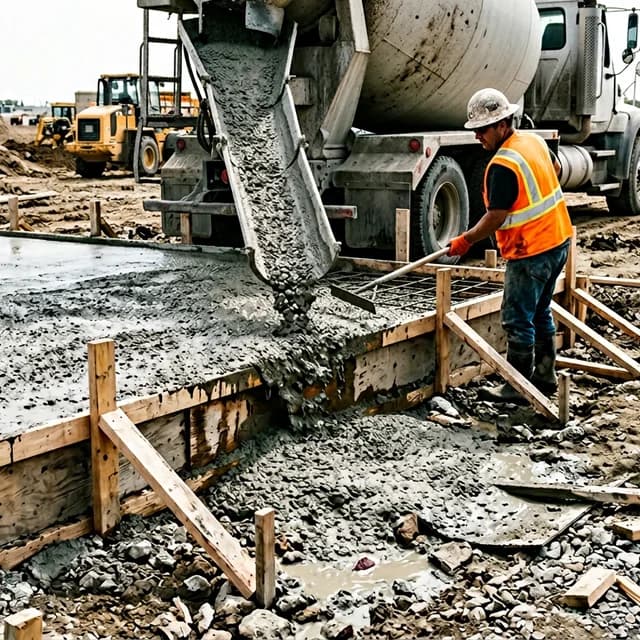
In the world of professional construction, there is a recurring nightmare that keeps even the most seasoned project managers awake at night: the "Short Load."
Imagine you've spent weeks preparing for a massive concrete driveway pour. The forms are set, the rebar is tied, and a crew of five finishers is standing by, trowels in hand. The ready-mix truck arrives, starts the discharge, and as it reaches the final corner of the slab, the chute goes dry. You are exactly one-quarter of a cubic yard short.
This isn't just an inconvenience; it's a structural disaster. Because concrete is a chemical process on a ticking clock, you can't just wait three hours for another truck to arrive without creating a "cold joint"—a seam where the new concrete won't bond to the old, leading to inevitable cracking and failure.
This is why the Construction Waste Factor is not an "optional" addition to your estimate; it is a fundamental requirement for project success.
What is a Construction Waste Factor?
The construction waste factor is a percentage added to the "net" mathematical volume of a project to account for real-world variables. In a perfect, theoretical world, a 10' x 10' x 4" slab requires exactly 1.23 cubic yards of concrete. In the real world, you order at least 1.4 cubic yards.
Why the discrepancy? Because the earth is not perfectly flat, lumber is not perfectly straight, and human hands are not mathematically perfect.
The 10% Rule of Thumb
While specific materials require different margins, the "10% Rule" is the industry baseline. If you are ever unsure, adding 10% to your raw estimate provides a safety net that covers minor errors, damaged materials, and subgrade inconsistencies.
Concrete Waste: The Battle Against the Subgrade
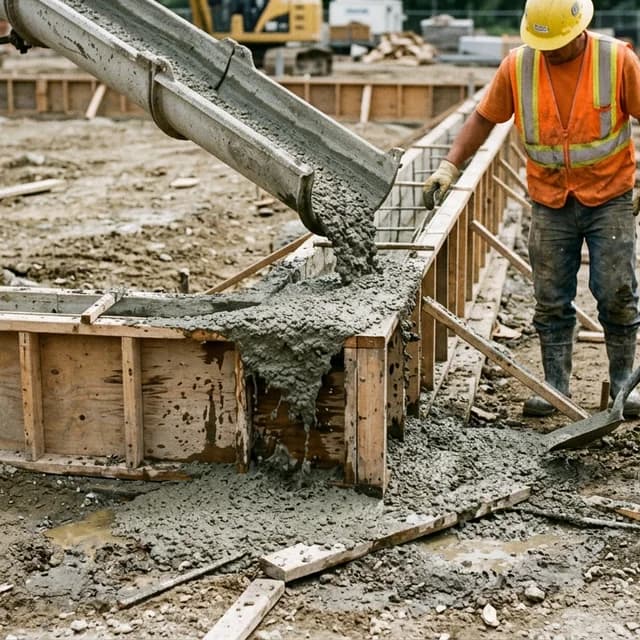
Concrete is the material where waste calculation is most critical. When you calculate the volume of a slab using a Concrete Mix Calculator, the formula assumes your subgrade (the dirt or gravel beneath) is a perfectly flat plane.
In reality, a subgrade that is just 1/2 inch deeper than intended across a standard 2-car driveway will consume nearly an entire extra cubic yard of concrete. Other factors leading to concrete waste include:
- Form Deflection: The immense weight of wet concrete (approx. 4,000 lbs per cubic yard) can cause wooden forms to bulge outward slightly, increasing the volume.
- Spillage: Concrete inevitably spills over the edges during the pour or gets left in the bottom of the truck's chute.
- Absorption: A dry, thirsty subgrade can actually suck moisture out of the mix, requiring slightly more volume to hit your marks.
Pro Tip: For slabs on grade, use a 10% waste factor. For complex footings or post holes in rocky soil where the holes are irregular, increase your waste factor to 15%.
Lumber Waste: Dealing with Defects and Offcuts
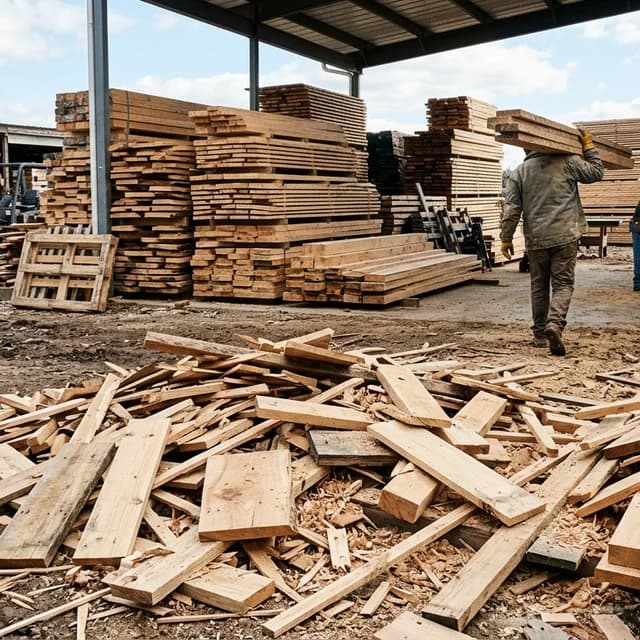
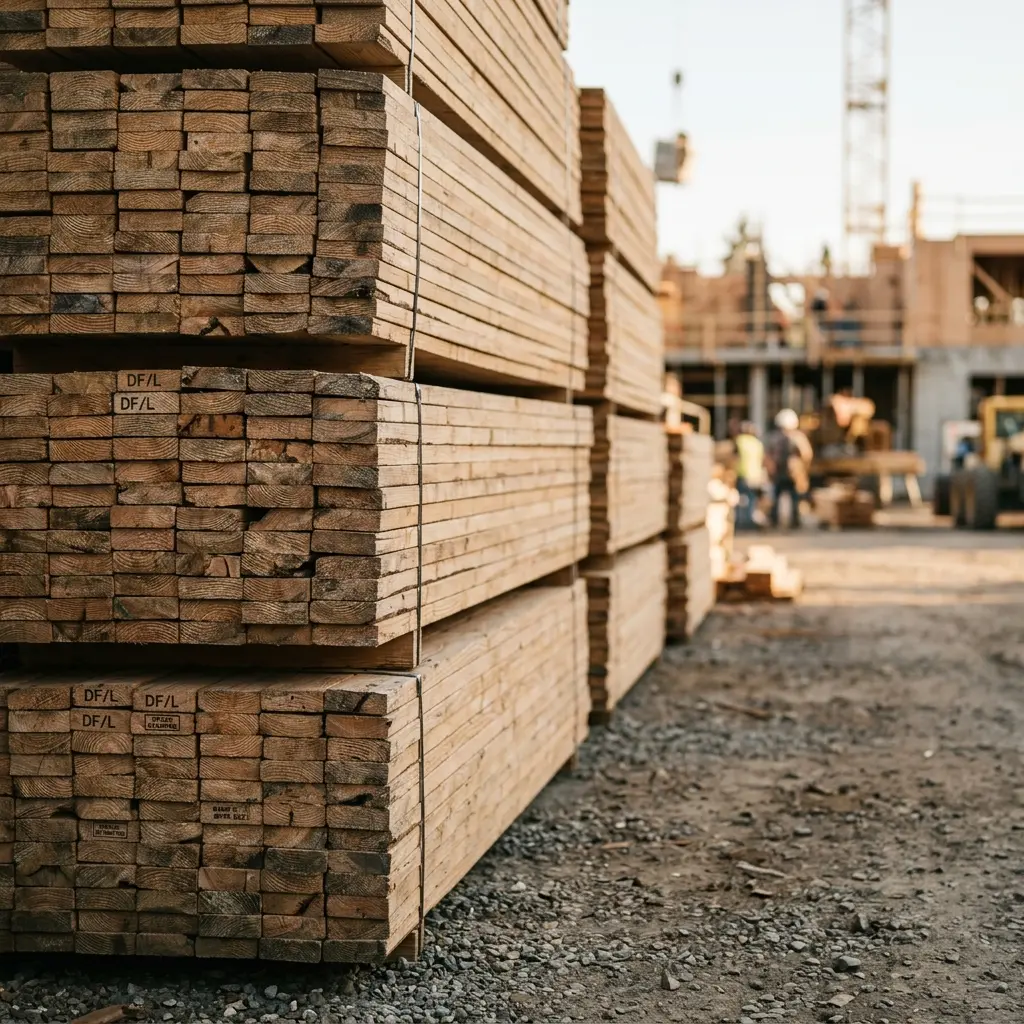
Unlike concrete, which is a fluid that fills a space, lumber is a discrete material that must be cut to fit. This introduces "Geometric Waste."
If you need a 7-foot stud for a custom wall, you have to buy an 8-foot stud and cut off 12 inches. That 12-inch piece is 12.5% of your material, and it's headed straight for the scrap pile. When using a Lumber & Wood Calculator, you must account for:
- End-Checks: The ends of lumber often have small cracks from the drying process that must be trimmed off.
- Natural Defects: Knots, wane (bark on the edge), and warping can make certain sections of a board unusable for structural or aesthetic purposes.
- The "Cutting Logic": In fine woodworking or decking, you often have to "sacrifice" clear wood to ensure the grain matches or that seams land on joists.
For standard framing (studs and joists), 15% is the standard waste factor. For finish carpentry or hardwood flooring where appearance is paramount, 20% to 25% is more realistic.
Waste factors by material
Ten percent is the default when you know nothing else, but the right number varies more than most people expect. Layout complexity drives it far more than the material itself — the same tile is 10% in a plain rectangular room and 20% laid diagonally.
| Material | Typical waste | What pushes it higher |
|---|---|---|
| Slab on grade concrete | 5–10% | Soft or uneven subgrade, thin slabs |
| Footings and post holes | 10–15% | Rocky soil, hand-dug irregular holes |
| Framing lumber | 10–15% | Odd wall heights, many openings |
| Tile, straight lay | 10% | Small rooms, large format tile |
| Tile, diagonal or herringbone | 15–20% | Every perimeter cut is a part tile |
| Drywall | 10–15% | Cut-up walls, cathedral ceilings |
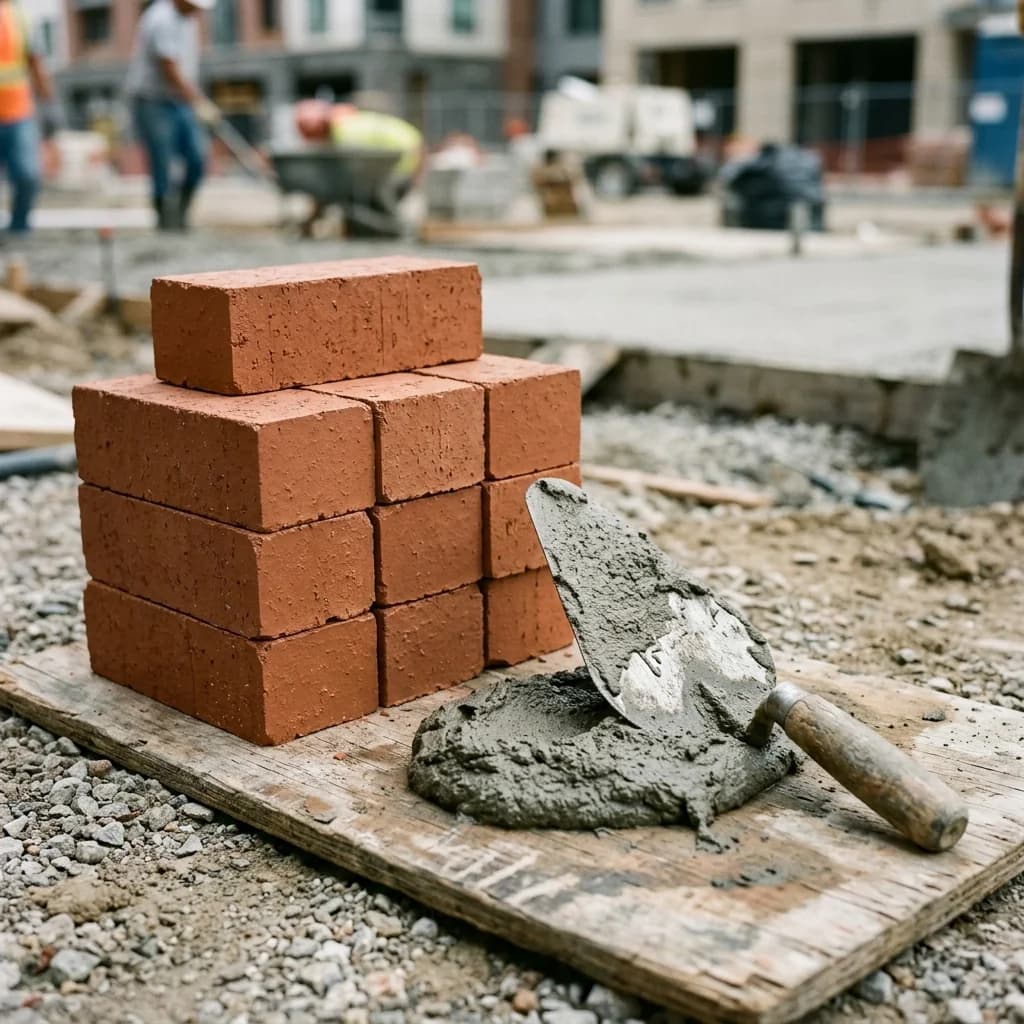
| Brick and block | 5–10% | Breakage in handling, cut corners |
| Hardwood flooring | 10% straight, 15%+ diagonal | Grade sorting, board rejection |
The packaging usually decides your waste, not your percentage
Here is the part most guides skip. You do not buy materials in the quantity you calculate — you buy them in boxes, bundles, pallets, and truckloads. Once you round up to whole purchase units, the box size sets your real overage, and your carefully chosen waste percentage becomes almost irrelevant.
Take a 10 by 12 foot room, so 120 square feet of tile. Add the standard 10% and you need 132 square feet. The tile you have chosen comes in boxes covering 15 square feet, so 132 ÷ 15 = 8.8 boxes, and you cannot buy 0.8 of a box. You buy 9 boxes, which is 135 square feet — an actual overage of 12.5%, not 10%.
This cuts both ways and is worth checking before you fret over one or two percent. If your maths lands just above a box boundary, dropping your waste factor slightly can save a whole box. If it lands just below one, you may as well raise the factor and keep the extra, because you are paying for the box either way. Concrete works the same: ready-mix is usually sold in quarter-yard increments with a short-load fee below a full truck, so the pricing steps, not the volume, determine what you should order.
One thing worth keeping separate: a waste factor is not a contingency. Waste covers material you will physically consume and throw away. Contingency covers being wrong about the scope. Budget them separately, or you will quietly spend your safety margin on offcuts and have nothing left when the excavation hits rock.
How to Calculate Your Total Order
Calculating the final order is a simple two-step process:
Total order with waste
Where Qtheory is your net calculated quantity and w is waste percentage (e.g. 10 for 10%).
Example: 100 bricks at 10% waste → 100 × 1.10 = 110 bricks.
It may feel counter-intuitive to "waste" money on extra materials, but the cost of the extra 10% is almost always lower than the cost of a second delivery fee, a two-day project delay, or a structural failure caused by a cold joint.
Next time you use one of our Construction Calculators, look for the "Waste Factor" option and use it. Your budget—and your stress levels—will thank you.
About the Author

Zain Sheikh — With over 10 years of hands‑on experience in residential and commercial construction, Zain ensures that every calculator on our platform accounts for real‑world variables, waste factors, and site conditions. Contact our team for technical inquiries.