
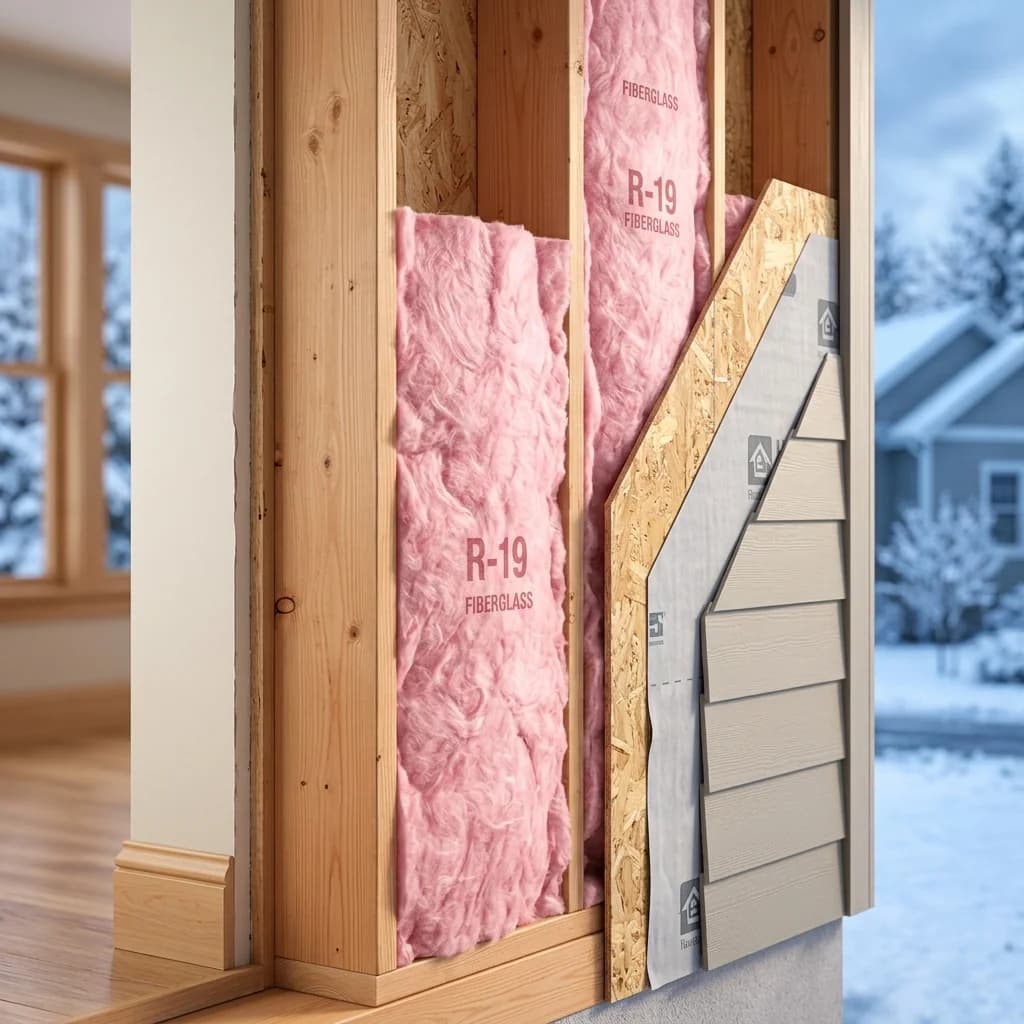
Understanding R-Value in Home Insulation
Learn what R-Value means, how to measure heat flow, and exactly how much insulation your attic and walls need using our professional insulation calculator.
Whether you are battling blistering summer heat or freezing winter nights, your home's comfort and energy bills depend heavily on one invisible shield: home insulation. But when you walk down the aisles of a home improvement store, you are bombarded with numbers and codes. The most important of these is the R-Value.
But what exactly does R-Value mean? Why do some walls require a different number than an attic? And how can you make sure you are buying the right amount without wasting money?
In this professional guide, we will break down the science of R-Value into simple, easy-to-understand terms. We will explore the types of insulation available, where you lose the most heat, and show you how to accurately estimate your project using an insulation calculator.
What is R-Value?
In the construction world, the "R" in R-Value stands for Resistance. It measures how effectively a specific material resists the conductive flow of heat. It is a simple concept: heat always wants to move from a warm place to a cold place. In the winter, your expensive furnace heat tries to escape outside. In the summer, the blazing outdoor heat tries to force its way into your air-conditioned living room.
The higher the R-Value of a material, the better it is at stopping this heat transfer. For example, a standard piece of uninsulated wood has an R-Value of about R-1 per inch. Quality fiberglass insulation can provide over R-3 per inch, acting as a thick thermal blanket for your house.
Thermal Resistance (R-Value)
Where Thickness is measured in inches, and k is the inherent ability of the material to pass heat.
Takeaway: You can increase your total R-Value by either selecting a higher-performance material (lower k-value) or simply installing a thicker layer.
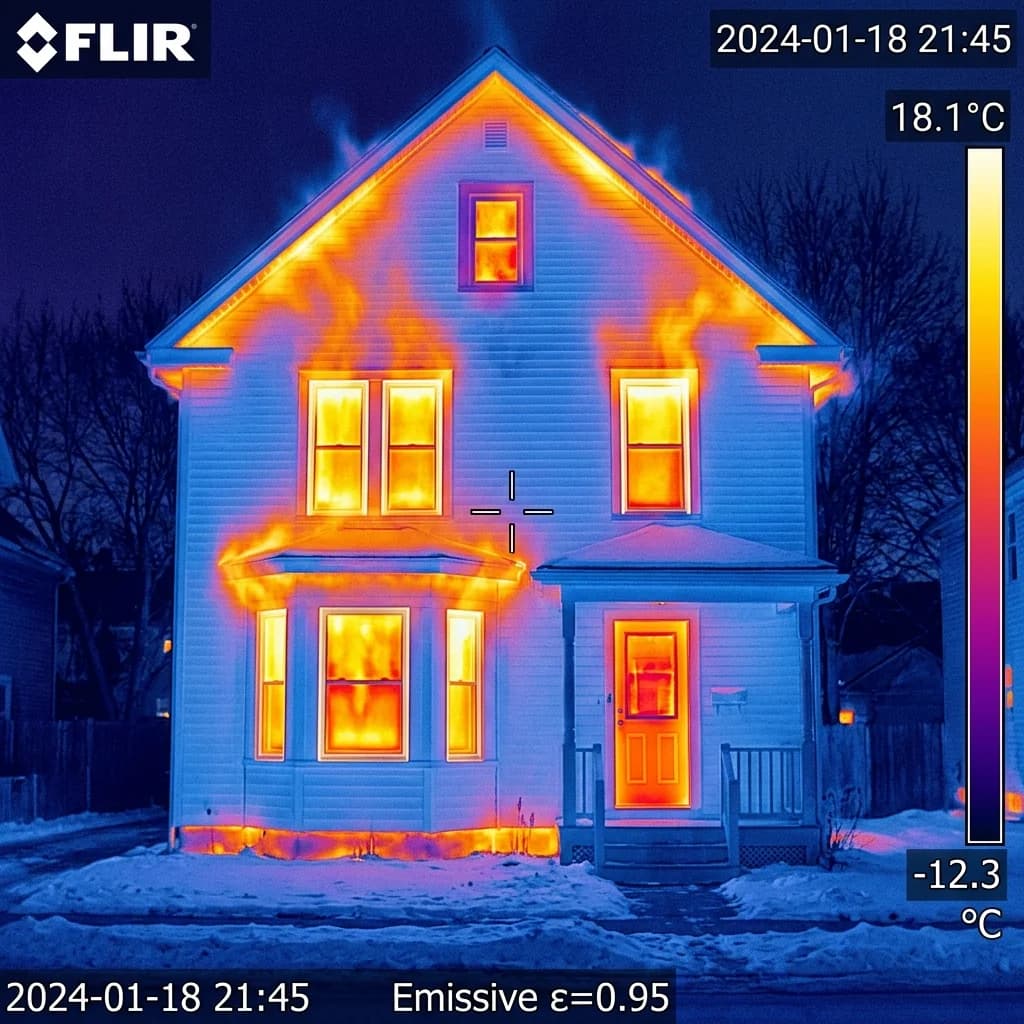
Why Heat Loss Matters (The Thermal Envelope)
Every house has a "thermal envelope," which includes the walls, floors, windows, and roof that separate the conditioned indoor space from the outdoors. As the thermal image above demonstrates, poorly insulated homes literally bleed thermal energy. The glowing red, orange, and yellow areas represent money escaping through your walls.
By upgrading your insulation's R-Value, you are properly sealing this envelope. This not only lowers your monthly utility bills but also significantly reduces the daily strain on your HVAC system, extending its overall lifespan.
Understanding the Different Types of Insulation
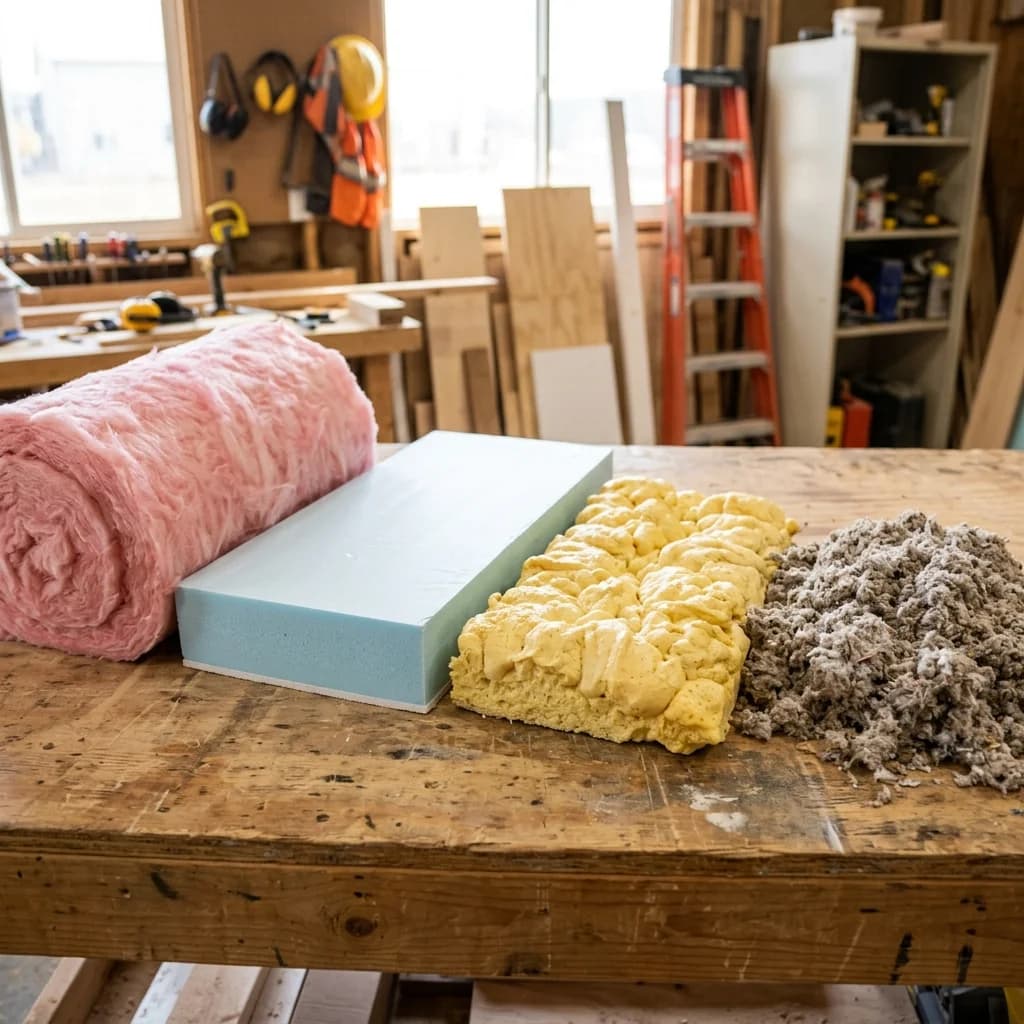
Not all insulation is created equal. Depending on the space you are trying to fill—like an open open attic space versus a closed wall cavity—you will need to choose the correct material. Here are the most common options:
- Fiberglass Batts and Rolls: The classic "pink blanket." This is the most popular choice for DIYers. It is affordable, easy to gently cut, and fits perfectly between standard wooden wall studs and ceiling joists. It typically offers a rating around R-3.1 to R-3.4 per inch of thickness.
- Blown-in Cellulose: Made mostly from recycled paper treated with heavy fire retardants, this loose gray/brown material is blown into attics or empty wall cavities using a special heavy-duty machine. It is fantastic for filling irregular shapes and gaps, providing about R-3.2 to R-3.8 per inch.
- Rigid Foam Board: Dense boards (often blue, pink, or white/yellow) that offer an extremely high R-Value per inch (R-4 to R-6.5). These are typically used during new construction on exterior walls, in basements, or flat roofs.
- Spray Foam Insulation: A professional-grade expanding liquid that rapidly turns into a tight, dense foam, completely sealing all air leaks. Closed-cell spray foam is the most effective available, pushing up to R-7 per inch, but it is the most expensive.
Attic vs. Wall Insulation: Why the Difference?
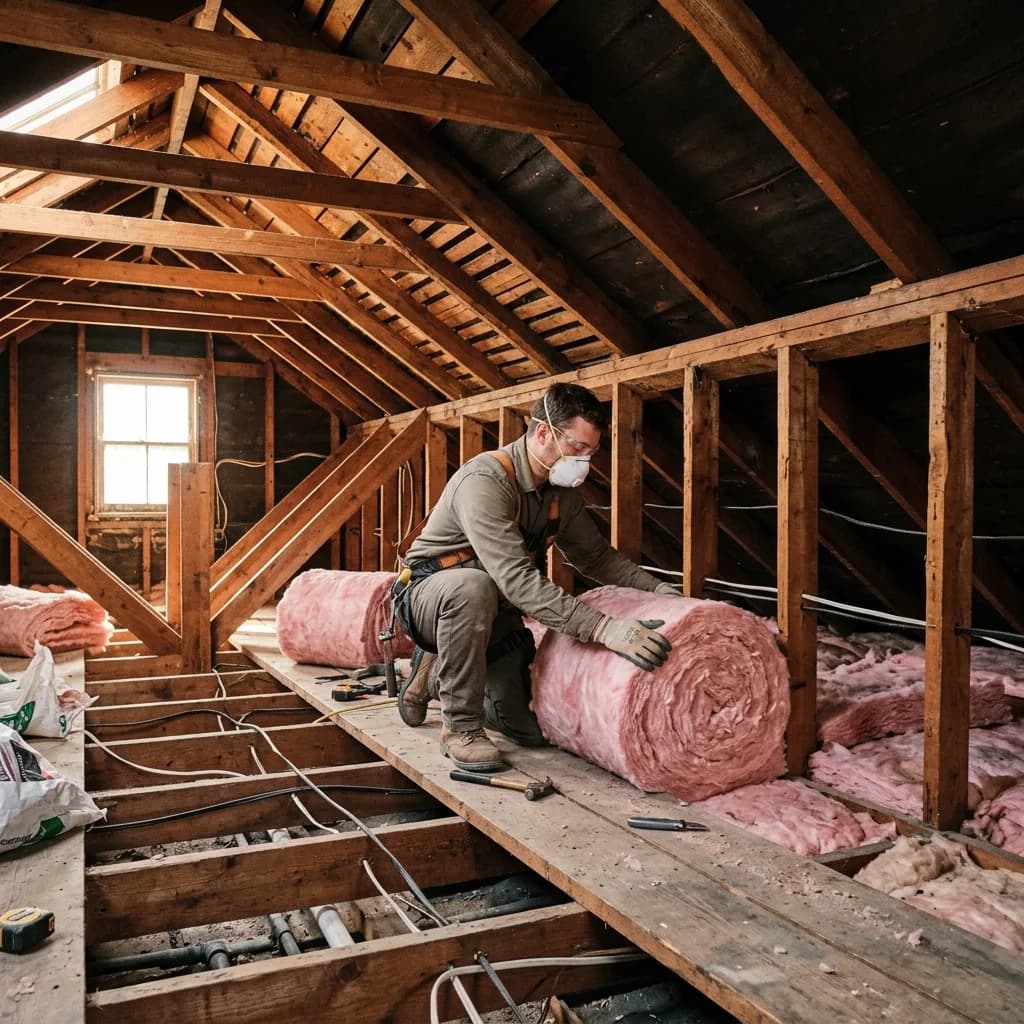
If you look at recommended local building codes, you will notice a huge discrepancy in the required R-Values. A standard wall might only require an R-13 to R-21 rating, while an attic may strictly demand R-38 to R-60 depending on your regional climate zone.
Why such a massive difference? It comes down to basic physics: hot air rises. During the freezing winter months, the heat generated by your expensive furnace naturally flows upward, putting massive thermal pressure against your ceiling. Without extremely thick attic insulation, all that comfortable heat quickly penetrates the roof deck and disappears outward to the sky. Your attic requires significantly more R-Value simply because it is the primary battleground against winter heat loss.
The Diminishing Returns of R-Value
It is a common misconception that doubling your R-Value cuts your energy loss in half. In reality, upgrading a hollow, uninsulated wall from R-0 to R-11 stops a truly massive amount of heat flow. However, upgrading from R-38 to R-49 in an attic only provides a minor incremental energy benefit. Always aim to hit your state energy code's baseline before overspending.
How to Calculate Your Insulation Needs
Calculating the amount of material you need for an insulation project can be incredibly confusing. You have to carefully measure the square footage of the space, meticulously exclude the measurements of windows and doors, account for the space forcefully taken up by the wooden framing (studs and joists usually eat up about 10% of the gross wall space), and then somehow figure out the total number of rolls or bags required based on their distinct retail packaging sizes.
Buying too much material means making painful return trips to the crowded hardware store. Buying too little means stopping your project hallway through, forcing you to leave walls completely open.
To make this effortless, use an accurate insulation calculator. Simply input the dimensions of your room space, tell the calculator whether you are tackling a wall or an attic install, and select your desired material. It will instantly determine the exact net square footage of coverage you need, brilliantly subtracting the necessary framing waste factors, and finally providing you with a clean, confident shopping list.
With a solid understanding of R-Value and a precise, calculated material estimate, you are completely well on your way to building a more comfortable, energy-efficient home today. Stay warm out there!
References
Standards and data referenced in this guide. Building codes are adopted locally, so verify requirements with your jurisdiction before you build.
- IRC 2021, Chapter 11 (RE) — Energy Efficiency (insulation R-values by climate zone) — International Code Council
About the Author

Hassan Baloch — An experienced Civil Engineer with more than a decade in building and structural planning. Hassan rigorously verifies the mathematical formulas and code compliance of our estimation tools to guarantee absolute precision. Contact our team for technical inquiries.
Related Calculators
Attic & Wall Insulation
Calculate net insulation area and required thickness for optimal R-Value.
Wall Square Footage
Calculate wall area excluding doors and windows.
Room Volume Calculator
Determine total cubic volume of a given room space.