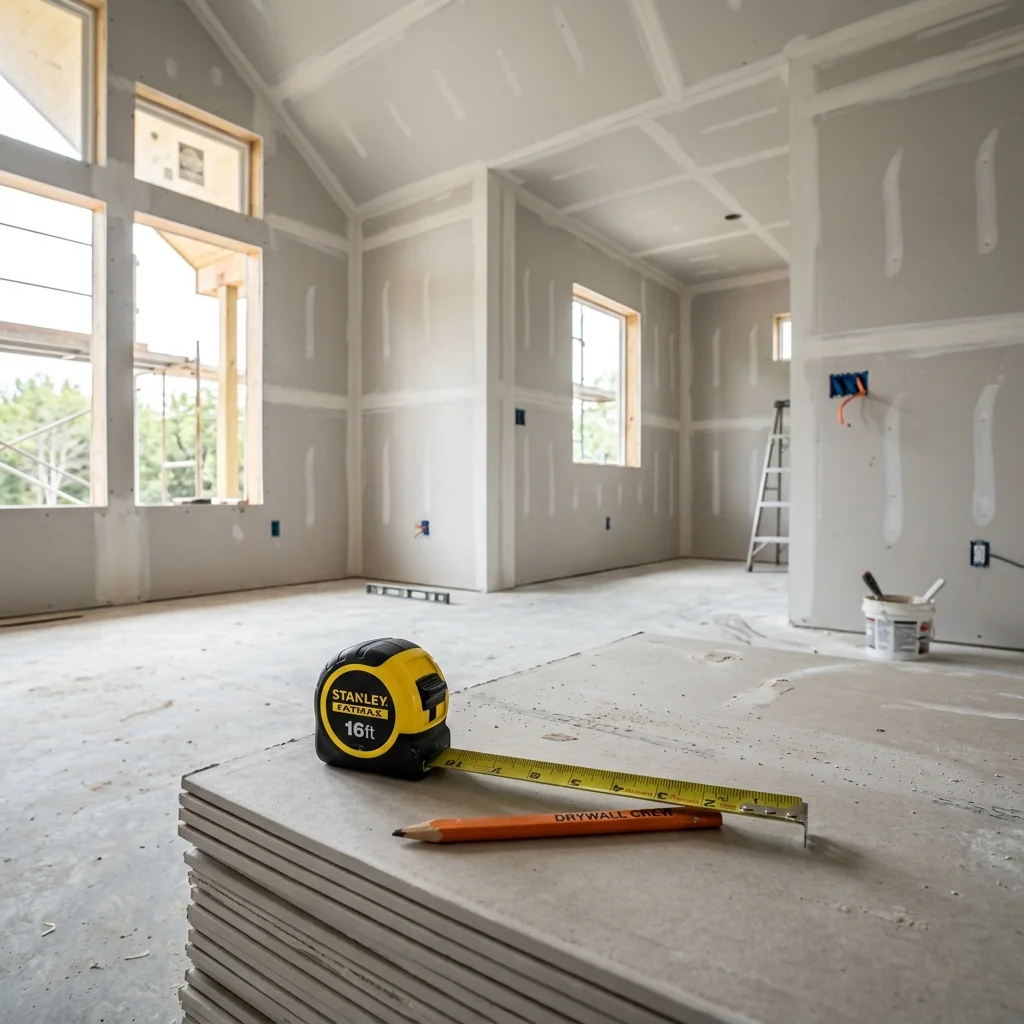
The Cost of Drywall per Square Foot: 2026 Price Guide
Budgeting for a renovation? Learn exactly what it costs to hang, tape, and finish drywall in 2026, including labor, materials, and specialized board pricing.
Drywall is the silent canvas of modern architecture. It transforms skeleton-like wooden studs into smooth, livable spaces. But for homeowners and contractors alike, the financial calculation behind those smooth walls is often a source of confusion. When you hear a quote for "two dollars a foot," what does that actually buy you?
In 2026, the average cost for professional drywall installation—including both labor and materials—typically ranges from $1.50 to $3.50 per square foot. However, that broad range hides a multitude of variables, from the height of your ceilings to the specific chemical composition of the boards.
In this definitive guide, we will break down every cent of the drywall process. We'll explore the difference between material and labor costs, identify the "hidden" types of drywall that could save your home from fire or mold, and explain the professional finish levels that dictate how your paint will actually look under a light. Whether you're doing it yourself or hiring a crew, using a professional drywall estimator is the first step to a successful budget.
Breaking Down the Costs: Materials vs. Labor
The first thing to understand about drywall pricing is the division of your dollar. In a typical professional installation, labor accounts for 60% to 75% of the total bill. The raw materials—the gypsum boards, the mud, and the tape—are relatively inexpensive compared to the skill and time required to make them look perfect.
1. Material Costs ($0.45 – $0.85 per sq ft)
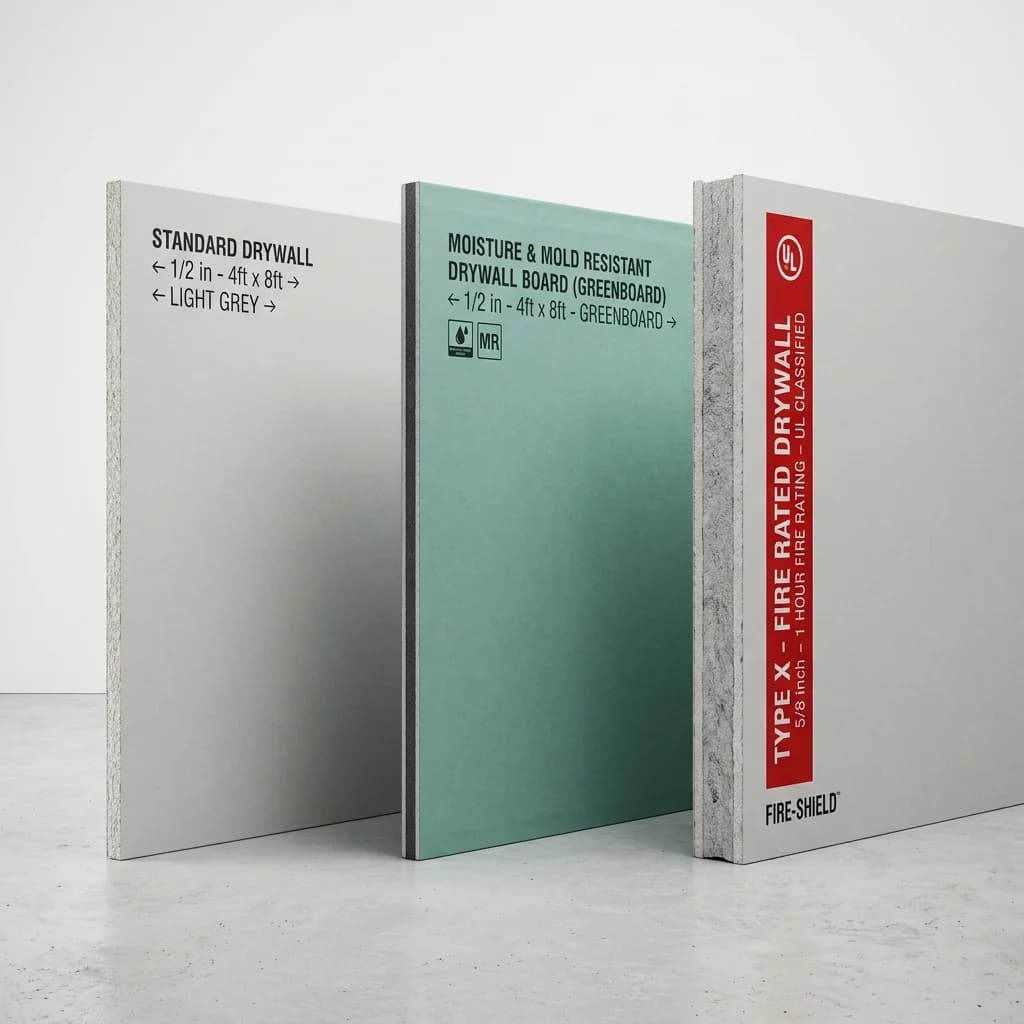
The standard 1/2-inch, 4'x8' drywall sheet currently costs between $12 and $22 per board. This translates to roughly $0.40 to $0.70 per square foot for the board alone. However, high-performance materials quickly push these numbers higher:
- Moisture-Resistant (Greenboard): Essential for bathrooms and laundry rooms. Expect to pay a 20% premium.
- Fire-Rated (Type X): A 5/8-inch thick board required by code for garage ceilings and shared walls. These boards are heavier and cost about 30% more.
- Soundproof Drywall (QuietRock): Specialized layered boards that can cost $60 to $100 per sheet—nearly 5 times the price of standard drywall.
2. Labor Costs ($1.10 – $2.65 per sq ft)
Labor is where the "drywall estimator" really becomes valuable. A professional crew doesn't just "hang" the board; they perform a three-stage dance:
- Hanging: Lifting the heavy sheets, measuring, cutting, and screwing them to the studs.
- Taping & Mudding: Applying the first "bed" of joint compound and the tape to every seam.
- Finishing & Sanding: Applying subsequent "skim" coats and sanding between each to ensure the seam disappears.
Understanding the Finish Levels (0 to 5)
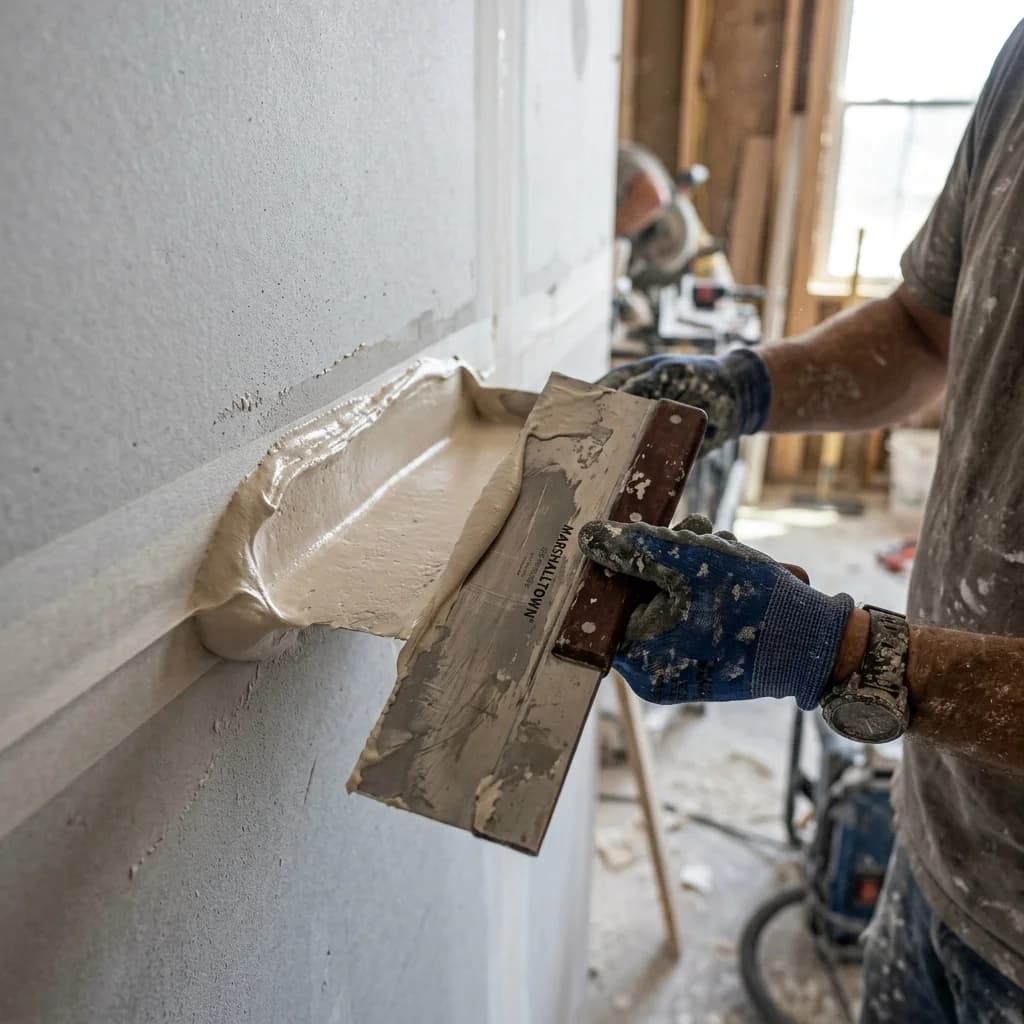
Not all walls are created equal. The Gypsum Association defines six different "levels" of drywall finish, and your choice of level is a primary price driver.
- Level 2: Often used in garages or closets. The tape is bedded, but the finish is rough. This is the most affordable level.
- Level 4: The residential standard. It involves three coats of mud over the tape and screws, followed by thorough sanding. It is suitable for most standard paints and textures.
- Level 5: The "Museum Grade" finish. This involves a thin "skim coat" of joint compound applied over the entire surface of the wall to ensure there is no texture difference between the paper and the mud. This can easily double the labor cost of a project.
Total Drywall Project Estimator
Where A is total wall/ceiling area, R represents the regional rates, and w is the waste factor (typically 0.10).
Example: 1,000 sq ft at $2.50 total rate + 10% waste ≈ $2,750.
Top 3 Factors That Inflate Your Quote
Beyond the raw square footage, several real-world variables can cause a drywall contractor to "upcharge" your estimate:
1. Ceiling Height
Standard 8-foot or 9-foot ceilings are easy to work with. Once you hit 10 feet or higher (vaulted/cathedral ceilings), the crew must use ladders, stilts, or scaffolding. This increases safety risk and slows down production, typically adding 20% to the labor rate.
2. Room Complexity
A single 20-foot long wall is much faster to hang and finish than a small bathroom with three corners, a soffit, and a window return. Every "corner" (inside or outside) requires a specialized bead or tape application. More corners = more labor.
3. Disposal Fees
Drywall is heavy and cannot always be tossed in standard residential trash. Many contractors will add a "dumpster fee" or a disposal charge, especially in metropolitan areas with high landfill taxes.
How to Order Your Materials Accurately
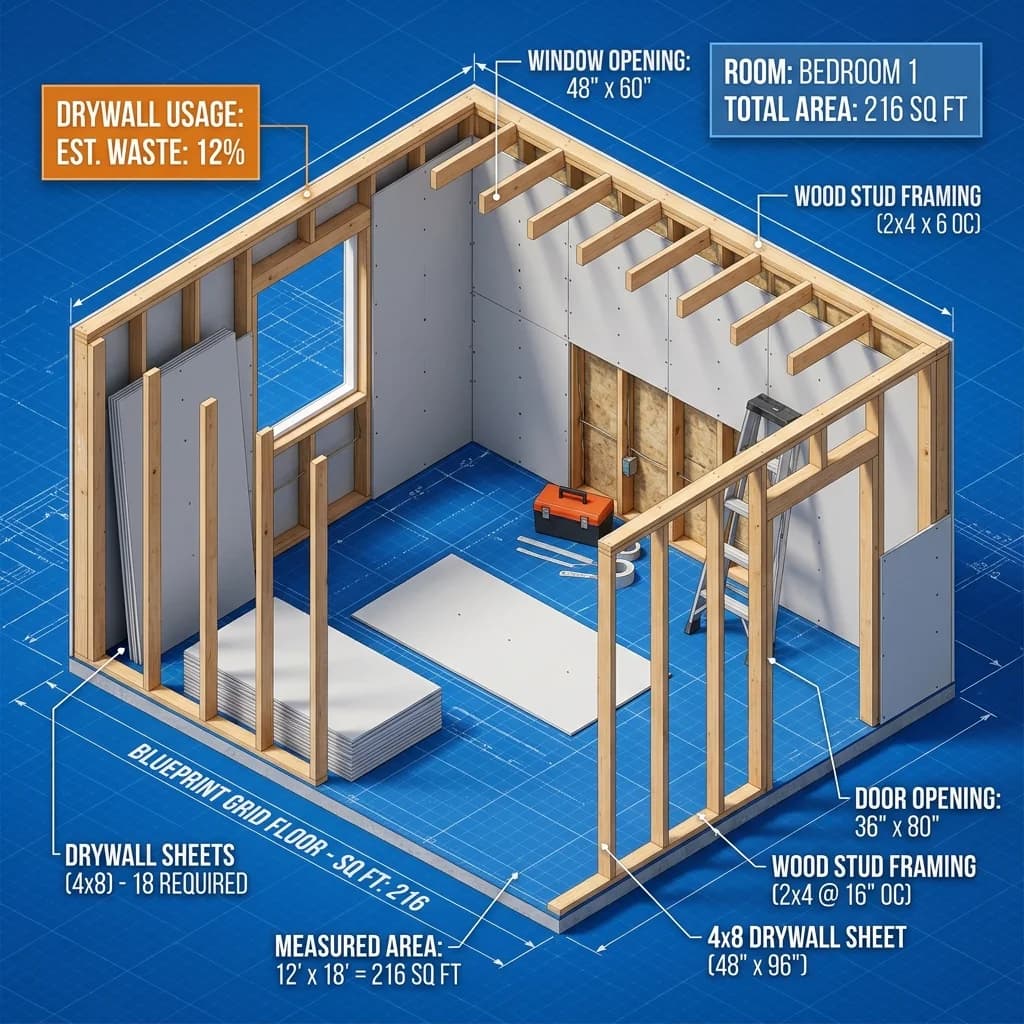
If you are managing the project yourself, the "Golden Rule" of drywall is to calculate based on gross area. As we explained in our Wall Square Footage Guide, you should not subtract the area of doors and windows for structural reasons. For a full walkthrough of sheet counts, mud, tape, and screw estimates, see our Drywall Estimation Guide.
Always use a dedicated drywall estimator to cross-reference your measurements. The estimator will take your total square footage and instantly tell you:
- The Sheet Count: Based on 4x8, 4x10, or 4x12 boards.
- Mud Consumption: How many gallons of all-purpose joint compound you need.
- Fastener Count: How many pounds of 1-1/4" or 1-5/8" screws you should buy.
DIY vs. Professional: Which is cheaper?
On paper, DIYing drywall looks 70% cheaper because you are eliminating the labor bill. However, drywall is one of the most physically demanding and "unforgiving" trades. A poor mudding job will be visible every single day when the sun hits your wall.
For a single room or a basement, DIY is a great way to save money. For a whole-house build where speed and a Level 4 finish are required for resale value, hiring a professional crew is almost always the better long-term investment.
Final Thoughts
Drywall is a science as much as it is an art. By understanding the per-square-foot breakdowns and the specific needs of your space (like moisture or fire resistance), you can walk into a contract negotiation with confidence.
Ready to start your estimate? Head over to our Drywall & Sheetrock Calculator to get your exact material list today!
References
Standards and data referenced in this guide. Building codes are adopted locally, so verify requirements with your jurisdiction before you build.
- Gypsum board application and finishing standards — Gypsum Association
About the Author

Hassan Baloch — An experienced Civil Engineer with more than a decade in building and structural planning. Hassan rigorously verifies the mathematical formulas and code compliance of our estimation tools to guarantee absolute precision. Contact our team for technical inquiries.
Related Calculators
Drywall & Sheetrock Calculator
Estimate drywall sheets, joint compound, and tape needed for walls and ceilings.
Wall Square Footage
Calculate wall area excluding doors and windows.
Labor Cost Estimator
Calculate labor costs based on hourly rates and time.