
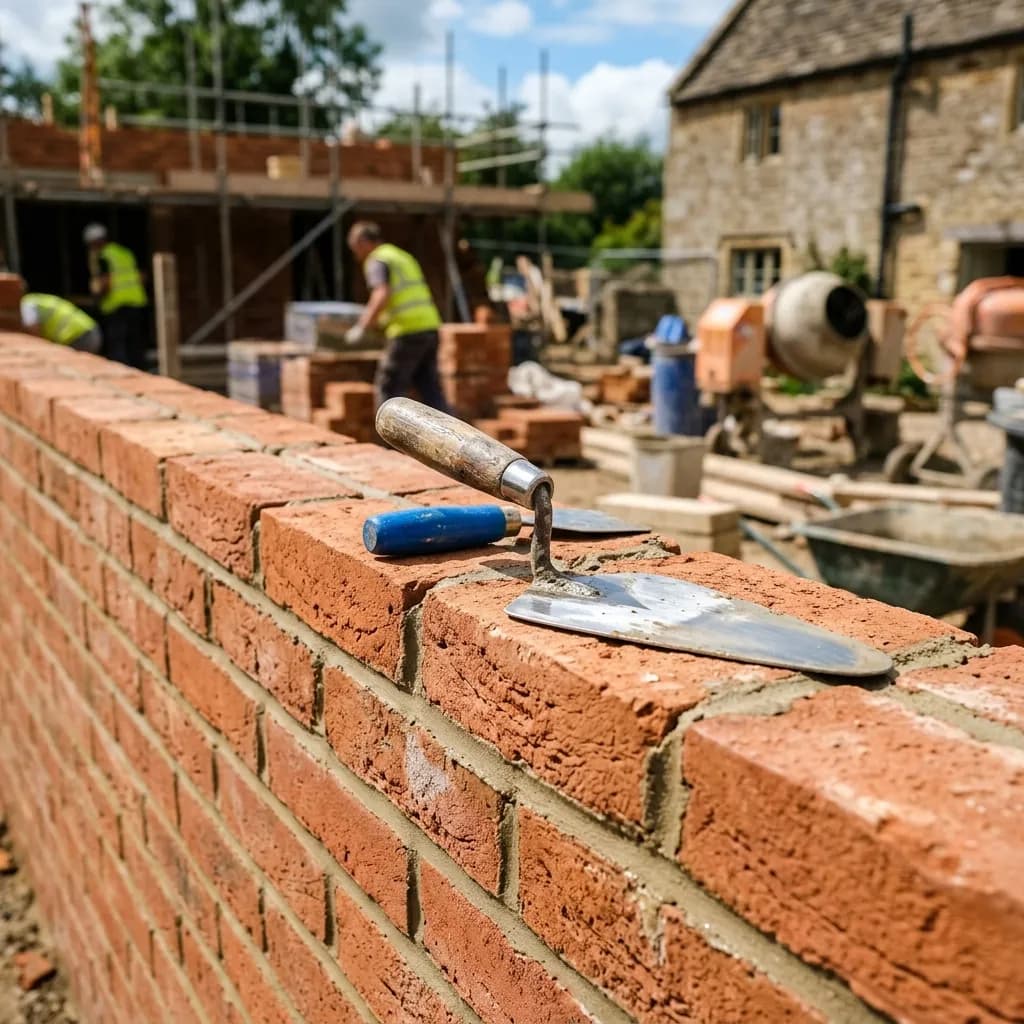
Standard Brick Sizes and Mortar Gaps
Learn how to accurately calculate your brick count per m2 by understanding standard brick sizes and mortar gaps. The complete guide to masonry estimation.
Whether you are building a small garden wall, a sturdy retaining wall, or calculating the materials for an entire house extension, one of the most common questions beginners and DIY enthusiasts ask is: how do I calculate the brick count per m2?
The answer lies in two critical components that work together in every masonry project: the physical dimensions of the bricks themselves, and the thickness of the mortar gap between them. Without accounting for both, you will inevitably order either far too few bricks or end up with expensive waste sitting in your driveway.
In this complete guide, we will break down the standard brick sizes, explain the essential role of the mortar gap, and show you exactly how professionals estimate their materials. We will also help you use the Brick & Mortar Calculator to ensure your next project is estimated flawlessly.
Understanding Standard Brick Sizes
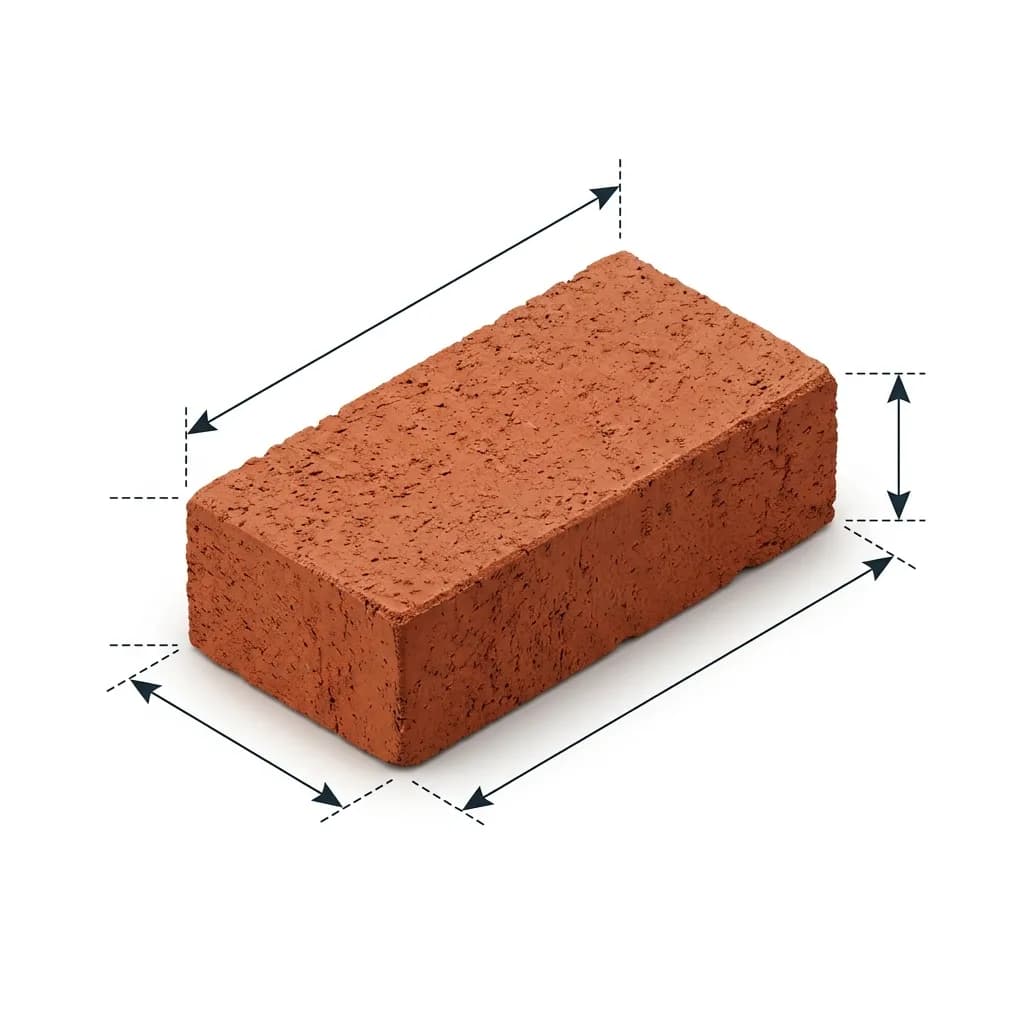
Before you can know how many bricks you need, you have to know how big a single brick is. While specialty bricks come in hundreds of shapes and sizes, standard facing bricks and house bricks generally follow strict national guidelines.
In the UK, Australia, and many other metric-based systems, a standard brick almost universally measures:
- Length: 215 millimeters (mm)
- Width (Depth): 102.5 millimeters (mm)
- Height: 65 millimeters (mm)
In the United States, the "Modular Brick" is the standard, which relies on the imperial system. It generally measures:
- Length: 7 5/8 inches
- Width (Depth): 3 5/8 inches
- Height: 2 1/4 inches
These specific numbers might seem oddly particular, but they are incredibly intentional. They are designed so that when you add a standardized layer of mortar, the final "working" size of the brick becomes a perfectly round number that is easy to map out on a large scale.
The Crucial Mortar Gap
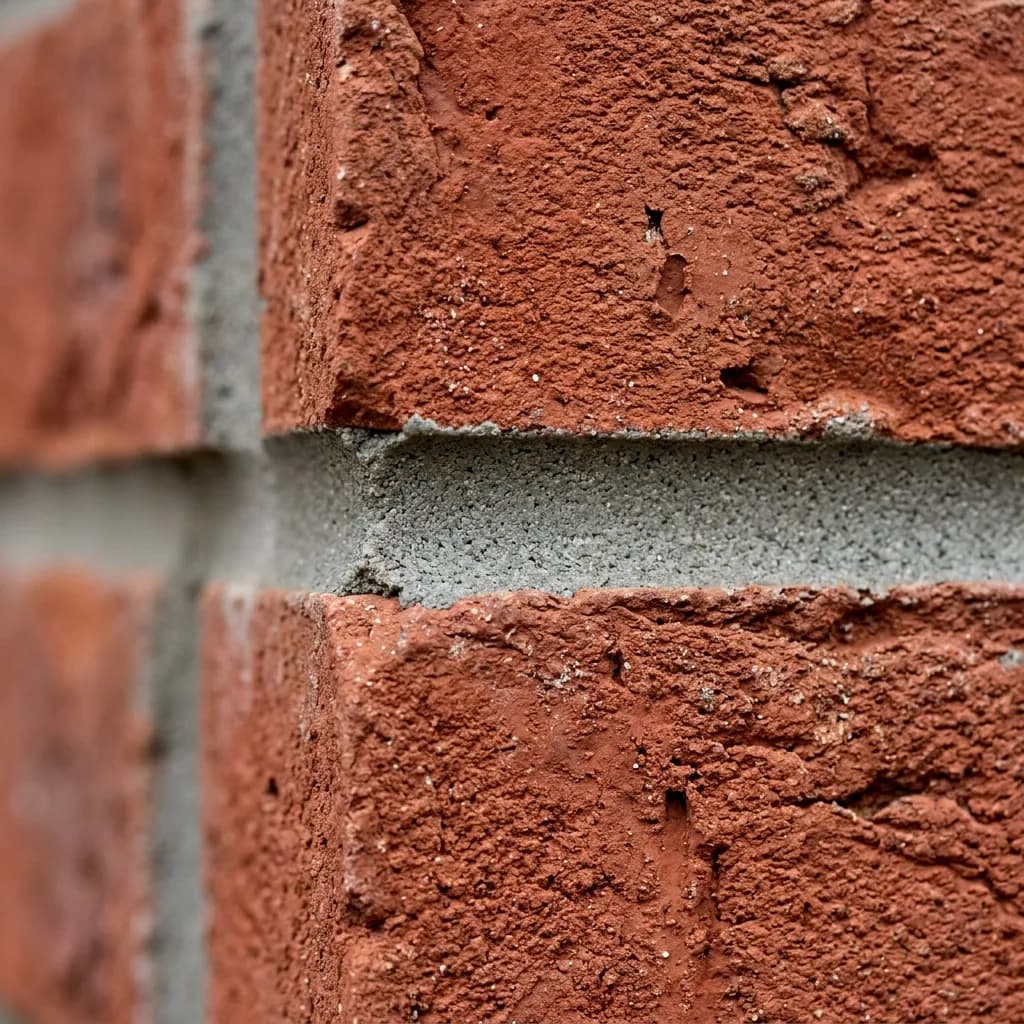
If you just stacked bricks on top of each other without any cement, your wall would fall over in a slight breeze. Mortar is the sticky mixture of sand, cement, and water that binds the individual bricks into one solid, structural panel.
But mortar isn't just glue; it is a physical spacer. When a bricklayer places a brick, they leave a gap between it and the next brick, and a gap underneath it. This is called the mortar joint.
The standard thickness for a mortar joint in metric systems is exactly 10 millimeters (10mm). In the US imperial system, it is standardly 3/8 of an inch.
The Golden Rule of Brick Dimension
When calculating the brick count per m2, you never use the raw size of the brick alone. You must always use the "Coordinating Size," which is the size of the brick plus one mortar joint.
For example, in the metric system (UK standard):
- Working Length: 215mm brick + 10mm mortar = 225mm
- Working Height: 65mm brick + 10mm mortar = 75mm
How to Calculate Your Brick Count per m2
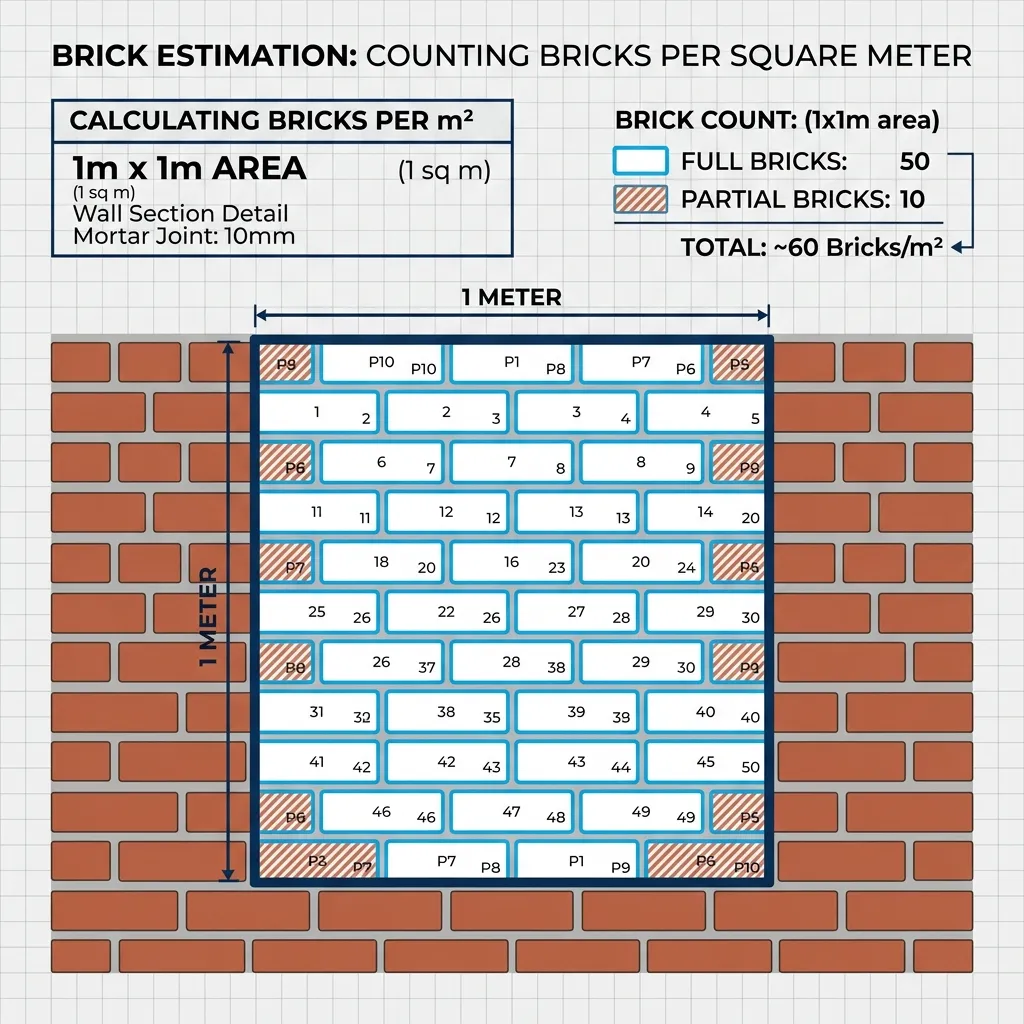
Now that we understand the coordinating size of a brick, the math to find your exact brick count per m2 (square meter) becomes remarkably simple. We just need to figure out the area of one working brick, and divide it into one standard square meter.
First, let's find the face area of a single working metric brick:
0.225 meters (Length) × 0.075 meters (Height) = 0.016875 square meters.
Next, we divide 1 square meter by the area of that single brick:
1 ÷ 0.016875 = 59.25
This is why the ultimate, industry ground-rule is that you need exactly 60 bricks per square meter for a standard single-skin (half-brick) wall. If you are building a double-skin wall (often called a one-brick wall), you simply double that number to 120 bricks per square meter, plus wall ties to hold the two skins together.
Don't Forget the Waste Factor
While the math perfectly dictates 60 bricks per square meter, the real world of construction is messy. Bricks get dropped and snap in half. Complex corners require you to cut perfectly good bricks into smaller pieces, rendering the offcuts useless. And sometimes, you just get a bad batch with a few cracked units off the delivery pallet.
To account for this, you must always add a professional waste factor to your total estimation. An addition of 5% to 10% extra is the industry standard depending on how many cuts, windows, or doors your design involves. So, if your wall is 10 square meters, you need 600 bricks mathematically, but you should order roughly 630 to 660 bricks to be perfectly safe.
Make the Estimation Easy
While the math is easy enough to do on a small garden wall, calculating an entire house layout—complete with subtracting the square meterage of all windows and doors, adding the waste factor, and figuring out exactly how many bags of cement and sand you need to mix the mortar—can quickly become an overwhelming headache.
To ensure your estimating is fast and perfectly accurate, use our Brick & Mortar Calculator. Just punch in the total length and height of your wall, choose your brick size, and let us do the rest. You'll get your exact brick count, plus the precise volume of mortar materials required to finish the job flawlessly.
About the Author

Hassan Baloch — An experienced Civil Engineer with more than a decade in building and structural planning. Hassan rigorously verifies the mathematical formulas and code compliance of our estimation tools to guarantee absolute precision. Contact our team for technical inquiries.