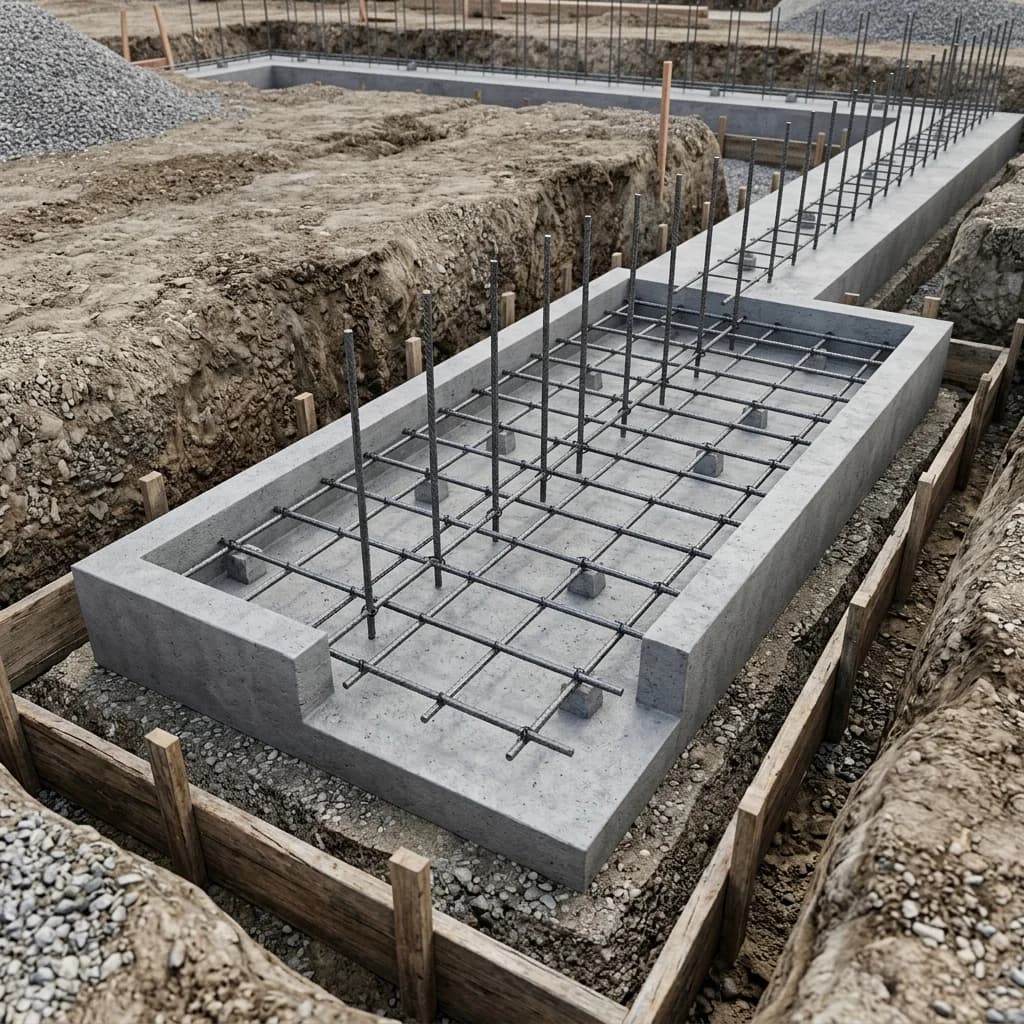
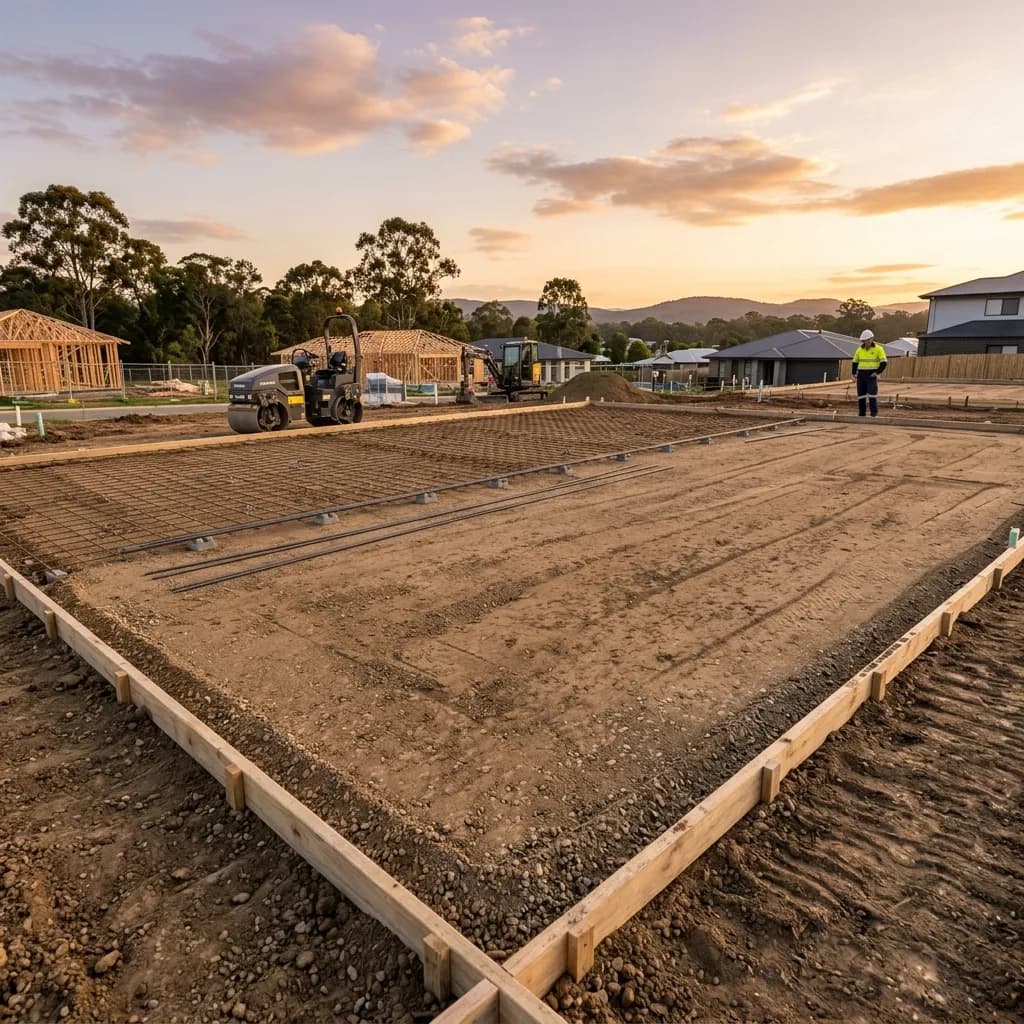
Soil Compaction: Why it Matters for Slabs
Learn why proper soil compaction is critical for concrete slabs, how it prevents foundation failure, and how to accurately calculate your soil volume needs.
When planning a concrete slab project, it is easy to focus entirely on the concrete itself—the mix ratio, the reinforcement, and the finish. However, the true strength of any concrete slab lies hidden directly beneath it. Soil compaction is the unsung hero of foundation work. Without a properly compacted base, even the strongest reinforced concrete will eventually crack, settle, or fail completely.
Understanding soil mechanics and taking the time to prepare your subgrade is non-negotiable for both DIYers and professional builders. In this comprehensive guide, we will explore what soil compaction is, why it is critical for your slabs, and how using a proper soil volume calculator can save your project from disaster.
What is Soil Compaction?
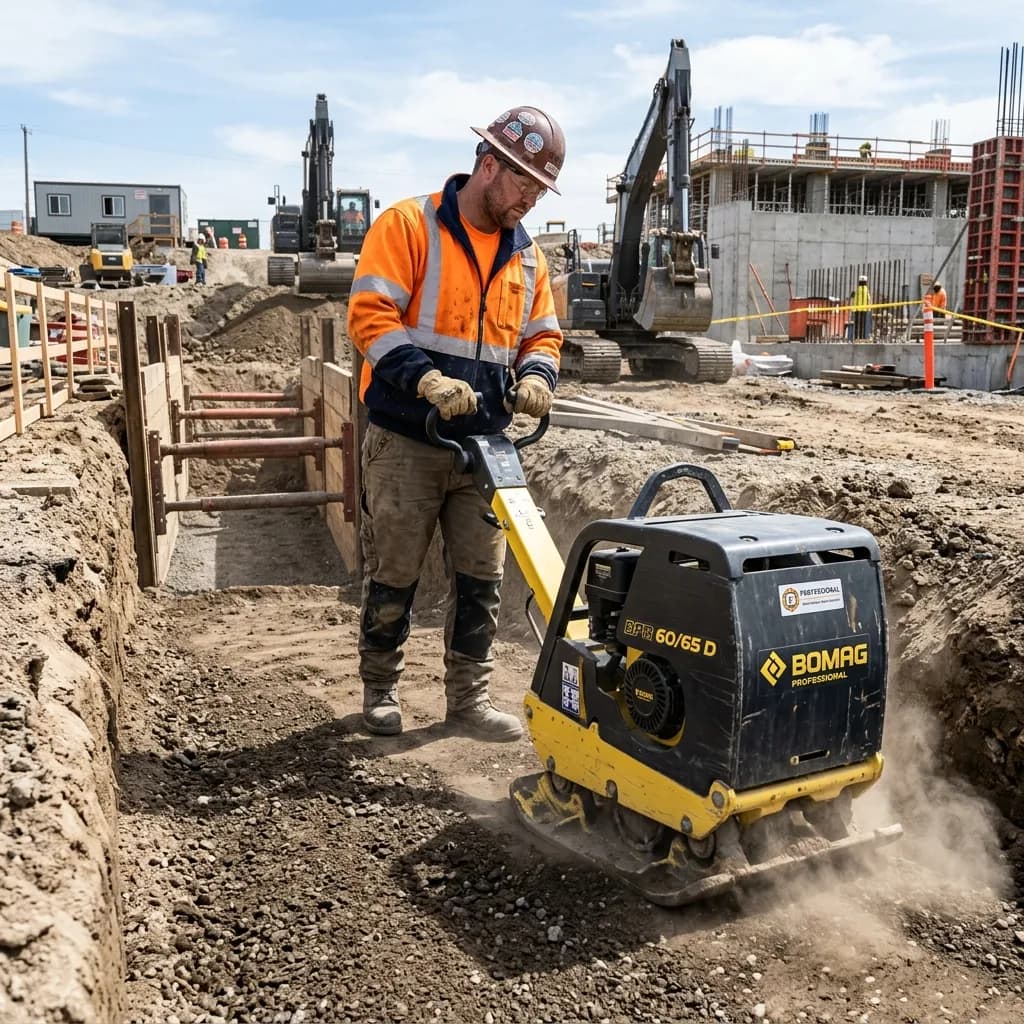
In simple terms, soil compaction is the process of applying mechanical pressure to soil to increase its density. In its natural state, soil contains countless microscopic air pockets and moisture voids. When heavy loads (like a concrete slab, walls, and roof) are placed on uncompacted soil, the weight forces those air and water pockets to collapse over time.
By using compaction equipment—such as a vibratory plate compactor or a jumping jack rammer—you forcefully squeeze the soil particles tightly together before construction begins. This mechanical effort mechanically removes the air voids, locking the dirt and gravel particles into a dense, solid matrix capable of bearing immense weight.
Why Compaction is Critical for Concrete Slabs
Concrete is incredibly strong under compression, but it is notoriously weak under tension. If the ground beneath a slab shifts, sinks, or washes away, the concrete is left unsupported. This lack of support forces the rigid slab to bridge a gap it wasn't designed to span, inevitably leading to structural failure. Here are the primary reasons you must prioritize compaction:
- Prevents Differential Settlement: If one side of a slab settles faster or deeper than the other, it creates immense shear stress. Compaction creates a uniform load-bearing surface so the entire slab is supported equally.
- Increases Load-Bearing Capacity: Dense soil can hold exponentially more weight than loose topsoil. A compacted base ensures the earth won't yield under the weight of vehicles, machinery, or the building itself.
- Reduces Water Infiltration: Loose soil absorbs water like a sponge, leading to frost heave in cold climates. Tightly compacted soil sheds water more effectively, keeping moisture away from the bottom of your concrete.
- Prevents Sinkholes and Washouts: Voids left in the soil can eventually cave in or wash away during heavy rain. Compacting the subgrade and gravel base eliminates these hidden dangers.
Checking Density Before You Pour
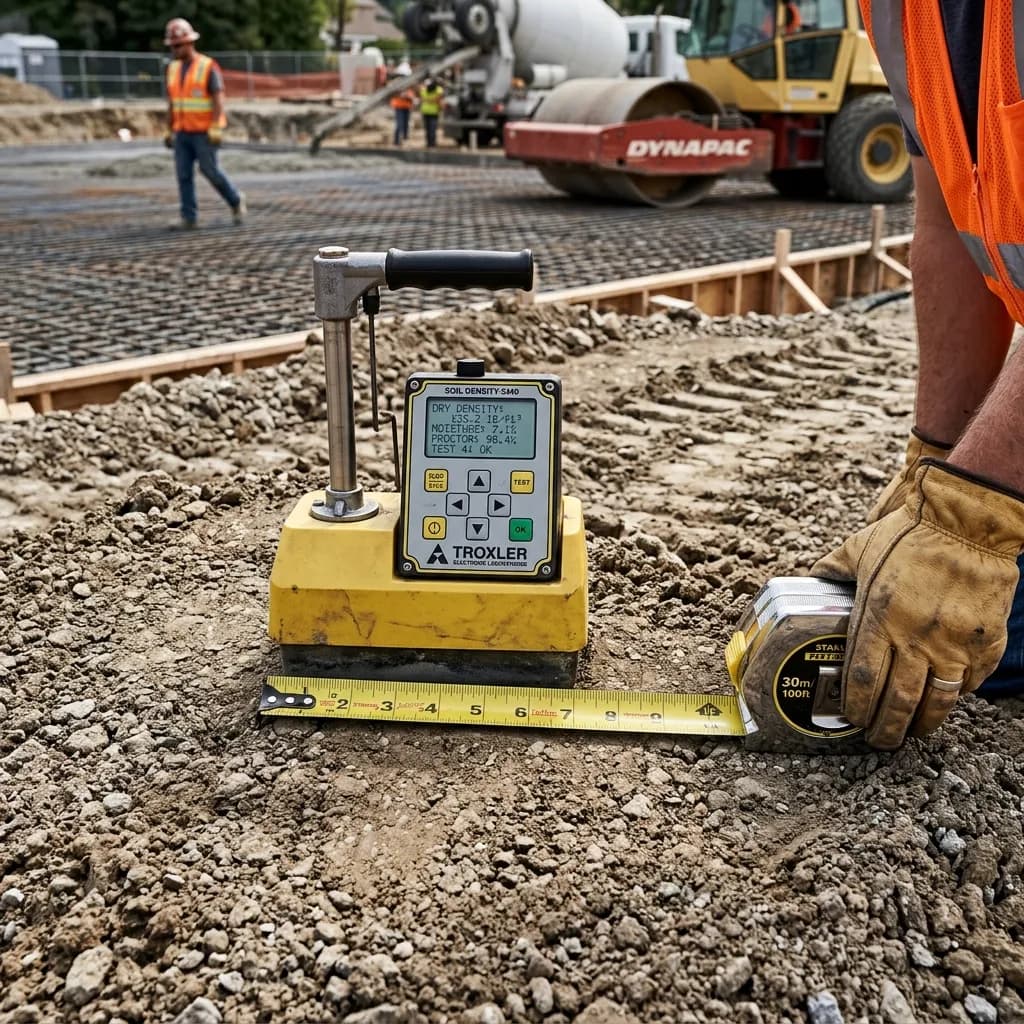
How do you know when you have compacted enough? In professional commercial construction, engineers use a nuclear density gauge to measure the exact compaction percentage against the soil's maximum dry density (often aiming for 95% to 98% compaction).
For residential projects, a simpler field test is often used. If you drive a fully loaded wheelbarrow or a vehicle over the compacted base and it leaves deep tire ruts, the soil is still too loose. A properly compacted gravel or dirt base should feel as hard as an asphalt road beneath your boots. When you strike it with a heavy digging bar, the bar should bounce off with a sharp ring, rather than sinking in with a dull thud.
The Anatomy of a Perfect Slab Base
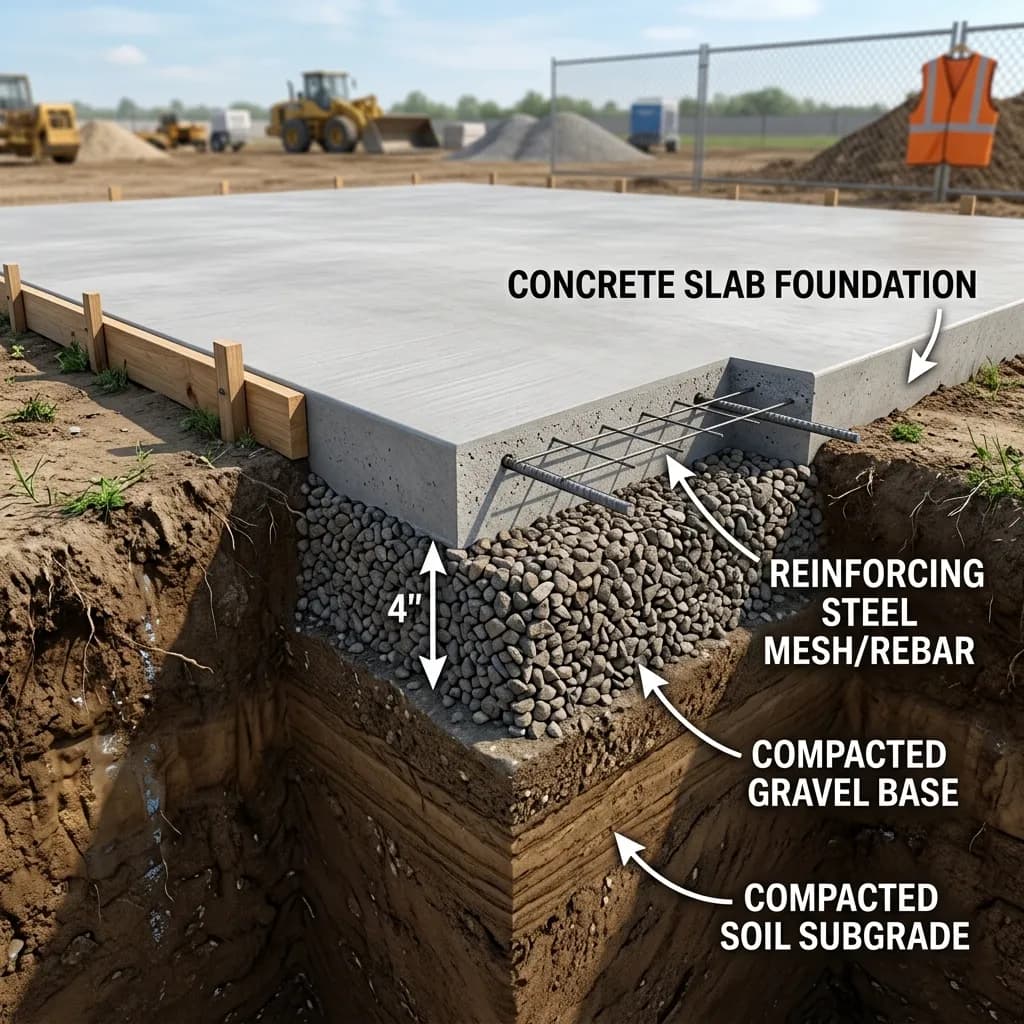
A high-quality foundation is built in carefully managed layers. You cannot simply dig a hole, throw in some dirt, and pour concrete. A standard robust slab system consists of:
- The Subgrade: This is the native, undisturbed soil at the bottom of your excavation. It must be cleared of all organic matter (roots, topsoil) and compacted thoroughly.
- The Subbase (Gravel): A layer of crushed stone or gravel (typically 4 to 6 inches thick) is added over the subgrade. This layer provides drainage and a capillary break, preventing ground moisture from wicking up into the concrete. This gravel must also be compacted in "lifts" (layers) of no more than 2 to 3 inches at a time.
- The Moisture Barrier: A thick plastic vapor barrier (like 6-mil or 10-mil polyethylene) is placed over the compacted gravel.
- The Concrete Slab: Finally, the reinforced concrete is poured over the prepared base.
Planning Your Materials: The Soil Volume Calculator
One of the biggest mistakes builders make is underestimating the amount of material required to build a solid base. When you order gravel or fill dirt, you are buying it in a loose, "fluffed" state. However, when you run a heavy plate compactor over that material, it shrinks considerably.
This shrinkage phenomenon is known as the compaction factor. Depending on the type of soil or gravel, you may lose 15% to 30% of your material volume during the compaction process. If you calculate your materials based purely on the dimensions of your hole, you will run short and have to pause construction to order more material—which is frustrating and expensive.
To avoid this, you must use a specialized tool. Before ordering your base materials, run your project dimensions through a professional soil volume calculator (like our Foundation Tool). A robust calculator will ask for your length, width, and depth, but more importantly, it will factor in the specific compaction shrinkage rate of your chosen material.
By taking the time to understand soil mechanics, properly compacting every layer of your base, and utilizing smart estimating tools, you guarantee that your concrete slab will remain level, crack-free, and structurally sound for decades to come.
References
Standards and data referenced in this guide. Building codes are adopted locally, so verify requirements with your jurisdiction before you build.
- Concrete design and construction standards — American Concrete Institute
- IRC 2021, Chapter 4 — Foundations (footing sizing, §R403) — International Code Council
About the Author

Hassan Baloch — An experienced Civil Engineer with more than a decade in building and structural planning. Hassan rigorously verifies the mathematical formulas and code compliance of our estimation tools to guarantee absolute precision. Contact our team for technical inquiries.