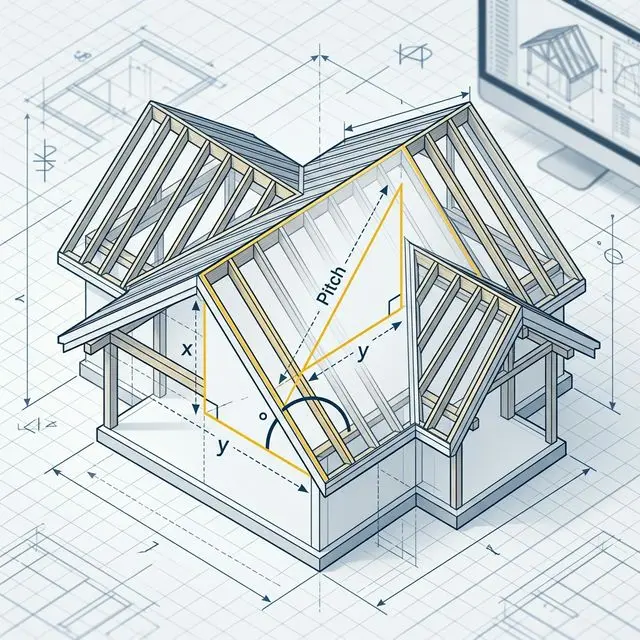
Roof Pitch vs. Angle: The 2026 Guide
Confused about roof pitch versus angle? Understand the mathematics of roofing geometry, learn how to measure it, and accurately use our roof pitch calculator for your next project.
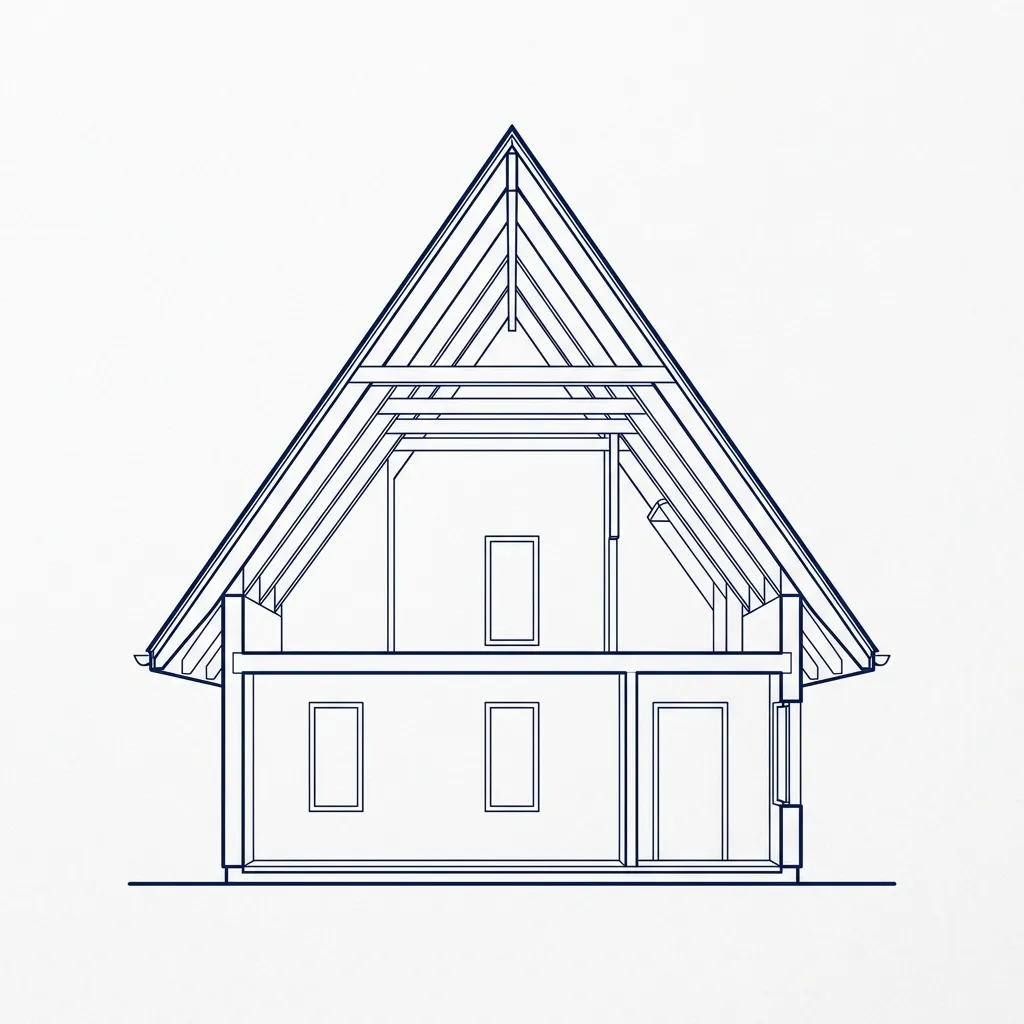
Whether you are an aspiring DIY homeowner planning a shed, or a seasoned contractor estimating an entire neighborhood's roofing material, there is one mathematical concept that dictates the success of your build: Roof Pitch.
But if you've ever stood at a lumber yard confused by fractions like "4/12" and degrees like "18.4°", you are not alone. The construction industry uses two distinct languages to describe the same physical slope: Pitch and Angle. Mixing them up when ordering shingles, calculating truss spans, or submitting permit drawings can lead to catastrophic framing errors, code violations, and compromised structural integrity.
In this comprehensive 2026 guide, we are going to break down the exact mathematics of roofing. We'll show you how to measure an existing roof safely, translate those numbers between the two systems, understand how pitch dictates your choice of roofing materials, and use a professional roof pitch calculator to ensure your project estimates are razor-sharp. By the end of this guide, you will understand roofing geometry better than the average salesperson.
Demystifying Roof Pitch (The Rise and Run)
In North American carpentry and architectural planning, a roof's steepness is almost exclusively referred to as its "Pitch". This is not a degree. It is a ratio of vertical rise compared to a standard horizontal run.
Specifically, the construction standard dictates the "run" as a constant 12 inches (or one foot). Therefore, the "rise" is simply the number of inches the roof goes up vertically for every 12 inches it goes sideways horizontally toward the center ridge. This creates a fraction-like notation.
- 2/12 to 3/12 Pitch: Nearly flat. You will barely notice a slope when walking on it. Commonly used for modern commercial buildings and arid-climate homes.
- 4/12 to 8/12 Pitch: The American standard. These are considered "moderate" or low-slope roofs. They shed water efficiently but are still relatively safe to walk on for a confident DIYer without extreme harness gear.
- 9/12 to 12/12 Pitch (and beyond): Very steep. A 12/12 roof rises exactly 12 inches for every 12 inches it runs, creating a perfect 45-degree geometric angle. These slopes strictly require professional roof jacks and fall-arrest systems.
Common Architectural Styles by Pitch
The pitch of your roof isn't just about shedding rain; it is a fundamental defining characteristic of your home's architectural identity. The steepness dictates the visual weight of the roof compared to the facade of the house.
The Ranch Style (3/12 to 5/12): Mid-century modern and sprawling ranch homes utilize low-slope roofs to emphasize a long, horizontal silhouette. These pitches create deep, wide eaves that shade the windows during hot summers, making them iconic in the American Sunbelt.
The Colonial and Craftsman (6/12 to 9/12): Traditional two-story homes rely on a moderate pitch. It provides an excellent balance: it's steep enough to easily shed heavy rain and moderate snowfall, yet it provides enough vertical clearance to create usable attic space for storage or HVAC ductwork.
The Victorian and Tudor (10/12 to 14/12): These historic styles feature incredibly steep, dominant roofs. The high pitch was originally a functional necessity to shed heavy European snows before modern waterproofing existed, but it also creates the dramatic, soaring aesthetic associated with classic storybook architecture.
Why the 12-inch constant?
Why use pitch instead of degrees in the field? Because the 12-inch constant makes it incredibly easy for a framing carpenter using a specialized steel framing square to quickly mark out rafter "birdsmouth" cuts on raw lumber without ever calculating trigonometry. It's an elegant, centuries-old system designed for the physical constraints of wood.
How Pitch Dictates Roofing Materials
Perhaps the most critical reason you must know your roof pitch is that it determines what waterproofing materials are legally and functionally permitted by building codes. Not all roofing is created equal, and gravity plays a massive role in how water moves across a surface.
Flat and Low-Slope (0/12 to 2/12): You cannot use standard asphalt shingles on a flat roof. Water moves too slowly, and capillary action will pull water upward under the shingles, rotting your roof deck. These roofs require seamless membranes like EPDM (rubber), TPO (thermoplastic), or traditional built-up hot tar & gravel.
Low to Moderate Pitch (3/12 to 4/12): Asphalt shingles can be used, but building codes often require double-coverage underlayment (like applying two overlapping layers of 15-pound felt or installing an ice-and-water shield across the entire deck) to prevent wind-driven rain from blowing back up the slope.
Standard Pitch (4/12 and higher): This is the ideal zone for traditional 3-tab and architectural asphalt shingles, wood shakes, terra cotta tiles, and standing seam metal roofing. Gravity pulls the water down the slope faster than it can be blown upward by storms.
The Climate Factor: Snow Loads
If you live in a region that experiences harsh winters, roof pitch is a matter of structural survival. Snow is incredibly heavy. A single cubic foot of wet, compacted snow can weigh upwards of 20 pounds.
A low-pitch roof holds onto snow, forcing the wooden trusses and walls below to bear immense "dead loads." If the dead load exceeds the structural limit, the roof can collapse. A steeper pitch (8/12 or greater) utilizes gravity to shed the snow naturally, allowing it to slide off the shingles before dangerous weight accumulates. This is why A-Frame cabins (which often feature 18/12 to 24/12 pitches) are standard architecture in alpine environments.
Pitch vs. Angle: The Trigonometry Behind the Truss
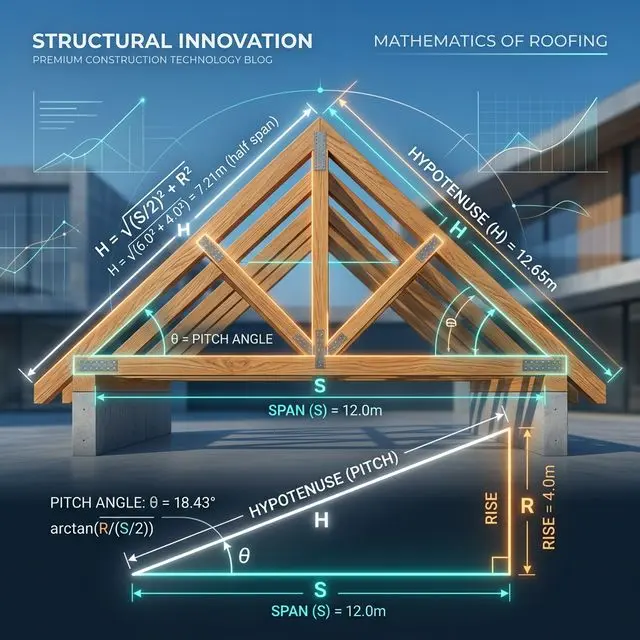
While framing carpenters prefer pitch, structural engineers, architects, and many European building standards often draw plans using Degrees (Angles). To convert a traditional pitch into an angle, we step into the realm of right-triangle trigonometry.
The slope of the roof creates a right triangle where the Rise is the opposite side and the Run (12) is the adjacent side. To find the angle (θ), we use the inverse tangent (arctan) function.
Calculating Roof Angle from Pitch
Where the Rise is the vertical inches per 12 inches of Run.
Example: For an 8/12 pitch, θ = arctan(8/12) ≈ 33.69°. You can bypass the manual math completely by using our built-in Roof Pitch Calculator.
How to Measure Pitch Like a Pro
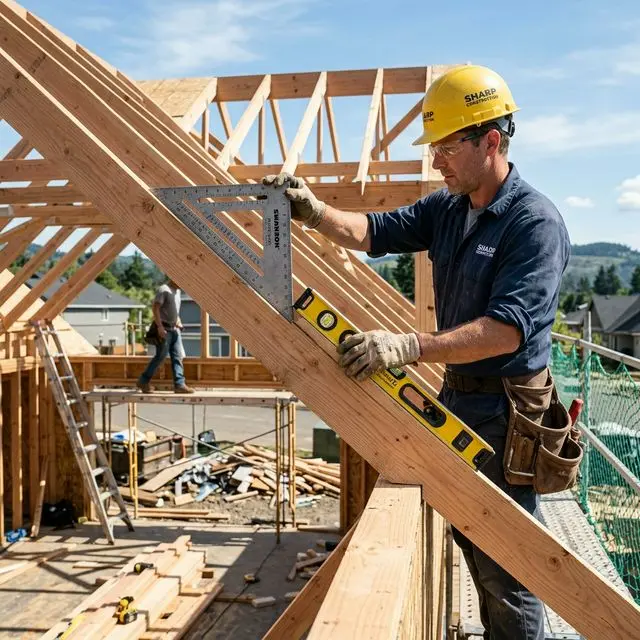
If you are repairing an existing roof, installing a skylight, or matching a home addition to the main structure, you must find the current pitch physically. There are two primary methods contractors use:
- From the Attic (The Safest Method): This method keeps you off a dangerous, slippery roof. Take a standard 12-inch or 24-inch bubble level and a tape measure into the unfinished attic. Hold the level perfectly horizontal against the bottom edge of an exposed roof rafter. Ensure the bubble is exactly centered. Measure straight up from the 12-inch mark on your level to the rafter above. That measurement in inches is your "rise".
- From the Roof Surface: If you do not have attic access, you must measure outside. Place the end of your 12-inch level against the shingles, level it horizontally, and measure straight down from the other end to the roof deck. Warning: Multiple layers of curled, aging shingles can skew this measurement slightly, throwing off your geometry.
The Hidden Cost of a Steep Roof
Before deciding to design a towering 12/12 roof for aesthetic reasons, understand that pitch drastically affects your project budget in two unexpected ways:
First, Surface Area Multipliers. A steep roof covers significantly more surface area than a flat roof over the exact same house footprint. A 1,000 square foot house with a 12/12 roof requires over 1,414 square feet of decking, underlayment, and shingles.
Second, Labor Danger Pay. Roofers work significantly faster on a 4/12 roof because they can walk safely without gear. Once a roof hits an 8/12 pitch, the crew must install temporary toe-boards, wear full-body harnesses tied off to ridge anchors, and move much slower. This can easily result in a 20% to 40% increase in pure labor costs simply due to the danger involved.
Why You Need a Roof Pitch Calculator
Finding the basic pitch is only step one. The real reason pitch matters is because it unlocks the Multiplier Factor required for calculating total roof square footage and rafter length (the hypotenuse).
As mentioned, the steepness creates greater surface area. Calculating this multiplier manually using Pythagorean theorems is tedious, slow, and highly prone to human error. A single math mistake on a rafter length can result in thousands of dollars of wasted custom-ordered lumber.
By dropping your home's total horizontal width (the span) and your calculated pitch into our dedicated roof pitch calculator, you instantly receive the true rafter length, the specific pitch multiplier, and the exact dimensional square footage needed. It converts your pitch to an angle instantly, taking the guesswork out of your material orders.
Don't let a simple geometry mistake result in a short-shipment of shingles or a failed inspection. Measure safely, run your specific numbers, and build with absolute confidence!
References
Standards and data referenced in this guide. Building codes are adopted locally, so verify requirements with your jurisdiction before you build.
- IRC 2021, Chapter 8 — Roof-Ceiling Construction (rafter framing, §R802) — International Code Council
- Engineered wood panel span ratings and sheathing guidance — APA – The Engineered Wood Association
About the Author

Zain Sheikh — With over 10 years of hands‑on experience in residential and commercial construction, Zain ensures that every calculator on our platform accounts for real‑world variables, waste factors, and site conditions. Contact our team for technical inquiries.
Related Calculators
Roof Pitch Calculator
Determine roof pitch, angle, rafter length, and area.
Lumber & Wood Calculator
Calculate board feet and total lumber piece counts.
Area & Perimeter Calculator
Calculate area and perimeter for various shapes.