
The Physics of a Staircase: Rise, Run, and Stringer Math
Deep dive into the geometry of safe stairs, proving the math behind our Staircase Calculator for DIYers and pros.
Walking up a flight of stairs is something we do without thinking—until the stairs are slightly "off." Then, we trip. The human brain is so attuned to the rhythm of climbing that a deviation of even 1/4 inch in riser height can cause a fall.
This isn't just a matter of comfort; it's a matter of Staircase Geometry Math and strict building codes. When you use our Staircase Calculator, the numbers it generates are based on centuries of architectural physics.
1. The 7-11 Rule: The Geometry of a Safe Step
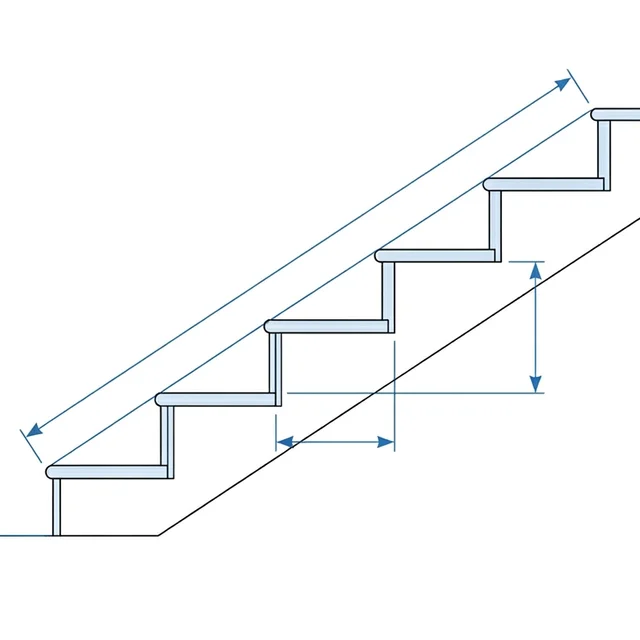
Every staircase is defined by two numbers: the Rise (vertical height of a step) and the Run (the horizontal depth).
In the United States and Canada, the most common standard is the "7-11 Rule." This suggests a maximum riser height of 7 inches and a minimum tread depth of 11 inches. Why these numbers? Because they match the average adult's natural gait and provide enough surface area for a foot to land securely without catching a heel on the way down.
The "Rule of 25"
A classic carpenter's rule is that (2 × Rise) + Run should equal between 24 and 25 inches. This proportion ensures that the effort required to lift your leg is balanced by the horizontal distance you move forward.
Rule of 25 (comfort proportion)
2. Squaring the Stringer: Pythagorean construction
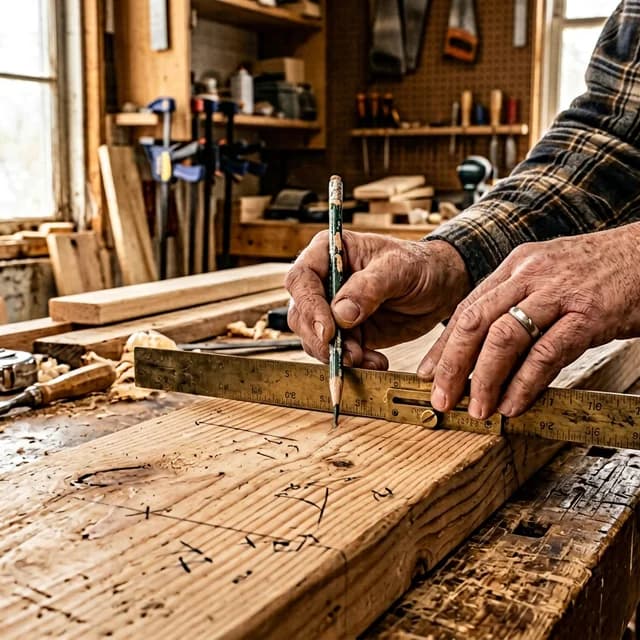
The Stringer is the backbone of the stairs—the diagonal piece of lumber (usually a 2x12) that supports the treads. To calculate its total length, we use the Pythagorean Theorem:
Stringer length (Pythagorean theorem)
However, real-world layout is done using a Framing Square. A carpenter sets brass "gauges" on the square at the specific rise and run numbers and "steps" the square down the board.
3. The "First Step" Adjustment
The most common amateur mistake in staircase building happens at the very bottom of the stringer.
When you add a 1-inch thick tread to the top of your stringer cutouts, every step gets 1 inch higher. This works fine for all middle steps. But at the very bottom, the tread sits on the floor, adding height to the first step. To fix this, you must "drop the stringer" by cutting off a thickness equal to the tread material from the very bottom of the board.
4. Headroom and Safety Loops
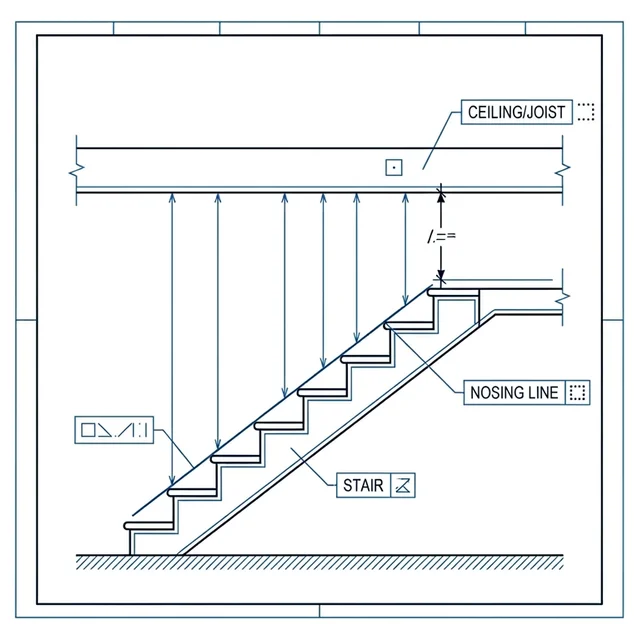
Geometry isn't just about the steps you walk on; it's about the space above them. Most building codes require a minimum of 6 feet 8 inches (80 inches) of vertical headroom measured from a line connecting the stair nosings to the ceiling.
Without this clearance, you create a "head-knocker"—a major safety hazard that will fail any inspection and make the stairs feel claustrophobic.
5. Where the code differs from the 7-11 rule
The 7-11 rule is a comfort guideline, not the law. The International Residential Code is looser: it allows a maximum riser of 7¾ inches and a minimum tread of 10 inches. A flight built to exactly 7-11 is comfortable and passes easily; a flight built to the code limits passes but feels steeper.
The requirement that actually fails inspections is uniformity. Within a single flight, the tallest riser may not exceed the shortest by more than 3/8 inch, and the same tolerance applies to tread depth. This is why you never lay out stairs one step at a time — you divide the total rise once and carry that decimal through every mark.
Two more that catch people out: where a tread is less than 11 inches deep, you need a nosing projecting between ¾ and 1¼ inches, and any landing must be at least 36 inches in the direction of travel.
6. A worked example: 109 inches of total rise
Say your finished floor-to-finished floor height is 109 inches. Start by testing the fewest risers you can get away with:
- 14 risers: 109 ÷ 14 = 7.786 inches. That exceeds the 7¾ inch maximum by about 1/32 of an inch, and it fails.
- 15 risers: 109 ÷ 15 = 7.267 inches. This passes with room to spare.
That near-miss is the whole reason to do the division before cutting anything. Fifteen risers means fourteen treads, because the top floor surface acts as the final tread.
| Value | 10 in treads | 11 in treads |
|---|---|---|
| Riser height | 7.267 in | 7.267 in |
| Total run (14 treads) | 140 in | 154 in |
| Stringer length | 177.4 in (14 ft 10 in) | 188.7 in (15 ft 9 in) |
| Rule of 25 check | 24.53 — comfortable | 25.53 — slightly long |
Both options are code-compliant, but they need different lumber. The 10 inch tread version fits on a 16 foot 2x12 with offcut to spare; the 11 inch version needs the full 16 feet once you account for the plumb cut at the top and the seat cut at the bottom. Check your stock length before you commit to the deeper tread, and remember the floor space: the difference between the two layouts is 14 inches of hallway.
Precision Matters
Staircase building is often considered the "final exam" for framing carpenters because there is zero room for error. If your total rise is 100 inches and you have 14 steps, each riser must be exactly 7.142 inches.
Don't guess with a tape measure. Use our Staircase Calculator to get the exact decimals and layout points you need for a safe, code-compliant, and comfortable flight of stairs.
References
Standards and data referenced in this guide. Building codes are adopted locally, so verify requirements with your jurisdiction before you build.
- IRC 2021, Chapter 3 — Building Planning (stairway rise and run, §R311.7) — International Code Council
About the Author

Zain Sheikh — With over 10 years of hands‑on experience in residential and commercial construction, Zain ensures that every calculator on our platform accounts for real‑world variables, waste factors, and site conditions. Contact our team for technical inquiries.