Lumber Waste Factors: Don't Underorder
Learn why a proper lumber waste percentage is crucial for any framing project. Understand common wood defects, geometric waste, and how to avoid costly mid-project shortages.
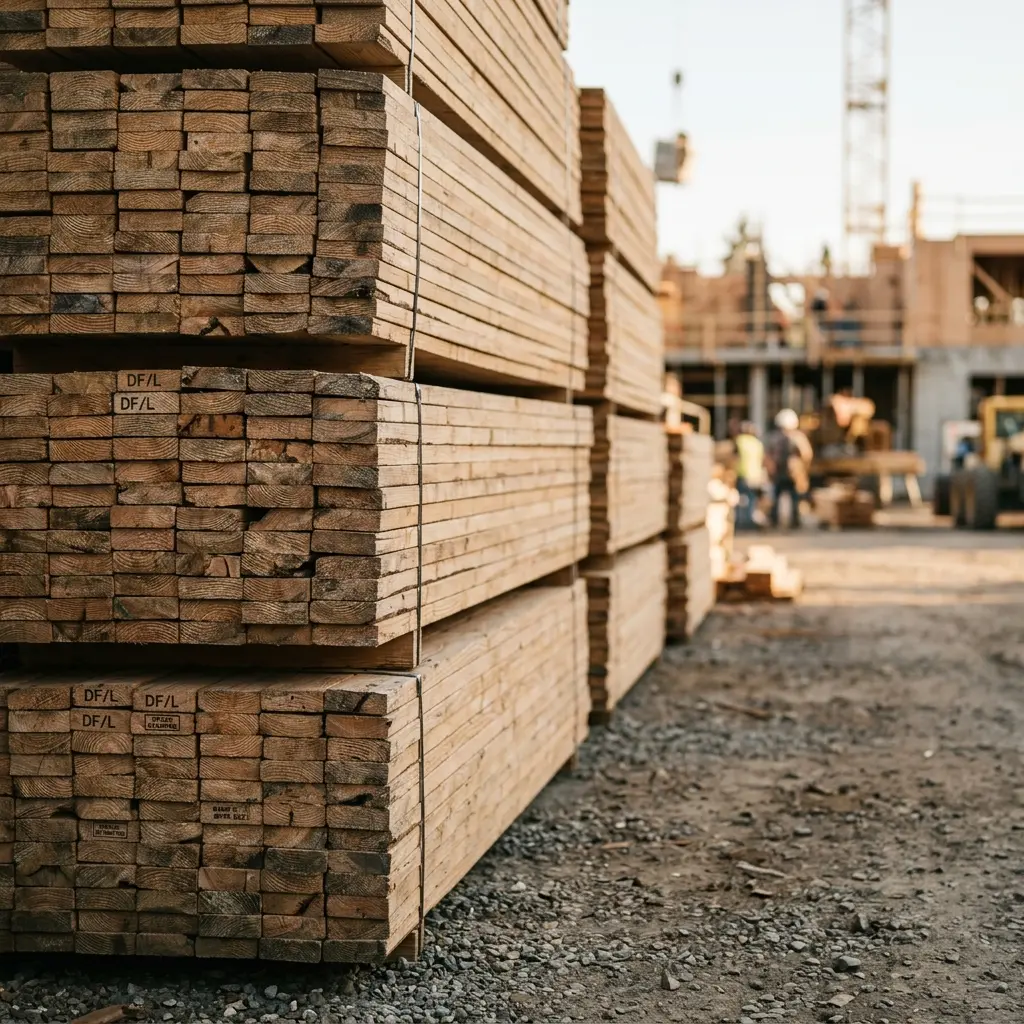
There are few moments on a construction site more frustrating than running out of materials when you are only a few boards away from finishing a project. This scenario, commonly known as a "short load," forces you to stop working, make an extra trip to the lumber yard, and often pay for second delivery fees. It is an expensive mistake that completely kills your project's momentum.
The main reason this happens is because DIYers and even some professionals try to order the exact mathematical amount of wood they need. However, building a successful frame requires understanding the primary rule of material estimation: you must calculate a lumber waste percentage.
In a perfect world, every piece of wood would be flawlessly straight, and every cut would use the entire board without any leftover scraps. Unfortunately, because wood is a natural material and houses are complex shapes, this is never the case. Let's break down the hidden factors that consume your lumber and why adding a waste percentage is non-negotiable.
The Reality of Natural Wood Defects
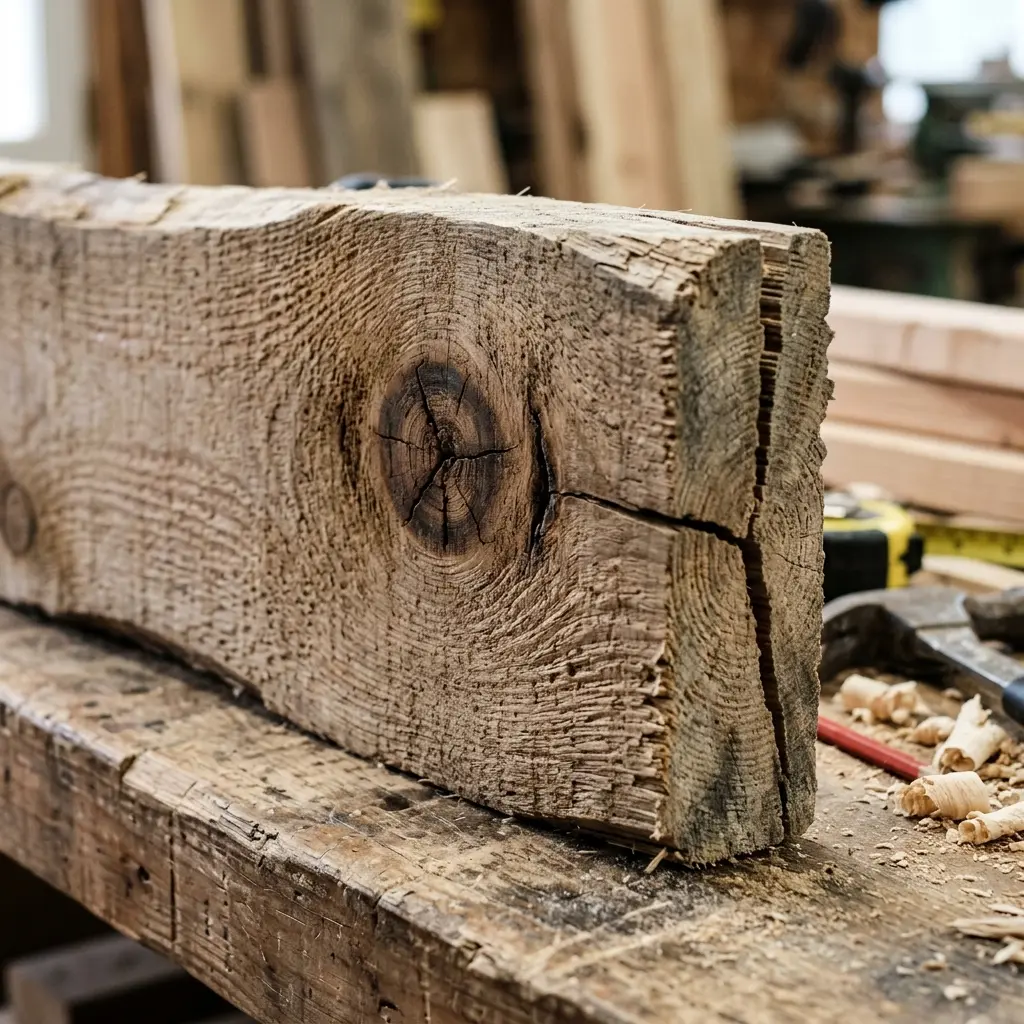
Unlike steel or concrete, wood is grown, not manufactured. When lumber is milled from a tree, it inherently comes with natural imperfections. Even if you buy premium-grade framing lumber, you will still encounter boards that simply cannot be used for structural purposes.
When determining your lumber waste percentage, you must account for these three common defects:
- Knots and Voids: Large knots create weak points in a board. If a knot is located exactly where you need to make a structural cut or drive a critical fastener, you will have to cut that section out and throw it away.
- Bowing and Warping: As wood dries, it twists. A board that looked perfectly straight at the store might look like a banana two days later on your job site. A severely bowed stud cannot be used in a flat wall.
- Splits and Checks: The ends of lumber often dry out faster than the middle, causing the wood to split along the grain. You frequently have to trim a few inches off the end of a board just to get a clean, solid starting point.
Geometric Constraints and Offcuts
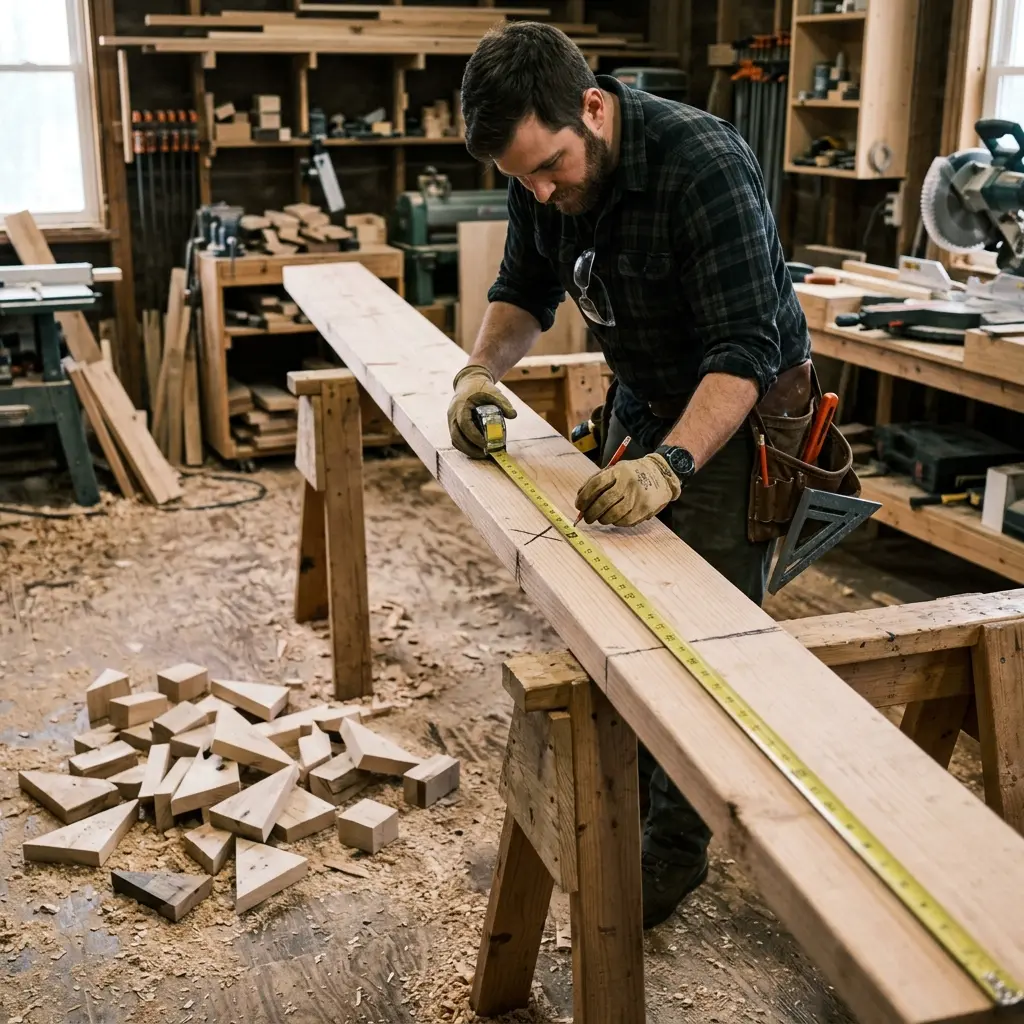
The second major reason you need a lumber waste percentage is due to geometric waste, commonly referred to as "drop."
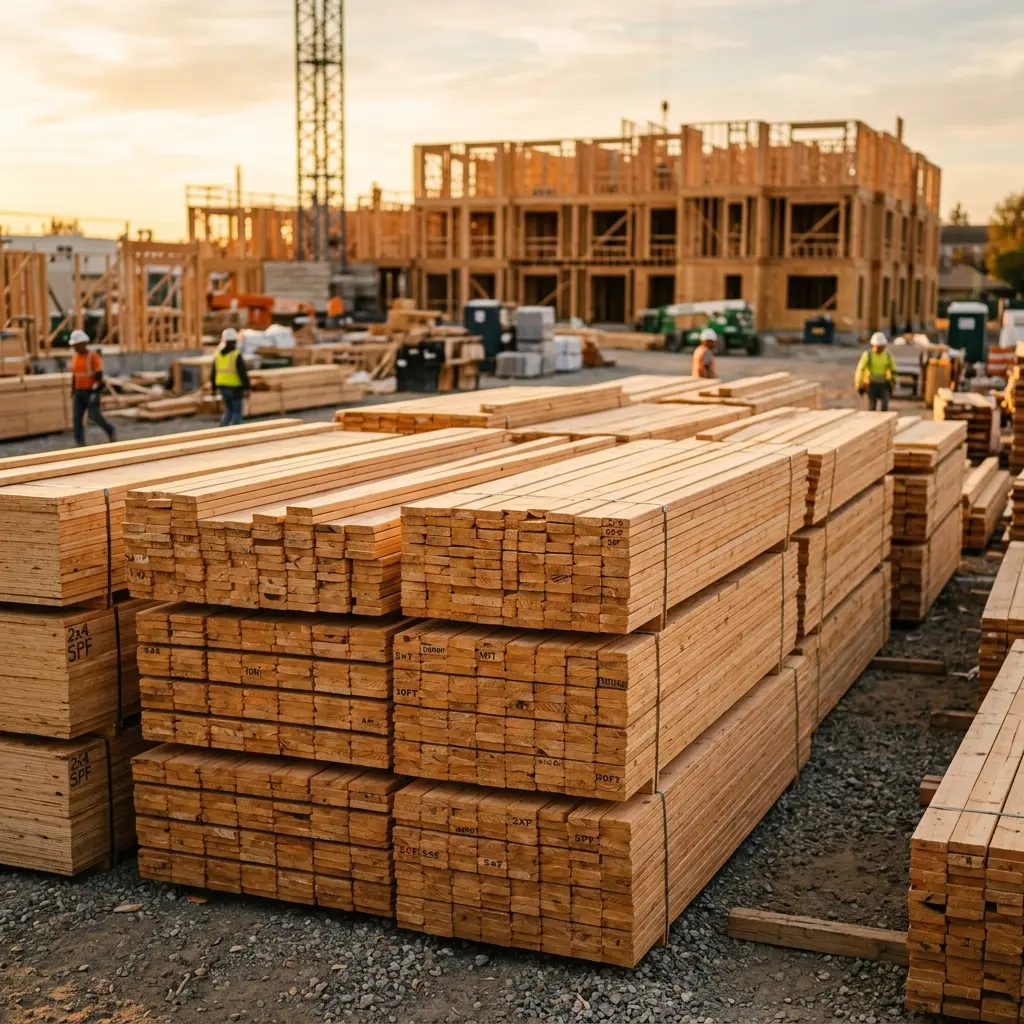
Lumber is sold in standard, even-numbered lengths like 8, 10, 12, or 16 feet. However, your house is rarely built perfectly to those numbers. If your architectural plans call for a 9-foot wall stud, you are forced to buy a 10-foot board. When you cut that board down to 9 feet, you are left with a 1-foot scrap.
That 1-foot piece is 10% of your purchased material, and it is almost entirely useless for the rest of your framing project. It goes straight into the scrap pile. If you do this for 100 studs, you have just wasted the equivalent of 10 entire boards. This is why mathematical formulas alone will always leave you short; they do not account for the unusable offcuts.
The Standard Lumber Waste Percentage
As a universal rule of thumb, you should always add 10% to 15% to your total calculated lumber order. For standard straight walls, 10% is usually sufficient. For complex roofs, angled walls, or high-end finish carpentry where matching the wood grain is important, push that number to 15% or even 20%.
How to Estimate Your Final Order
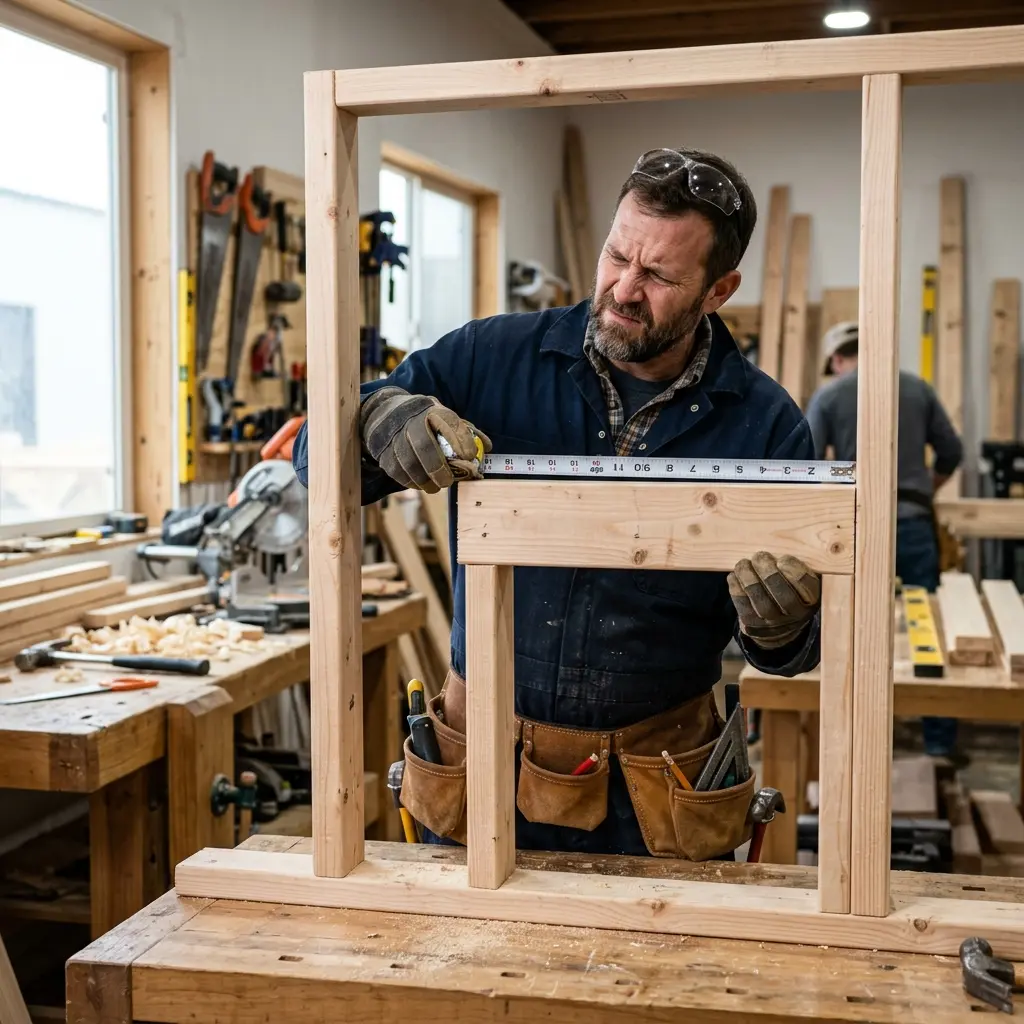
Calculating your final lumber order is a simple two-step process:
- Find the Net Amount: Calculate the exact mathematical amount of wood needed for your walls, floors, or roof.
- Apply the Waste Factor: Multiply that gross number by 1.10 (for 10% waste) or 1.15 (for 15% waste).
Total Lumber Order Calculation
To find the total amount to purchase, multiply your calculated need (Qtheory) by one plus your waste percentage (W).
Example: If you need 250 studs mathematically, ordering with a 10% waste factor means you need: 250 × 1.10 = 275 studs.
It might feel painful to spend money on wood that you know will become scraps, but it is deeply necessary. The cost of 25 extra studs is far less than the cost of stopping a project for a whole day because you tried to buy the exact number.
Make Your Material Estimation Simple
Manually figuring out the net amount of wood and then doing the math for your waste multiplier can be tedious. Fortunately, we have built professional tools to do the heavy lifting for you.
When you use our Lumber & Wood Calculator, you can simply input the dimensions of your project, and the tool will allow you to easily select a waste percentage right in the dashboard. It will automatically pad your order correctly, ensuring you buy enough material to handle defaults, mistakes, and offcuts without breaking your budget. Always remember: when setting up a site, it is much better to have a few boards left over than to be a few boards short!
References
Standards and data referenced in this guide. Building codes are adopted locally, so verify requirements with your jurisdiction before you build.
- Span tables and the National Design Specification for Wood Construction — American Wood Council
- Engineered wood panel span ratings and sheathing guidance — APA – The Engineered Wood Association
About the Author

Zain Sheikh — With over 10 years of hands‑on experience in residential and commercial construction, Zain ensures that every calculator on our platform accounts for real‑world variables, waste factors, and site conditions. Contact our team for technical inquiries.