How to Calculate Stair Stringers Fast
Learn how to handle stair stringer math and build safe, reliable stairs quickly using our easy-to-use Stair Calculator.
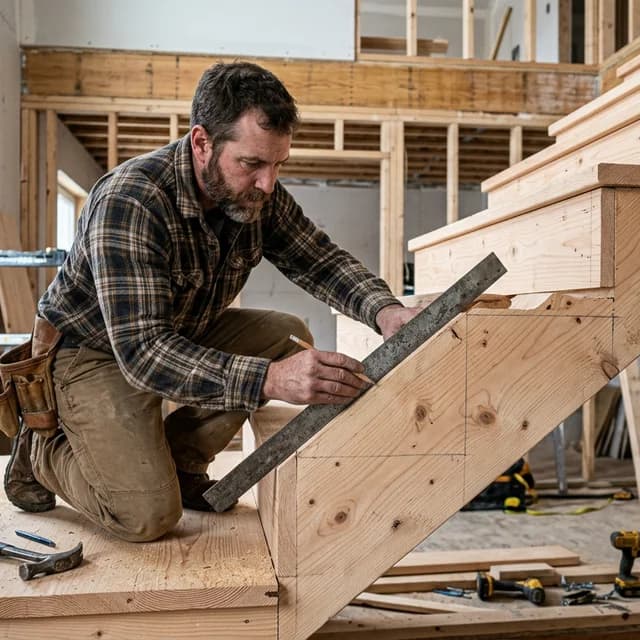
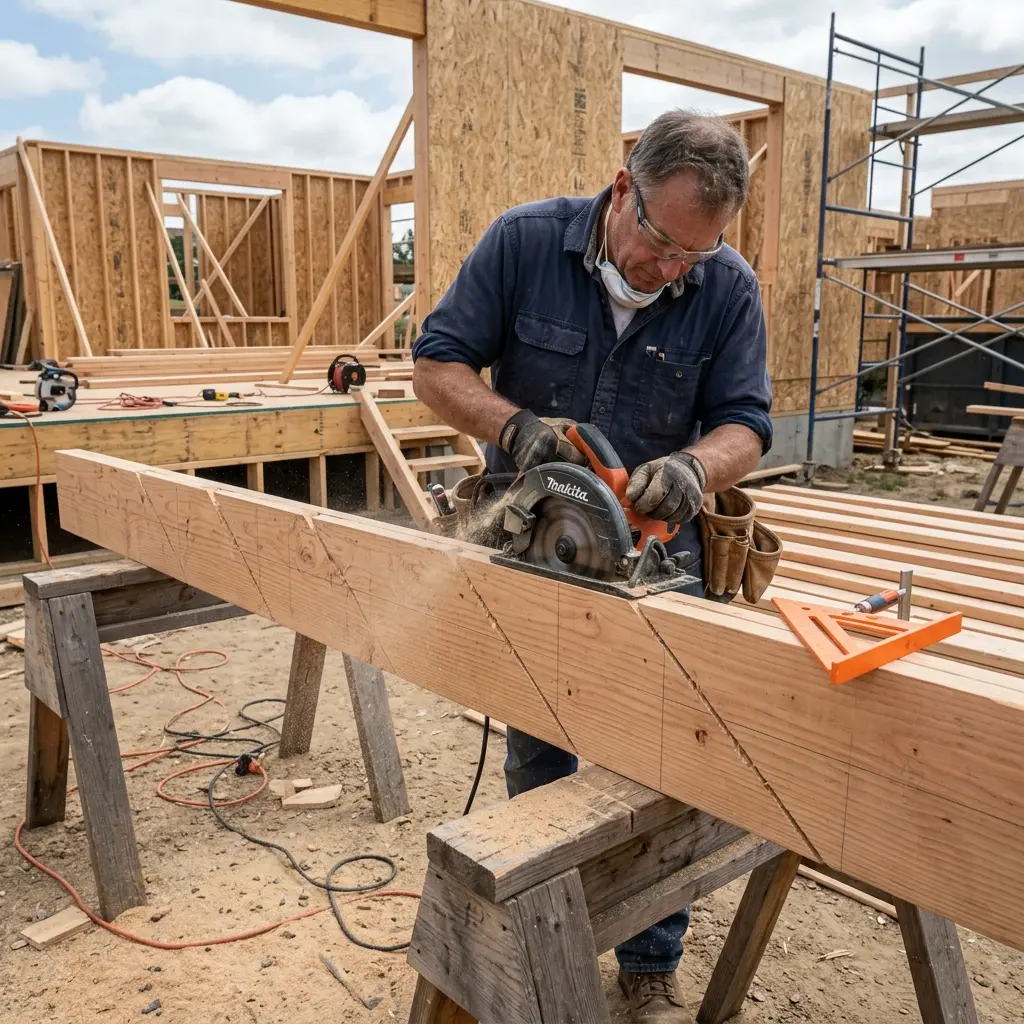
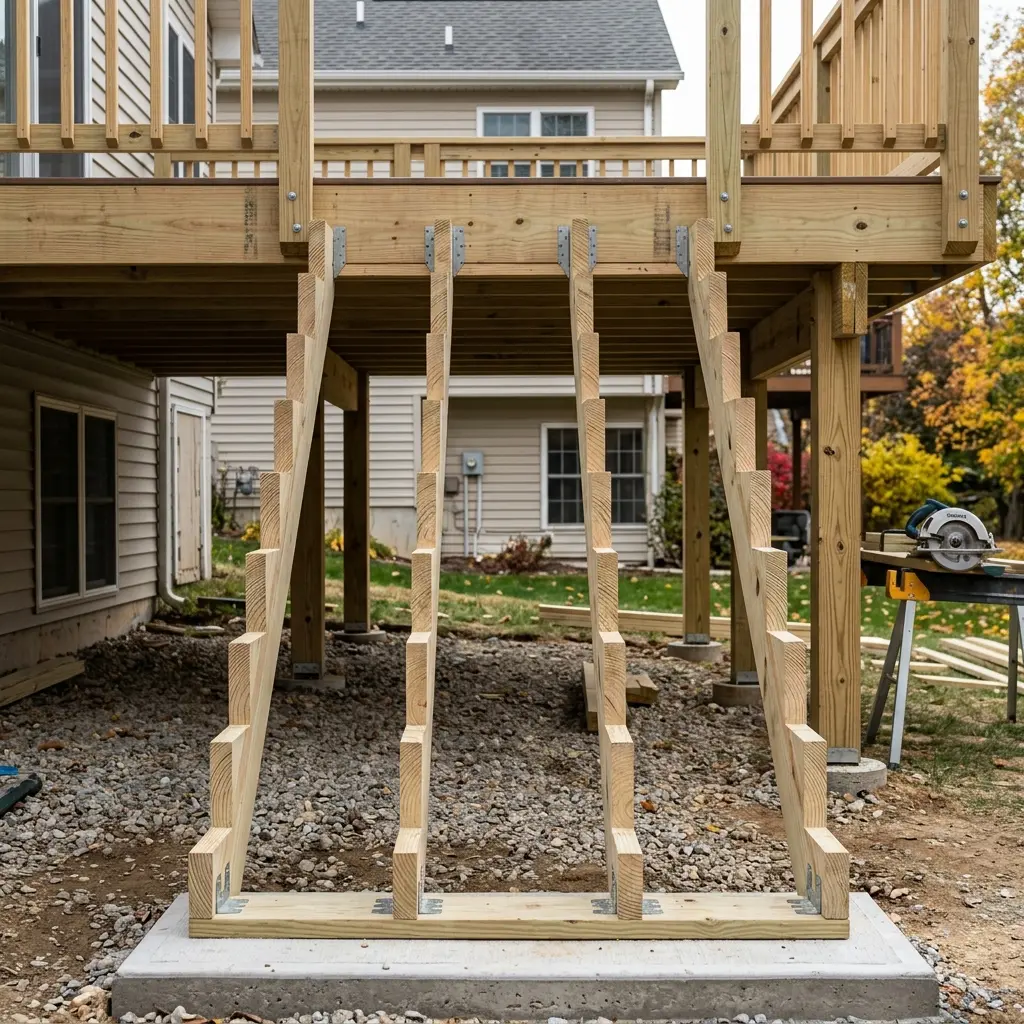
Building a staircase might seem like a complicated project, but it is actually highly rewarding once you understand the basic concepts. The most important part of any staircase is the stringer. The stringers are the angled side boards that support the weight of the stairs and hold the flat steps (treads) and vertical boards (risers) in place.
If you get the stair stringer math wrong, your stairs could be unsafe, uneven, or simply uncomfortable to walk on. Fortunately, calculating the correct sizes does not have to be difficult. In this complete guide, we will show you how to calculate stair stringers fast, what measurements to focus on, and how to use our Stair Calculator to save time and avoid mistakes.
Safety Warning
Always check your local building codes (like the 7/11 rule) before cutting lumber. A stair math error can lead to a structural hazard.
Understanding the Key Measurements
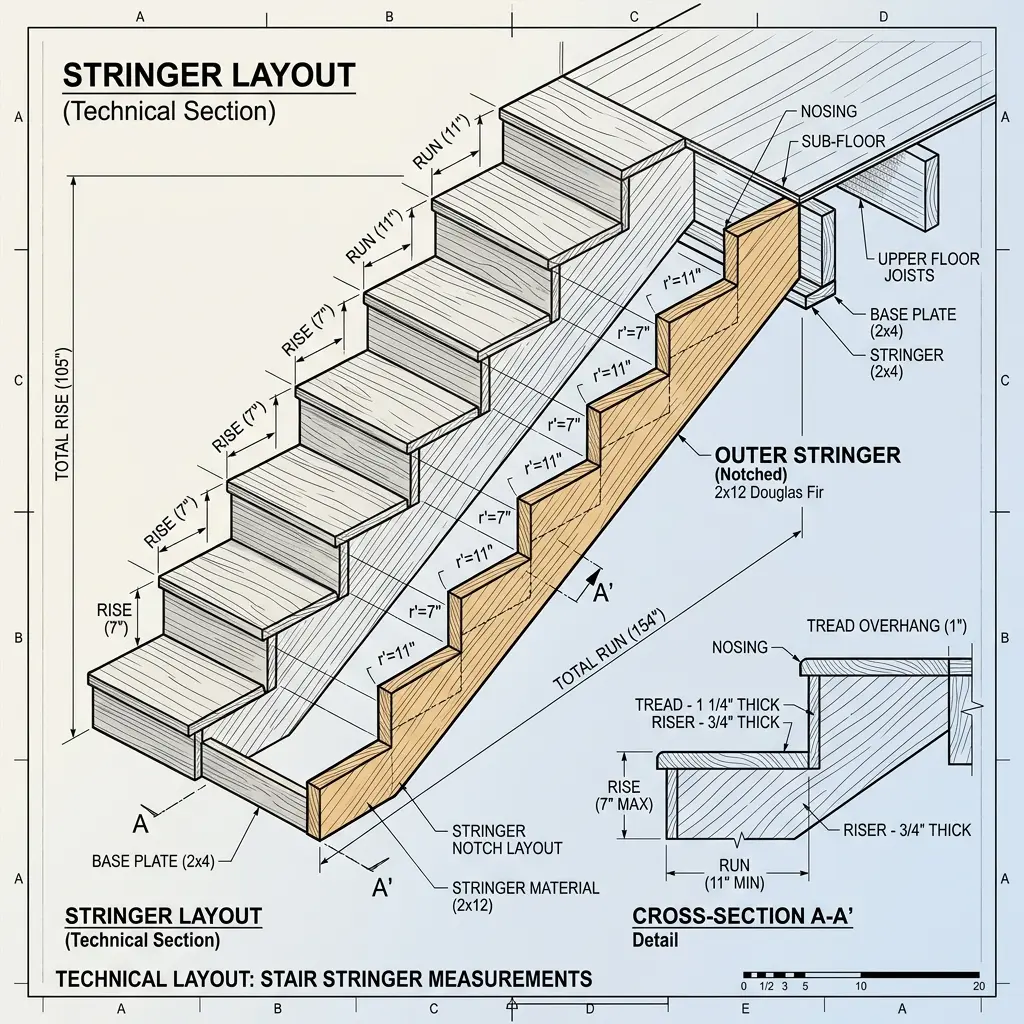
Before you make a single cut, you need to understand the three main measurements that control stair stringer math:
- Total Rise: This is the total vertical height from the lower floor to the exact top floor where the stairs will connect. You must measure this in a perfectly straight, vertical line.
- Individual Rise: This is the height of each step. For comfort and safety, most building codes require the individual rise to stay near 7 inches. If your steps are too high, they become exhausting to climb.
- Individual Run (Tread Depth): This is the horizontal depth of each step where you place your foot. A safe and standard run is usually around 10 to 11 inches.
When drafting the stringer, the individual rise and the run form a 90-degree angle notch in the 2x12 lumber. These notches dictate the exact shape of your staircase.
The Secret to Stair Stringer Math
The core of stair stringer math revolves around finding out exactly how many steps you need so they all have the exact same height. A deviation of even a fraction of an inch can cause a tripping hazard.
The Step Calculation Rule
To find the number of steps, you divide your Total Rise by the ideal step height (usually 7 inches). You then round that number up or down to find the nearest whole number of steps. Finally, you divide the Total Rise by that whole number to find your perfect, exact individual step height.
For example, if your deck is 38 inches off the ground:
38 inches ÷ 7 = 5.42 steps. We round this to 5 steps.
Next, we find the exact height for each of those 5 steps:
38 inches ÷ 5 = 7.6 inches per step.
How to Mark Your Stringer Quickly
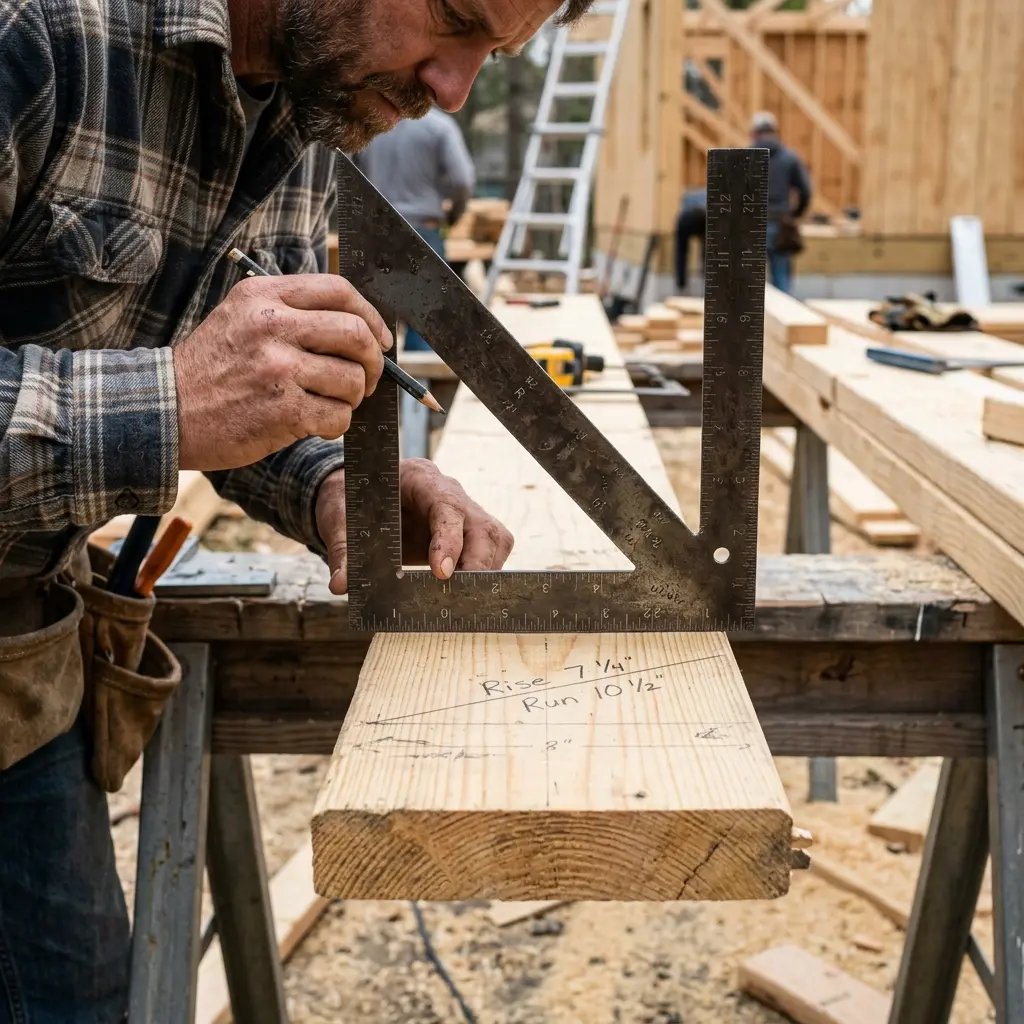
Once you have your exact rise and run measurements, it is time to transfer them to your lumber. The best tool for this job is called a framing square.
- Set Your Markers: You can use small, inexpensive brass attachments called "stair gauges" on your framing square. Attach one gauge to the exact measurement of your rise on the shorter edge, and another gauge to the measurement of your run on the longer edge.
- Trace the Steps: Lay the square against the un-cut 2x12 board so that both brass gauges are touching the edge of the wood. Draw a pencil line along the outside of the square. This marks your first step's rise and run.
- Slide and Repeat: Slide the square down the board so that the rise line of your next step starts exactly where the run line of your previous step ended. Keep moving down the board until you have traced all of your required steps.
The Crucial Bottom Cut
There is one final piece of stair stringer math that often catches beginners off guard, known as "dropping the stringer."
When you eventually add your flat tread boards (which are typically 1-inch thick) on top of the cut stringer, it raises the height of every single step by 1 inch. Because the staircase moves as a single unit, this extra inch cancels out across the middle steps. However, the very bottom step will now be 1 inch too tall compared to the rest!
To fix this, you must cut an amount equal to the thickness of your tread material off the very bottom of the stringer where it touches the ground. This simple adjustment ensures every step from the concrete to the top deck is perfectly identical.
Fast Track Your Project with Our Calculator
Doing the stair stringer math by hand is a great skill to learn, but doing it manually on the job site takes time and opens the door to costly mistakes. Cutting a stringer wrong means wasting a very expensive piece of 2x12 lumber.
If you want to skip the complex math and get straight to building, visit our Stair Calculator. Just enter your Total Rise, and the tool will instantly run all the math for you. It will provide the exact measurements for your individual rise, your total horizontal run, the total length of the 2x12 board you need to buy, and even account for material thickness.
With the right tools and a solid plan, creating a professional and safe staircase is easier than ever. Grab your framing square, run your numbers in the calculator, and start cutting with confidence!
References
Standards and data referenced in this guide. Building codes are adopted locally, so verify requirements with your jurisdiction before you build.
- IRC 2021, Chapter 3 — Building Planning (stairway rise and run, §R311.7) — International Code Council
- Span tables and the National Design Specification for Wood Construction — American Wood Council
About the Author

Zain Sheikh — With over 10 years of hands‑on experience in residential and commercial construction, Zain ensures that every calculator on our platform accounts for real‑world variables, waste factors, and site conditions. Contact our team for technical inquiries.