
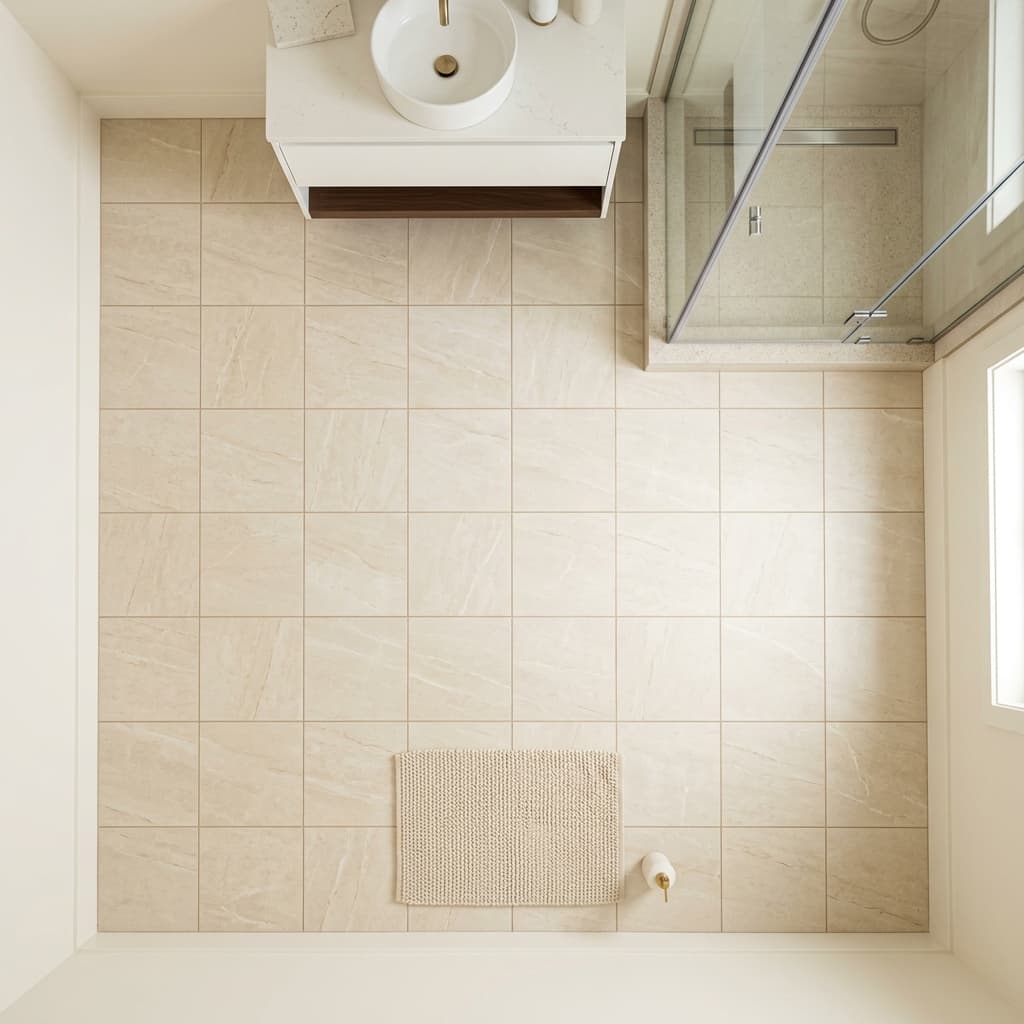
How Many Tiles for a 10x10 Bathroom?
Planning a bathroom remodel? Learn exactly how many tiles you need for a 10x10 bathroom floor, how tile size affects the count, and how to use a tile floor calculator for a perfect estimate.
A 10x10 bathroom is one of the most common sizes in residential homes. Whether you are renovating a master bathroom, updating a guest bath, or finishing a basement, the very first question on every homeowner's mind is: how many tiles do I actually need?
Ordering too few tiles means your project grinds to a halt while you wait for a backorder—and if your tile is from a specific dye lot, the new batch might not even match. Ordering too many is a waste of money. The sweet spot lives somewhere in between, and finding it requires a bit of math, knowledge of tile sizes, and an understanding of waste factors.
In this complete guide, we will walk you through every step of calculating your tile needs. We will cover the basic math, explain how tile size changes everything, break down grout lines and waste, and show you how to use a professional tile floor calculator to get your material order exactly right the first time.
Step 1: Calculate the Total Floor Area
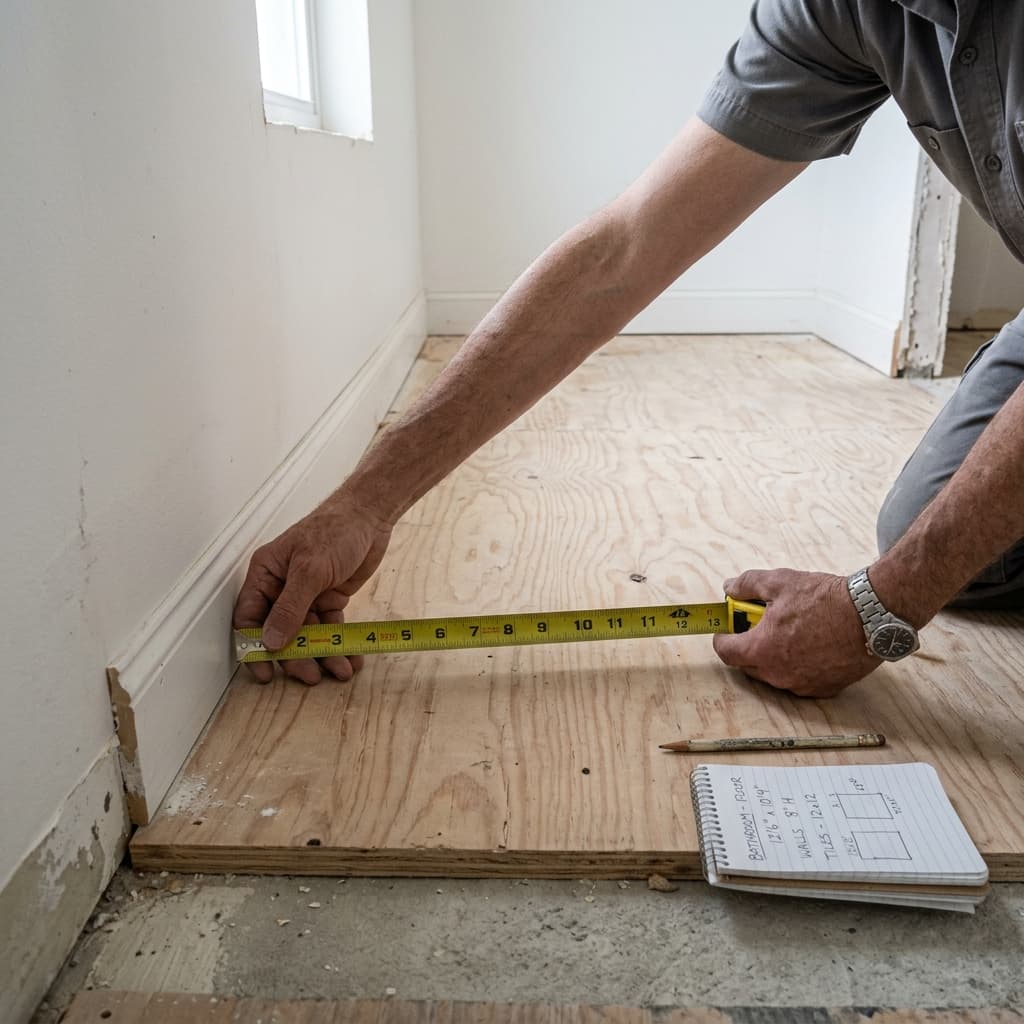
Before you can figure out how many tiles to buy, you need to know exactly how much floor space you are covering. For a standard 10x10 bathroom, the math starts out straightforward:
Floor Area Formula
Where L is the length and W is the width of the room, both measured in feet.
Example: 10 ft × 10 ft = 100 square feet.
Sounds simple, right? However, most bathrooms are not perfectly empty squares. You need to consider the footprint of your vanity, toilet, and any built-in cabinets. In most cases, professionals tile the entire floor before the fixtures are installed. This approach is stronger, looks cleaner, and makes future fixture replacements much easier.
If your bathroom has an unusual shape—like an L-shaped layout or an alcove for the tub—break the space into simple rectangles, calculate each section separately, and add them together. Our Area & Perimeter Calculator can help you find the exact total for irregular shapes.
Pro Tip: Always Measure Twice
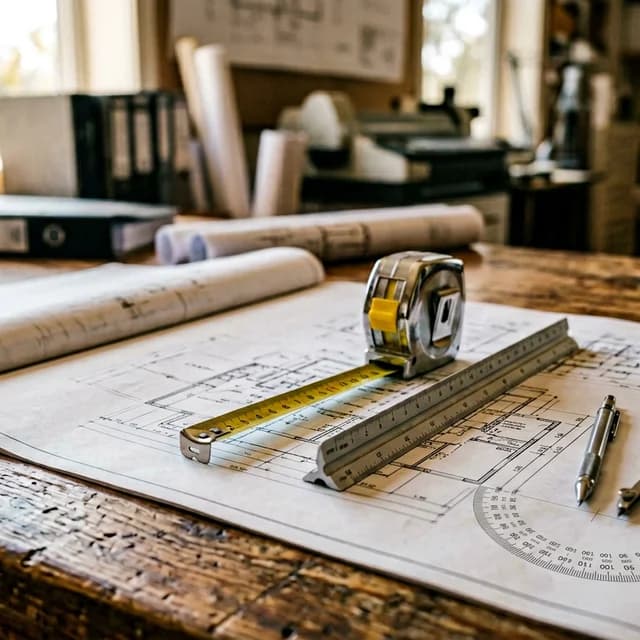
Do not rely on architectural plans or the measurements from an old listing. Walls shift over time, and framing is rarely perfectly square. Take a physical tape measure into the room and measure from the exact face of one wall to the opposite wall. Do this at both ends of the room. If the numbers differ, use the larger number to avoid being short.
Step 2: Choose Your Tile Size
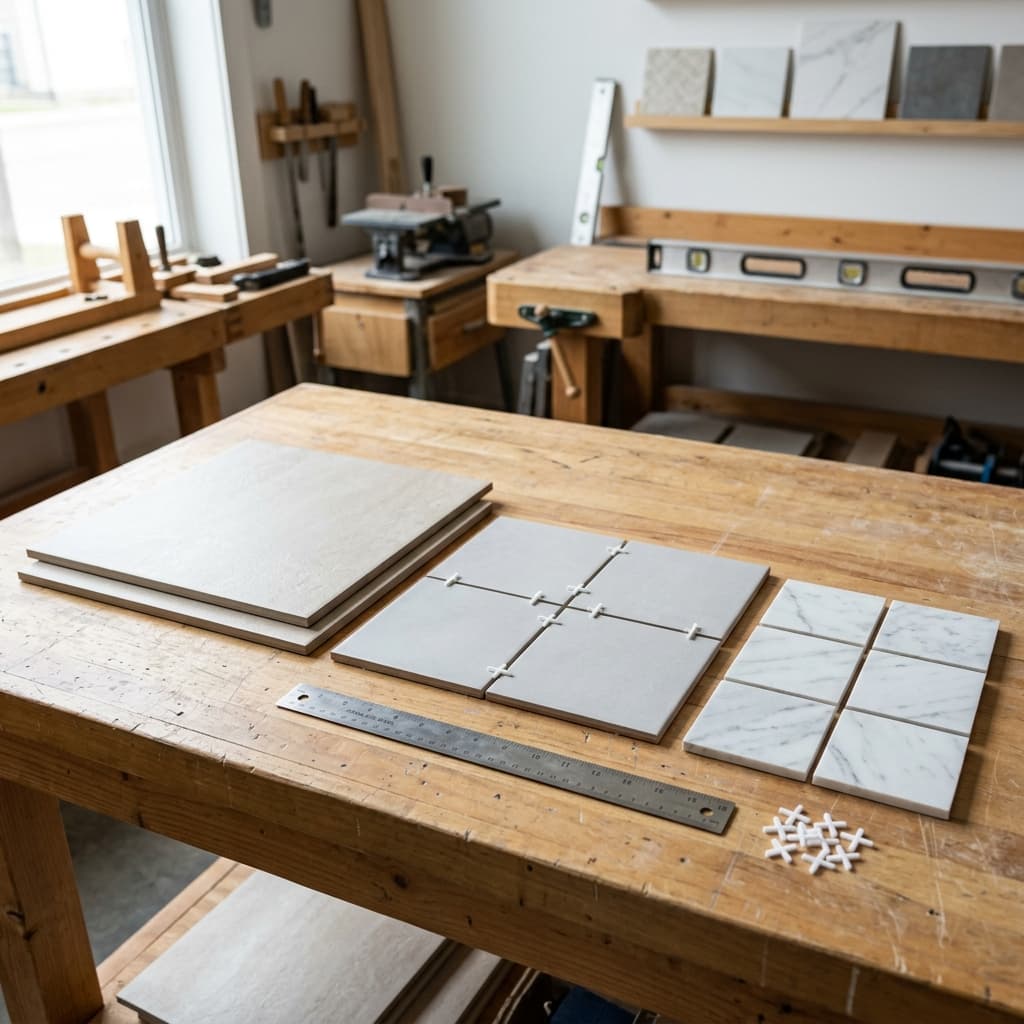
This is where tile estimation gets interesting. The size of the individual tile you choose has a massive impact on how many pieces you need to buy and how much waste you will generate. Floor tiles for bathrooms generally come in the following standard sizes:
- 6×6 inches (0.25 sq ft each): Classic, traditional look. Great for small spaces and detailed patterns but requires more grout lines.
- 12×12 inches (1.0 sq ft each): The most popular bathroom floor tile. A perfect balance between visual appeal and ease of installation.
- 12×24 inches (2.0 sq ft each): Modern, rectangular plank-style tiles. These create a sleek, contemporary aesthetic and make small bathrooms look larger.
- 18×18 inches (2.25 sq ft each): Large-format tiles that minimize grout lines. Excellent for open, minimalist bathroom designs.
- 24×24 inches (4.0 sq ft each): Extra-large format. Stunning in spacious bathrooms but generates more waste in small rooms due to the amount of cutting required along the edges.
Step 3: Calculate the Number of Tiles
Once you know the total area and the size of your chosen tile, the formula to find the tile count is beautifully simple. You divide the total floor area by the area of a single tile.
Tile Count Formula
Where Afloor is the total floor area in square feet, and Atile is the area of a single tile in square feet.
Example: 100 sq ft ÷ 1.0 sq ft (12×12 tile) = 100 tiles.
Here is a quick reference table showing how many tiles you need for a 10x10 bathroom (100 square feet) based on common tile sizes, before adding any waste factor:
| Tile Size | Area per Tile | Tiles Needed (Net) |
|---|---|---|
| 6×6 inches | 0.25 sq ft | 400 tiles |
| 12×12 inches | 1.0 sq ft | 100 tiles |
| 12×24 inches | 2.0 sq ft | 50 tiles |
| 18×18 inches | 2.25 sq ft | 45 tiles |
| 24×24 inches | 4.0 sq ft | 25 tiles |
As you can see, the difference is dramatic. Choosing a tiny 6×6 tile means you need 400 individual pieces, while a large 24×24 tile only requires 25 pieces. This is exactly why running the numbers through a tile floor calculator is so much easier than doing it by hand, especially when your room is not a perfect square.
Step 4: Account for Grout Lines
Many first-time tilers forget that tiles do not sit perfectly flush against each other. Between every single tile, there is a deliberate gap called a grout joint. This gap is filled with grout, the cement-like paste that seals the spaces and gives the floor its finished, waterproof appearance.
Standard grout joint widths for floor tiles are:
- 1/16 inch: Minimal grout line for rectified (precision-cut) tiles. Creates a near-seamless look.
- 1/8 inch: The most common choice for bathroom floor tiles. It provides a clean, professional look.
- 3/16 inch: Standard for natural stone tiles that have slight size variations.
- 1/4 inch: Used for rustic or handmade tiles where size differences are more pronounced.
So does the grout joint change the number of tiles you need? In practice, for a 10x10 bathroom, the impact is very small. With 12×12 tiles and a standard 1/8-inch grout line, the effective tile footprint becomes approximately 12.125 × 12.125 inches. Across 100 square feet, this might save you 1 or 2 tiles at most. However, for very large rooms or very thick grout lines, the difference becomes more significant.
Our tile floor calculator automatically accounts for grout spacing so you can trust the result down to the last tile.
Step 5: The Waste Factor (The Most Important Step)
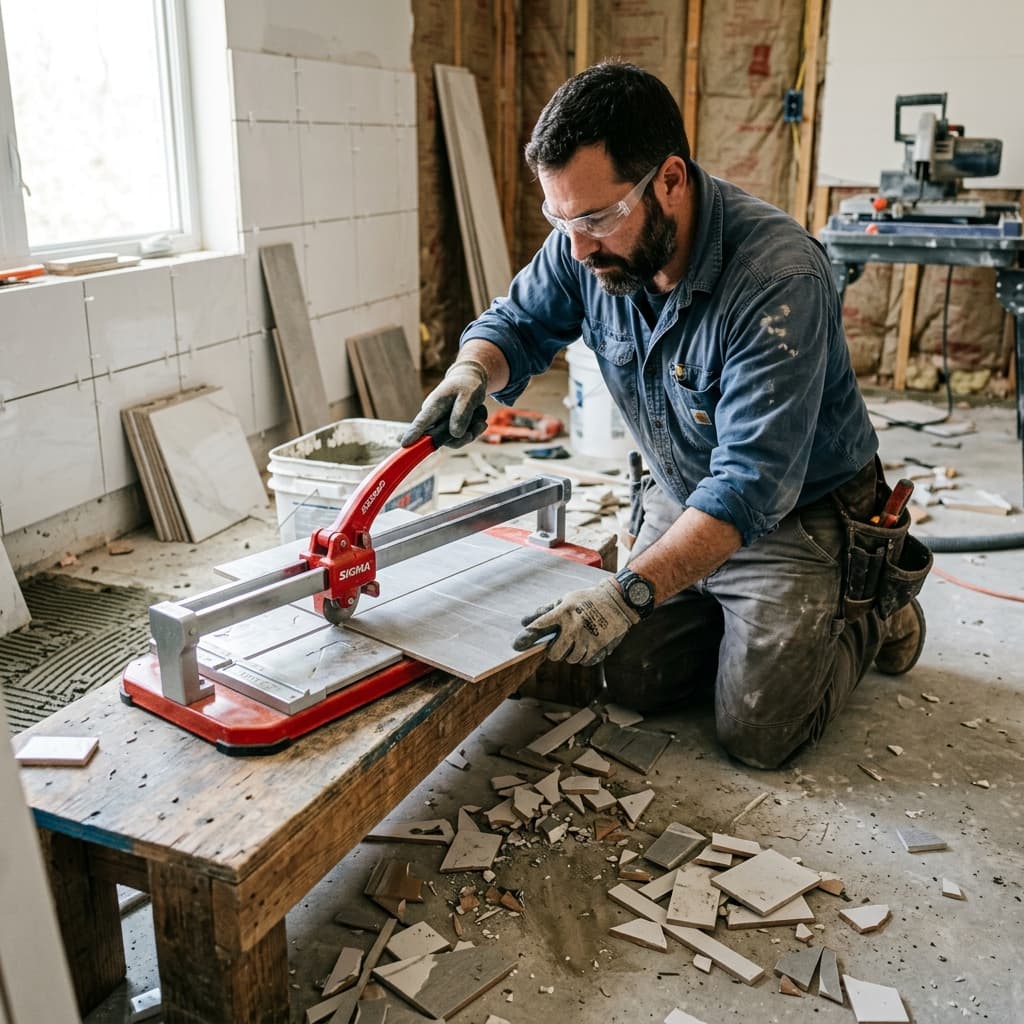
Here is the part that separates a successful tile project from an expensive disaster. The mathematical tile count from Step 3 assumes that every single tile you buy makes it onto the floor in perfect condition. In the real world, that never happens.
When you tile a bathroom, you will inevitably encounter several types of waste:
- Edge Cuts: Every row of tiles that meets a wall must be cut to fit. The leftover piece is usually too small to use elsewhere, especially in a compact 10x10 room.
- Fixture Cuts: Cutting notches and curves around the toilet flange, doorways, and floor vents requires careful work. A bad cut means a wasted tile.
- Breakage: Ceramic and porcelain tiles are brittle. Dropping one on concrete, snapping one unevenly on the cutter, or over-scoring a line can destroy a tile instantly.
- Factory Defects: Every box of tiles may contain 1 or 2 pieces with chips, cracks, or glaze imperfections from the manufacturer. These are unusable.
How Much Waste Should You Plan For?
For a simple, square room with a standard grid layout, add 10% waste to your tile count. For diagonal (45-degree) patterns, herringbone, or complex mosaic designs, increase the waste factor to 15% or even 20%. Diagonal layouts generate significantly more edge cuts because the tiles meet every wall at an angle.
Total Tile Order with Waste
Where Nnet is your calculated tile count, and W is the waste factor as a decimal (e.g. 0.10 for 10%).
Example: 100 tiles × 1.10 = 110 tiles to order for a standard grid layout.
Complete Tile Estimate for a 10x10 Bathroom
Let us put it all together with a real-world example. Suppose you have chosen the most popular option: a 12×12 inch porcelain tile in a straight grid pattern with a 1/8-inch grout line and a 10% waste factor.
- Floor Area: 10 ft × 10 ft = 100 square feet.
- Tiles Needed (Net): 100 sq ft ÷ 1.0 sq ft per tile = 100 tiles.
- Apply 10% Waste: 100 × 1.10 = 110 tiles.
- Convert to Boxes: If each box contains 10 tiles, you need 11 boxes.
If you prefer 18×18 tiles with a diagonal layout (15% waste):
- Floor Area: 100 square feet.
- Tiles Needed (Net): 100 ÷ 2.25 = 44.4, round up to 45 tiles.
- Apply 15% Waste: 45 × 1.15 = 51.75, round up to 52 tiles.
What About Bathroom Wall Tiles?
Many bathroom renovation projects include tiling the walls, especially in the shower area and around the tub surround. Wall tile estimation uses the exact same formula, but instead of the floor area, you calculate the wall square footage.
For a typical tub surround that is 5 feet wide and 8 feet tall on three walls, the area is approximately:
- Back wall: 5 ft × 8 ft = 40 sq ft
- Two side walls: 2 × (2.5 ft × 8 ft) = 40 sq ft
- Total surround area: approximately 80 sq ft
Add this to your floor tile count (or order them separately if you are using different wall and floor tiles) and apply the same waste factor. Use our Wall Square Footage Calculator to quickly find the exact surface area of all the walls you need to cover.
How Tile Layout Patterns Affect Your Order
The pattern you choose does not just change the look of your bathroom; it changes how many tiles you need. Here is a quick summary of popular layout patterns and their impact on waste:
- Straight Grid (Standard): Tiles are laid in a simple grid, aligned with the walls. This is the most efficient layout with the lowest waste—typically around 10%. It is perfect for beginners.
- Brick Bond (Offset/Staggered): Each row is offset by half a tile, similar to how bricks are laid. Waste is slightly higher, around 10% to 12%, because the offset creates small cuts at the ends of alternating rows.
- Diagonal (45-Degree): Tiles are rotated 45 degrees relative to the walls. This layout looks stunning and makes small bathrooms appear larger, but it generates significantly more waste—plan for 15% to 20%.
- Herringbone: Tiles are laid in a zigzag "V" pattern. This is the most material-intensive layout. It requires precise angled cuts at every wall boundary and can generate 20% or more waste.
Materials You Will Also Need
Tiles are the star of the show, but a professional bathroom floor requires several supporting materials. When building your shopping list, make sure to include:
- Thinset Mortar (Tile Adhesive): This is the cement-based adhesive that bonds the tile to the subfloor. For a 100 sq ft floor, plan on approximately 2 to 3 bags of 50-pound thinset.
- Grout: Pre-mixed or powder grout to fill the joints. For a 10x10 floor with 12×12 tiles and 1/8-inch joints, you will need roughly 10 to 15 pounds of sanded grout.
- Tile Spacers: Small plastic cross-shaped pieces that ensure every grout line is perfectly even.
- Cement Backer Board: In wet areas like bathrooms, tile should never be installed directly on plywood. A 1/4-inch or 1/2-inch cement backer board provides a moisture-proof, stable substrate.
- Waterproofing Membrane: For shower floors and areas directly exposed to water, a liquid or sheet membrane is applied over the backer board to prevent moisture from reaching the subfloor.
Use our Material Cost Calculator to estimate the total spend for all of these items combined.
Common Mistakes to Avoid
Even experienced DIYers fall into these traps. Keep these common mistakes in mind as you plan your bathroom tile project:
- Not Ordering Enough Extras: The number one mistake is ordering the exact mathematical amount. Always add your waste percentage. Once your tile is discontinued or the dye lot changes, a perfect match becomes impossible.
- Ignoring the Subfloor: Tiles are only as strong as the surface they sit on. A bouncy, uneven plywood subfloor will cause tiles to crack within months. Always use backer board in bathrooms.
- Skipping the Dry Layout: Before you apply a single drop of thinset, lay out a full row of tiles across the room without adhesive. This "dry fit" reveals whether you will end up with an ugly sliver of tile against one wall, which can be avoided by shifting the starting point.
- Mixing Boxes: Tiles from different production batches can have subtle shade differences. Always mix tiles from multiple boxes as you work across the floor. This distributes any slight color variation randomly, making it invisible to the eye.
- Forgetting Transition Strips: Where your new bathroom tile meets the hallway carpet or hardwood, you need a transition strip. Order this before you start, not after.
Use Our Tile Floor Calculator
Doing all of this math by hand—calculating area, converting tile sizes, factoring in grout spacing, adding waste percentages, and converting to boxes—is tedious and error-prone. A single miscalculation on a 10x10 bathroom could leave you 10 to 15 tiles short, derailing your project timeline.
Instead, use our professional-grade tile floor calculator. Just enter your room dimensions, select your tile size, specify the grout width, and choose your waste factor. In seconds, you will receive the exact tile count, the number of boxes to purchase, and the total square footage covered. It eliminates the guesswork and lets you order with confidence.
Whether you are a first-time homeowner tackling a weekend bathroom refresh or a professional contractor pricing out a multi-unit renovation, getting the tile count right is the foundation of a beautiful, stress-free installation. Measure carefully, plan your layout, account for waste, and let the calculator handle the math. Happy tiling!
References
Standards and data referenced in this guide. Building codes are adopted locally, so verify requirements with your jurisdiction before you build.
- Handbook for Ceramic, Glass, and Stone Tile Installation — Tile Council of North America
About the Author

Hassan Baloch — An experienced Civil Engineer with more than a decade in building and structural planning. Hassan rigorously verifies the mathematical formulas and code compliance of our estimation tools to guarantee absolute precision. Contact our team for technical inquiries.
Related Calculators
Tile & Flooring Calculator
Estimate tiles or flooring planks and box requirements.
Area & Perimeter Calculator
Calculate area and perimeter for various shapes.
Material Cost Calculator
Estimate total material costs based on unit pricing.