Gravel vs. Sand: Calculating Sub-Base
Learn the crucial differences between gravel and sand for your construction sub-base, and discover how to calculate exact tonnages using our gravel tonnage calculator.
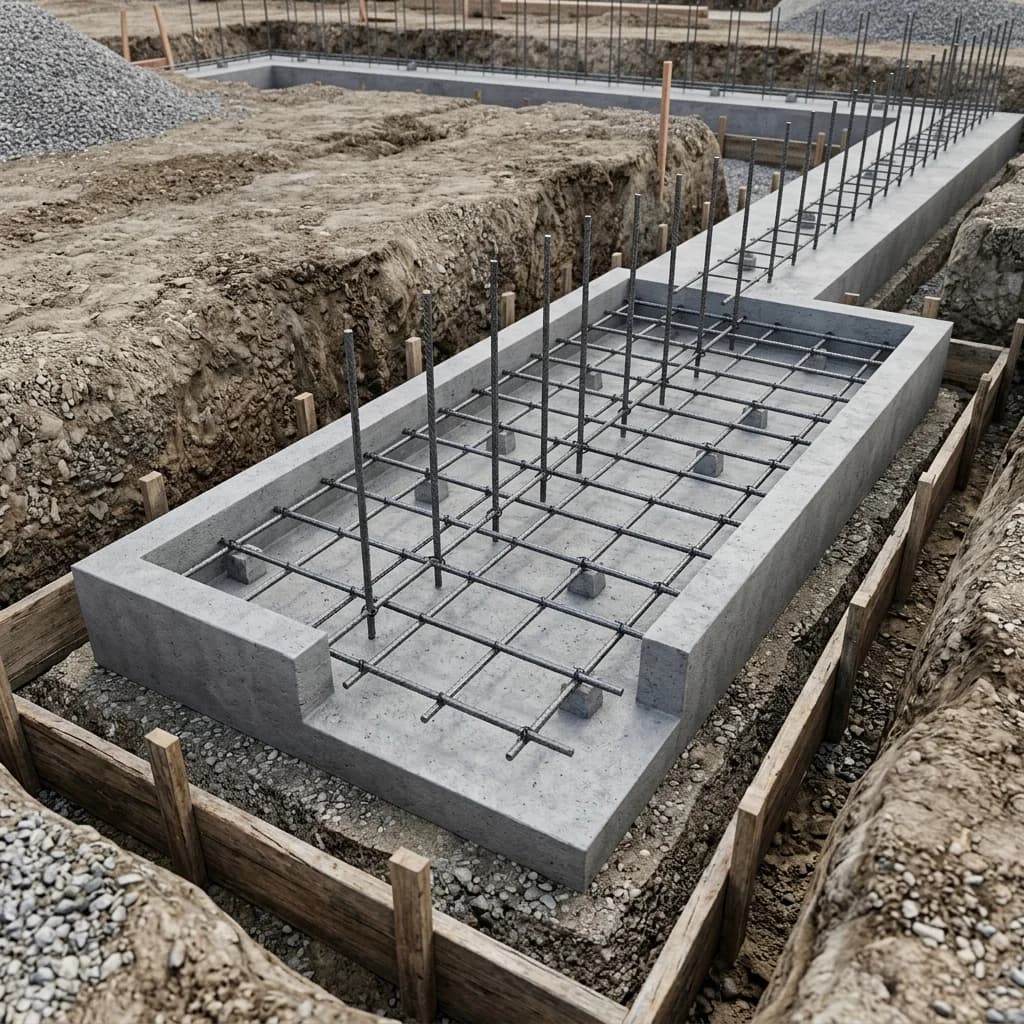
Whether you are pouring a massive concrete driveway, laying a beautiful paver patio, or building a retaining wall, your project will only be as strong as the ground beneath it. The structural foundation that supports your finished surface is known as the sub-base, and selecting the right materials is the most critical decision of the entire build.
The two undisputed champions of sub-base construction are gravel and sand. While they may look like simple piles of dirt to an amateur, professional contractors know that they serve completely different mechanical purposes. Choosing the wrong material—or ordering the incorrect amount—can lead to sunken pavers, cracked concrete slabs, and total project failure.
In this comprehensive professional guide, we will explore the exact engineering differences between gravel and sand, explain when to use each material, and show you how to eliminate ordering errors by using a gravel tonnage calculator.
The Structural Backbone: Construction Gravel
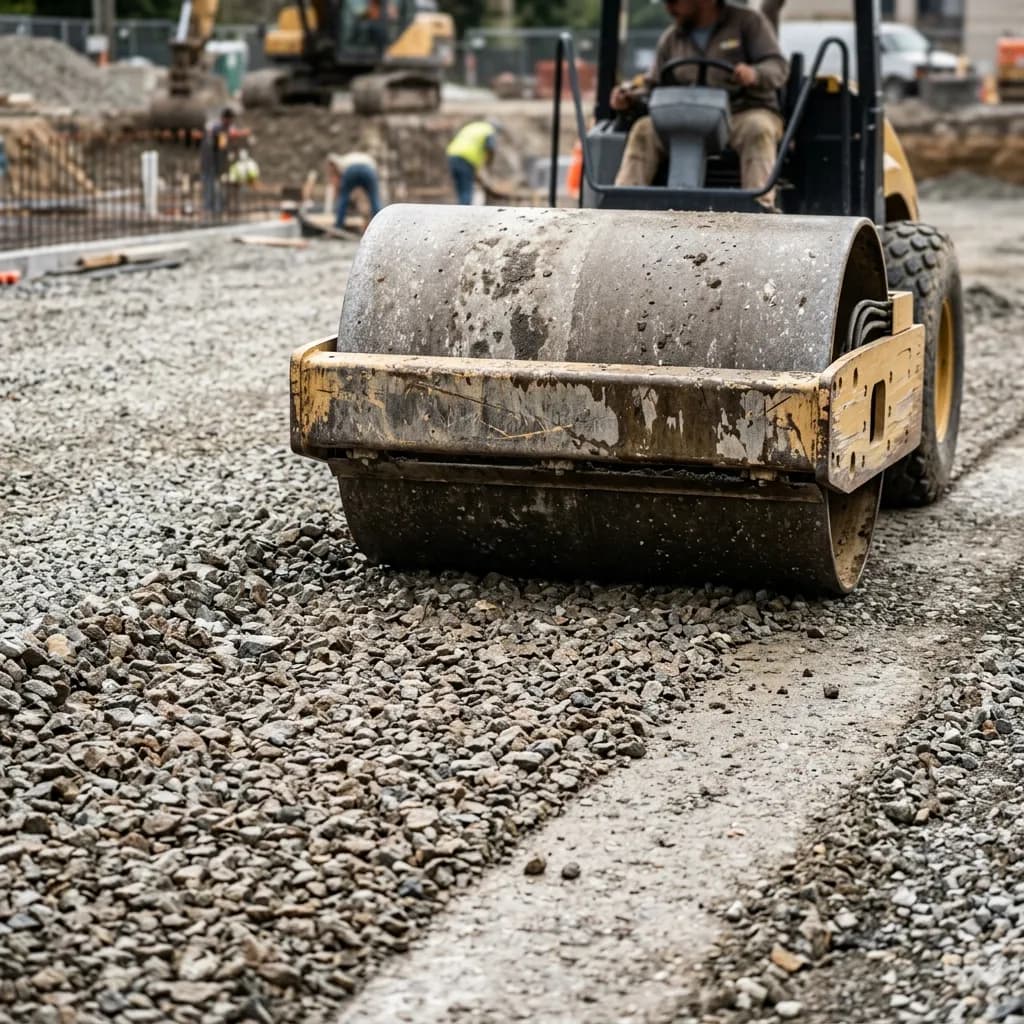
When contractors talk about a sub-base, they are usually referring to a thick layer of crushed stone or gravel. This layer acts as the primary load-bearing foundation, distributing the immense weight of vehicles, foot traffic, and the concrete or pavers above it into the surrounding earth.
Gravel is not just random rocks. Professional construction gravel (often called "crush and run" or "Type 2 aggregate") contains a specific blend of angular stones and fine stone dust. When you run a heavy vibratory plate compactor over this mixture, the angular edges of the stones lock together like puzzle pieces, while the stone dust fills the microscopic voids between them.
This locking action creates a nearly solid, rock-hard surface that is highly resistant to shifting and settling, while still allowing subterranean water to drain away slowly without washing the foundation out.
The Leveling Layer: Coarse Sand
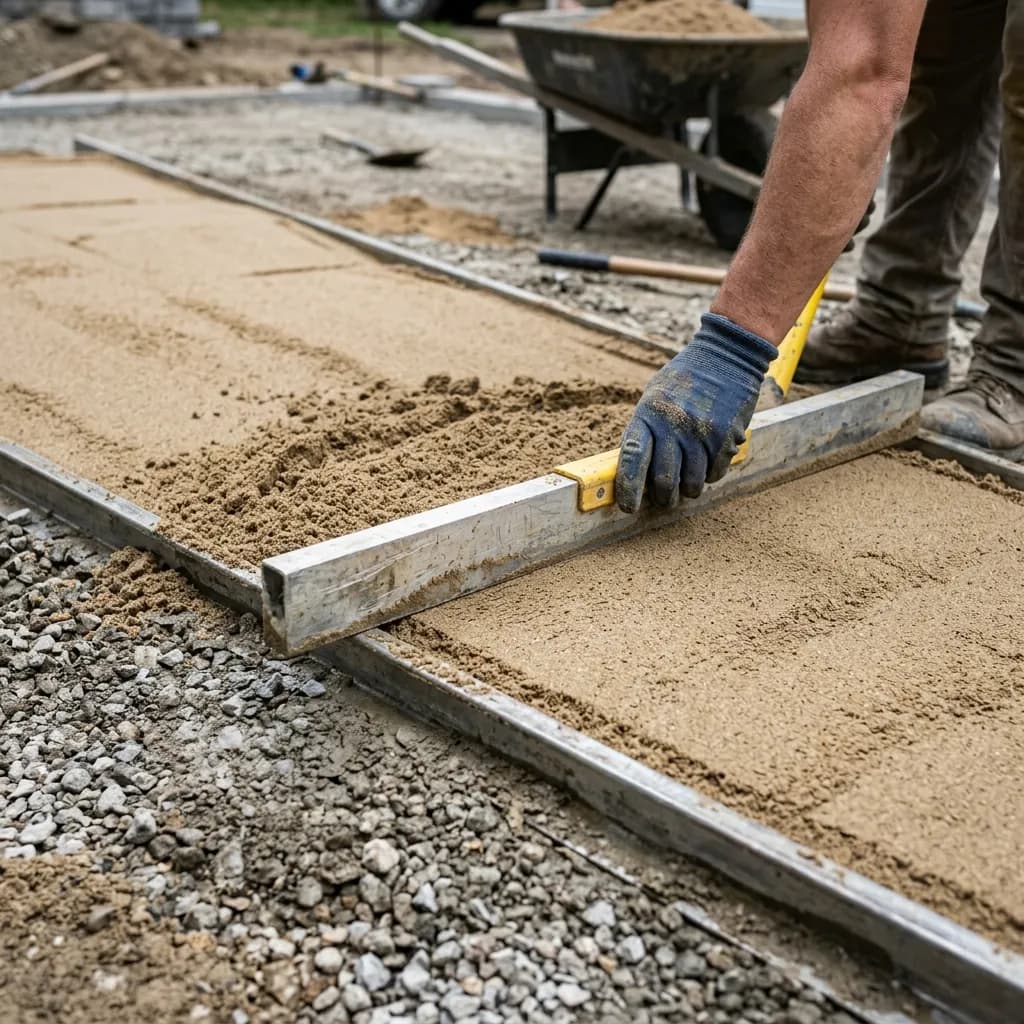
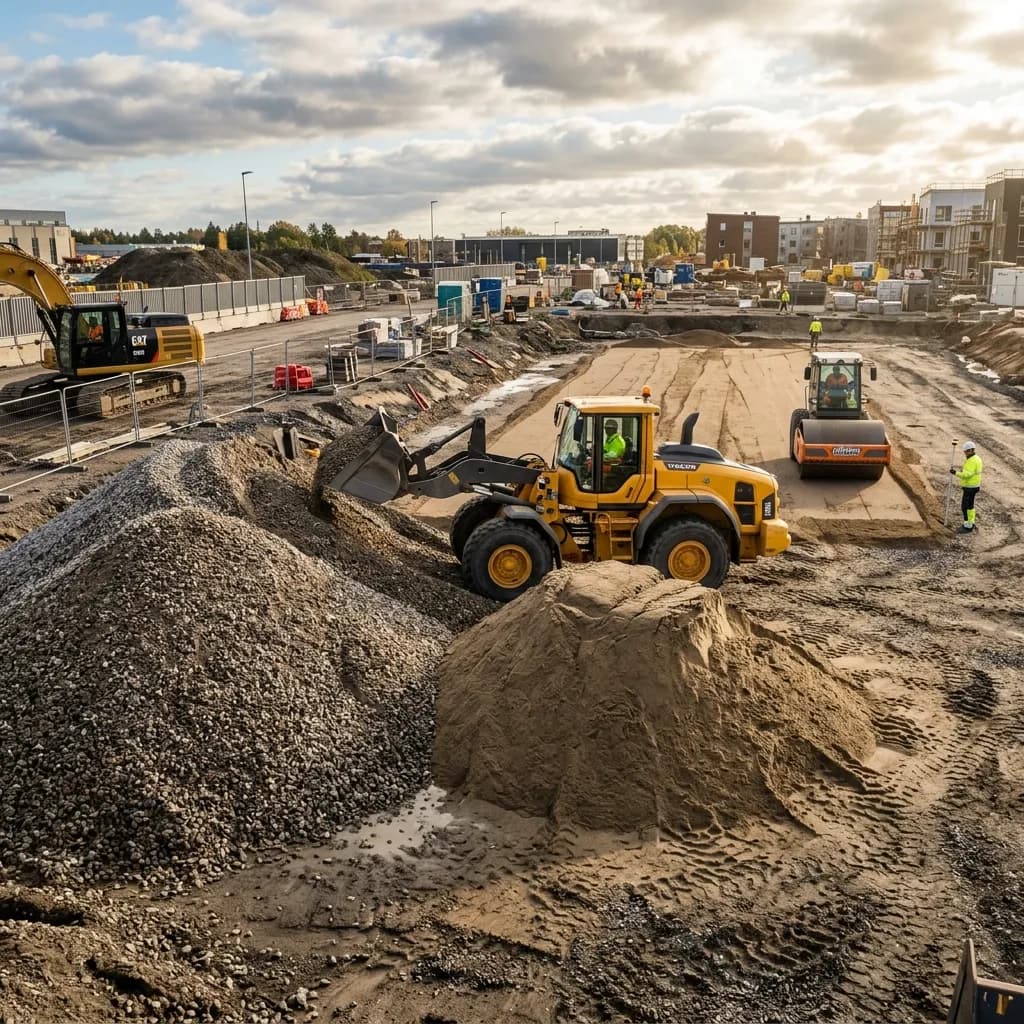
If gravel provides the strength, what is the purpose of sand? Sand acts as the ultimate leveling agent.
Even after heavy compaction, a gravel sub-base is inherently bumpy and rough. If you try to lay delicate brick pavers directly on top of compacted gravel, the pavers will sit unevenly and rock back and forth when stepped on.
This is where sand comes in. A thin layer of coarse concrete sand (typically about 1 inch thick) is spread directly over the compacted gravel. Because sand particles are incredibly small and uniform, they can be screeded (leveled out) to create a perfectly flat, smooth surface. The pavers or stones are then laid directly into this soft "bedding" layer, allowing them to settle evenly and firmly.
- Important Rule: Never use sand as your primary sub-base. Sand does not compact and lock together like crushed stone. If you build a heavy driveway entirely on sand, it will easily wash away in heavy rain or shift under the weight of a car.
Calculating Your Material Tonnage
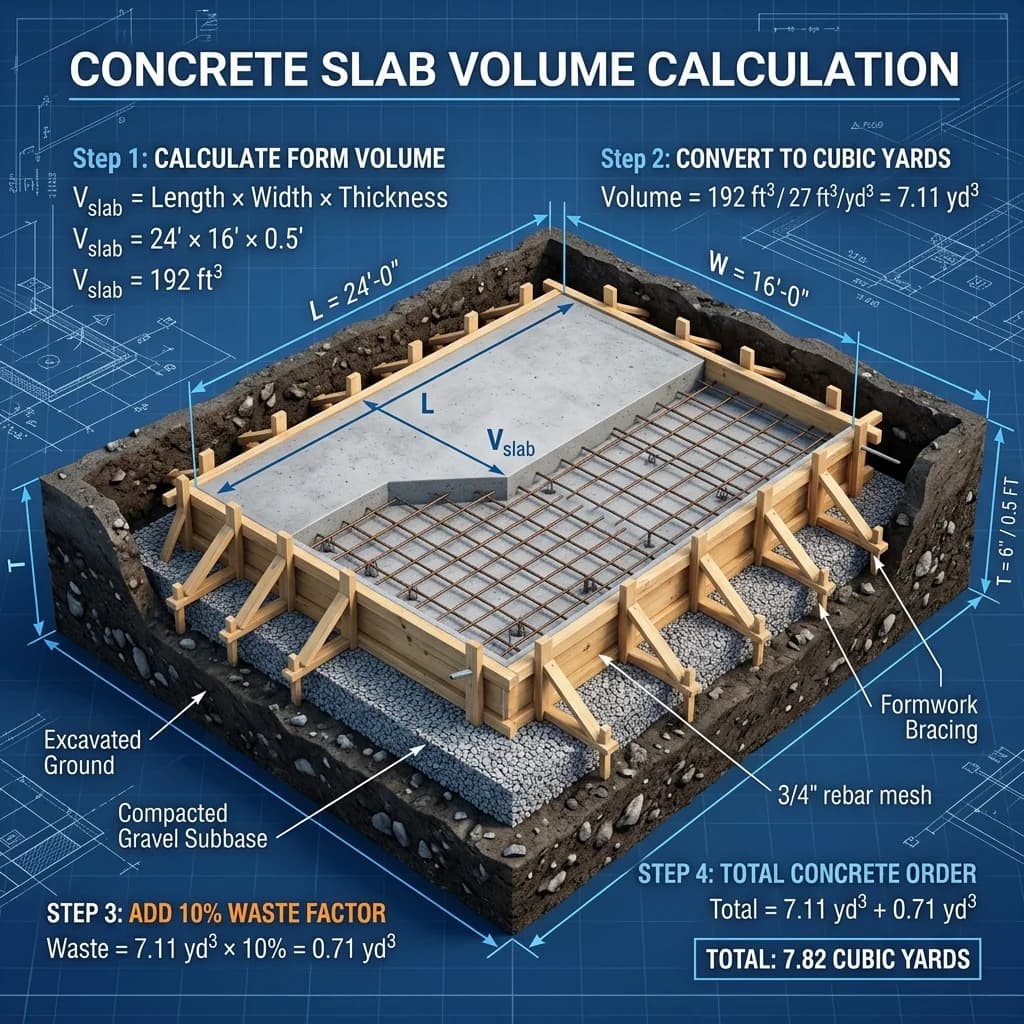
The most stressful part of any excavation and sub-base project is ordering the materials. Sand and gravel are incredibly heavy, and they are usually sold by the ton, not by the bag. Trying to estimate the required tonnage manually by converting cubic feet to cubic yards and then to tons is a mathematical nightmare for most homeowners.
Furthermore, you must account for "compaction shrinkage." When you compact a 6-inch layer of fluffy, loose gravel with a heavy machine, it will compress down to roughly 4.5 inches. If you only order enough gravel to fill the hole mathematically, you will be significantly short once the material is compacted.
A worked tonnage example
Take a 20 by 20 foot patio, 400 square feet, built on a 6 inch compacted crushed stone base with a 1 inch sand bedding layer on top.
Start with the gravel. Six inches is half a foot, so the compacted volume is 400 × 0.5 = 200 cubic feet, which is 200 ÷ 27 = 7.41 cubic yards. That is the volume you need after compaction, so add roughly 20% for the shrinkage described above: 7.41 × 1.2 = 8.89 cubic yards loose. Crushed stone runs about 1.4 tons per cubic yard, giving 8.89 × 1.4 = 12.4 tons. Order 13.
The sand is easier because a bedding layer is screeded, not compacted. One inch over 400 square feet is 33.3 cubic feet, or 1.24 cubic yards. At roughly 1.35 tons per cubic yard that is 1.67 tons, so order 2.
| Material | Approx. tons per cubic yard | Compaction allowance |
|---|---|---|
| Crushed stone / road base | 1.4 | 20–25% |
| Pea gravel | 1.3 | Minimal — does not lock up |
| Concrete / bedding sand | 1.35 | None for a screeded bed |
Densities vary by quarry and by how wet the material is when it is loaded, so treat these as planning figures and ask your supplier for theirs when you place the order — most will tell you the conversion they bill against.
One practical note on getting that compaction: do not try to compact 6 inches in a single pass. Place and compact in lifts of 3 to 4 inches. A plate compactor only transmits meaningful energy a few inches down, so a single thick lift leaves you with a firm crust over loose stone, which settles later and takes your pavers with it.
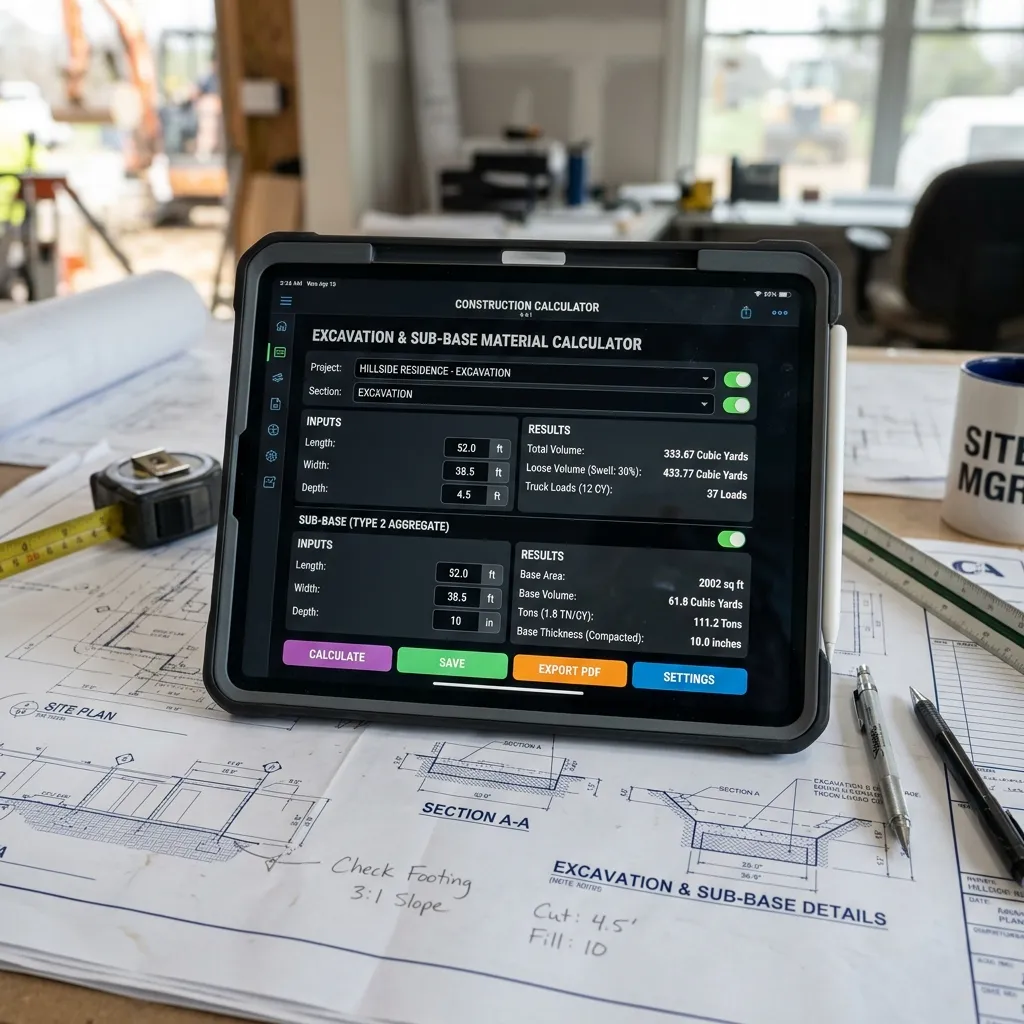
This is precisely why professionals rely on a gravel tonnage calculator.
By using our advanced estimation tools, you can simply input the length, width, and desired depth of your excavation area. The calculator will instantly process the density of your selected material, automatically account for standard compaction factors, and tell you exactly how many tons to order from the quarry.
Don't leave your structural foundation to guesswork. Understand the difference between your gravel base and your sand leveling bed, measure your site carefully, and use our Sand & Gravel Calculator to ensure your next build stands the test of time!
References
Standards and data referenced in this guide. Building codes are adopted locally, so verify requirements with your jurisdiction before you build.
- ASTM C33 — Standard Specification for Concrete Aggregates — ASTM International
- Cement and concrete mix design references — Portland Cement Association
About the Author

Zain Sheikh — With over 10 years of hands‑on experience in residential and commercial construction, Zain ensures that every calculator on our platform accounts for real‑world variables, waste factors, and site conditions. Contact our team for technical inquiries.