Calculating Deck Joist Spacing for Safety
Learn how to properly calculate your deck joist span and spacing for a safe and sturdy deck. Discover the lumber sizes, local building codes, and standard measurements you need.
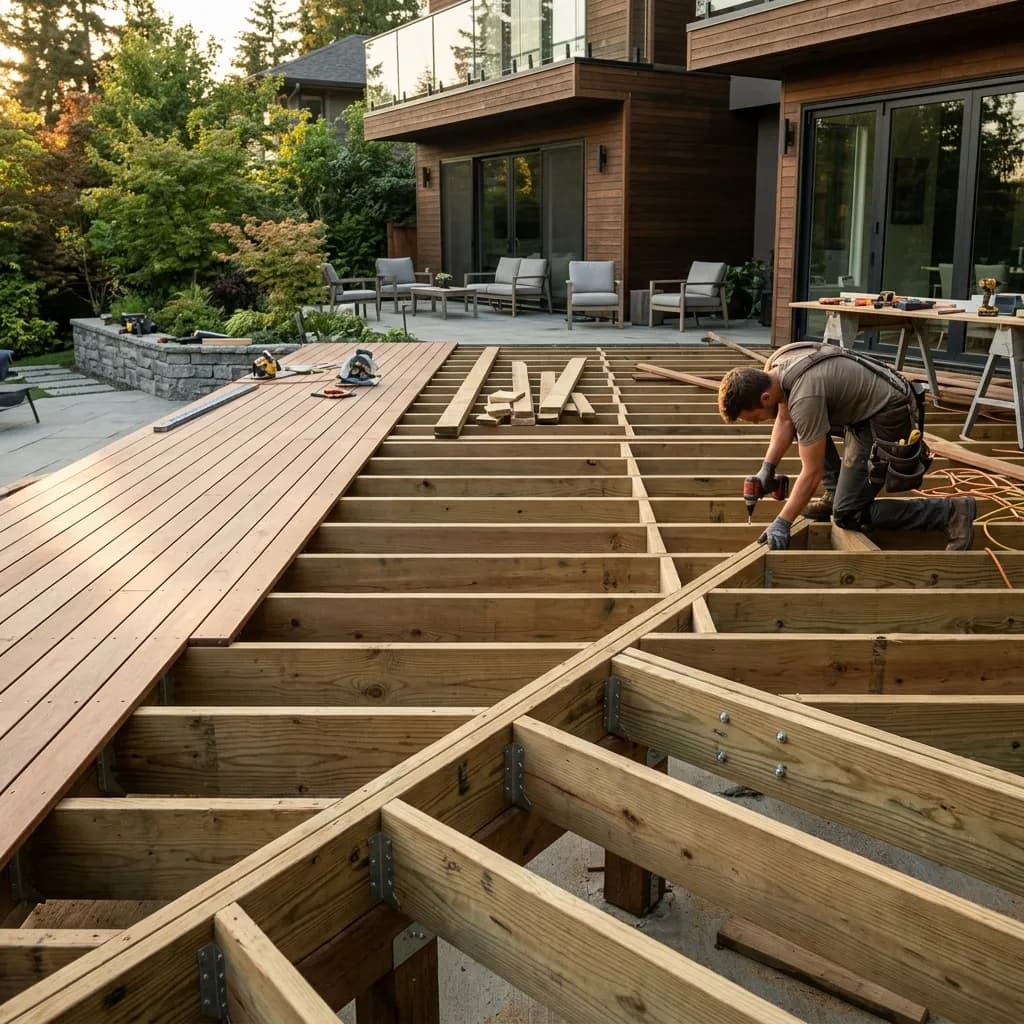
Building a deck is an exciting project that can transform your backyard into a beautiful living space. However, beneath the smooth, finished surface lies a critical framework that determines how safe and strong your deck will be. The most important part of this framework is the deck joist system.
If your joists are placed too far apart, your deck boards will sag and bounce when you walk on them. If they span too great a distance without proper support, the entire structure could fail. Understanding how to properly calculate your deck joist span and spacing is the first and most vital step in any safe deck construction.
In this complete guide, we will break down the essential rules of joist spacing using simple and professional terms. We will cover the standard measurements, how the type of lumber affects your design, and how to use a Lumber & Wood Calculator to accurately estimate your materials.
What is a Deck Joist Span?
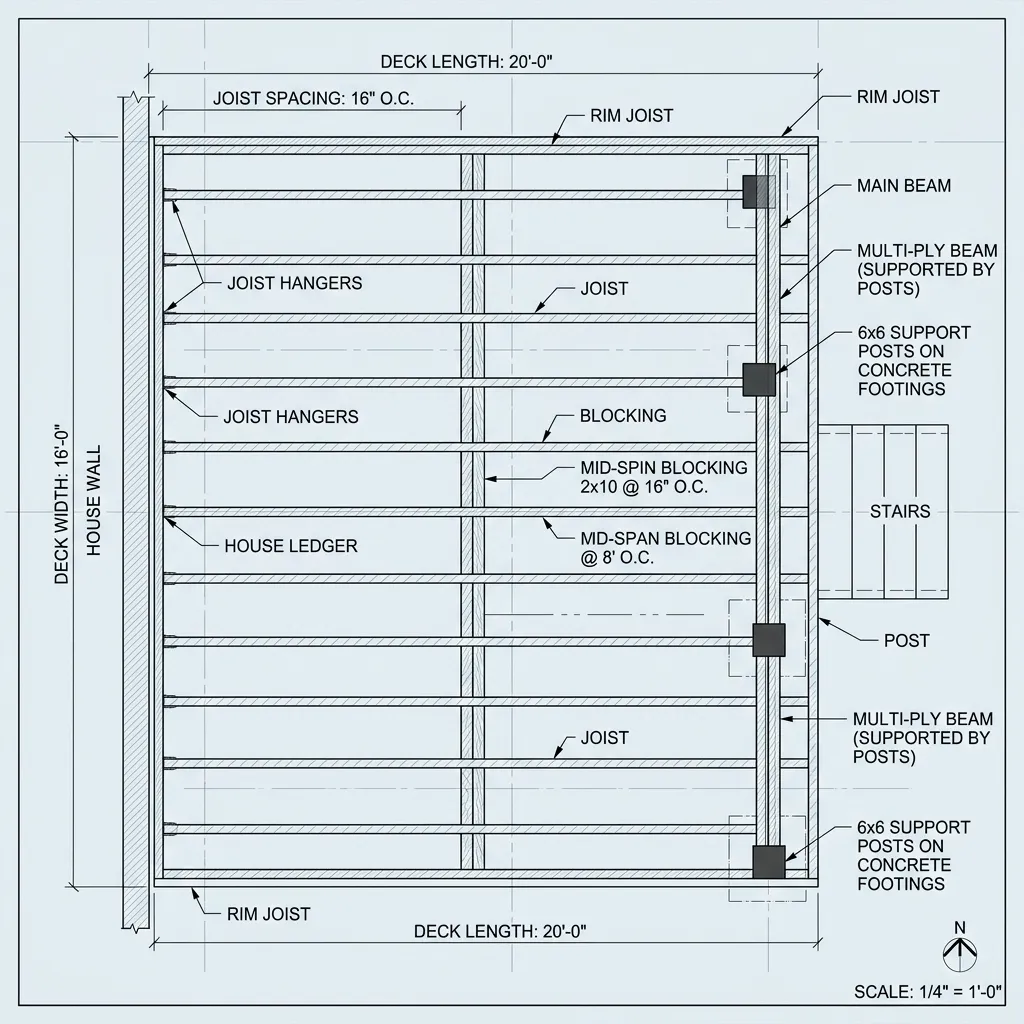
Before diving into the numbers, it is important to know the vocabulary. A "joist" is one of the repeated structural beams that run horizontally underneath your deck boards to support the floor.
The deck joist span is the total unsupported distance a joist travels between two main supports (such as from the house ledger board to the main carrying beam). Do not confuse span with spacing. Span is how long the joist reaches, while spacing is how far apart each joist is from its neighbor.
Safety First: Local Building Codes
While this guide provides standard best practices, local building codes (often based on the International Residential Code) hold the final say. Always check your local regulations, as snow loads and weather conditions in your area can dictate stricter span limits.
Standard Deck Joist Spacing Rules
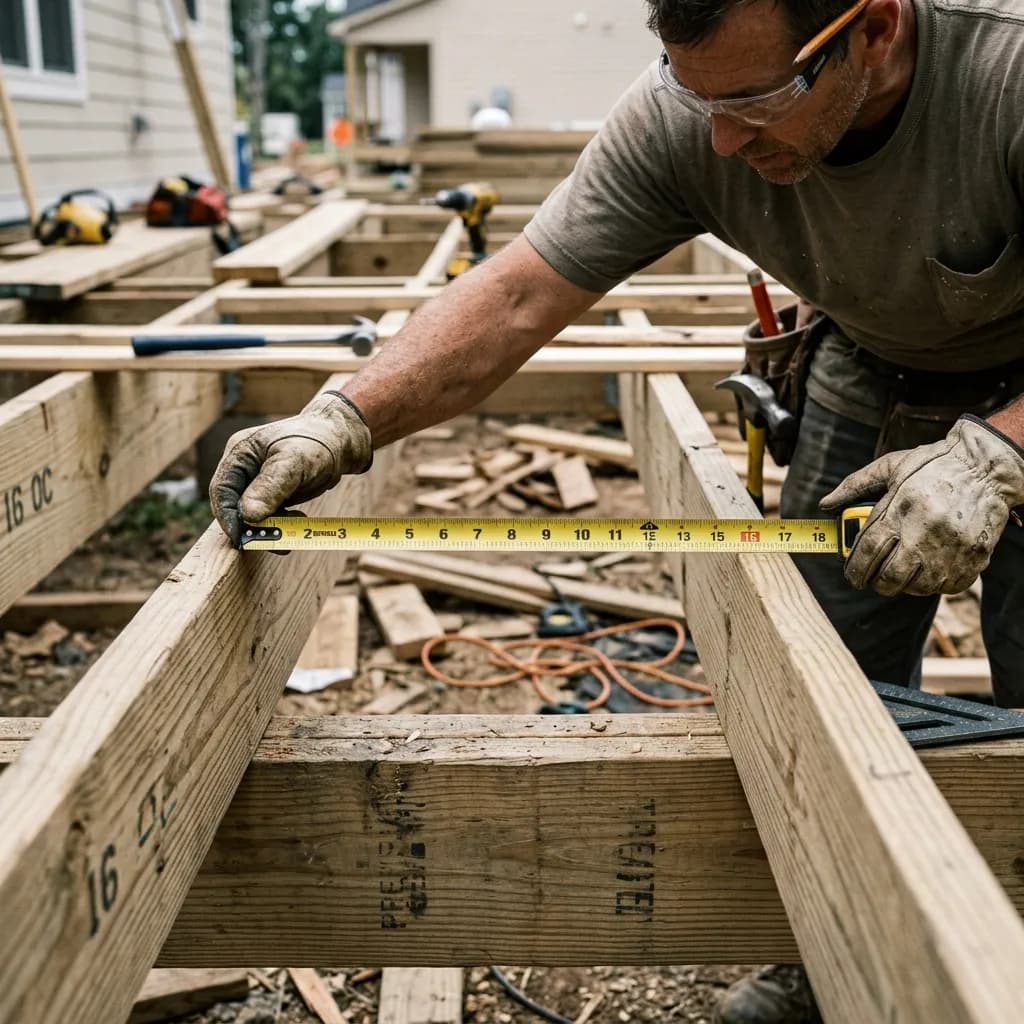
How far apart should you place your joists? The spacing is always measured "on center" (O.C.), meaning from the direct middle of one joist to the direct middle of the next. There are three common standards:
- 16 Inches On Center (The Standard): This is the most common and widely accepted spacing for residential decks. It provides excellent support for standard wood and most composite decking boards installed straight across the frame.
- 12 Inches On Center (For Heavy Loads or Diagonal Decking): If you plan to lay your deck boards diagonally at a 45-degree angle, or if you are using thinner decking material, you must reduce the spacing to 12 inches to prevent the boards from flexing under foot traffic.
- 24 Inches On Center (Rarely Recommended): Some thick, heavy-duty 2x6 decking boards can technically span 24 inches. However, this is generally not recommended for standard residential decks as it often results in a "bouncy" floor feeling.
Choosing the Right Lumber Size
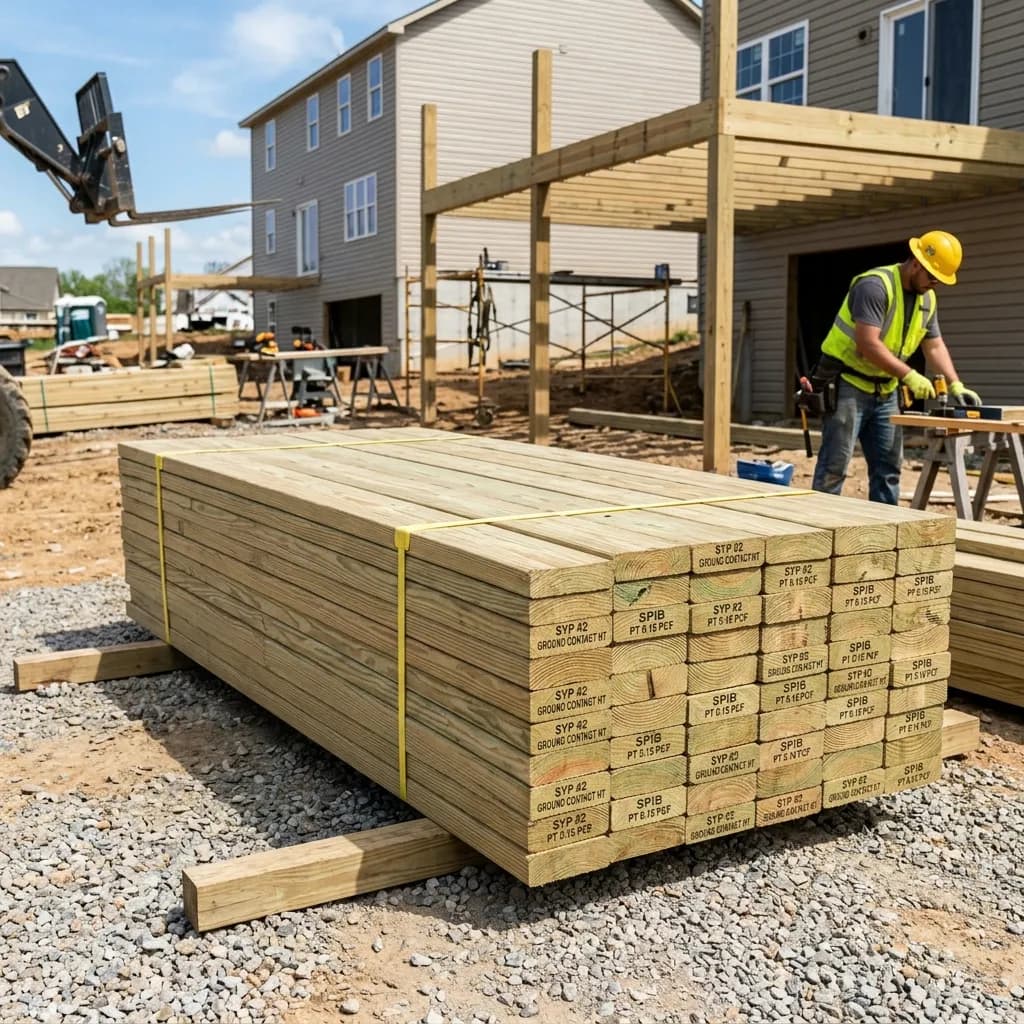
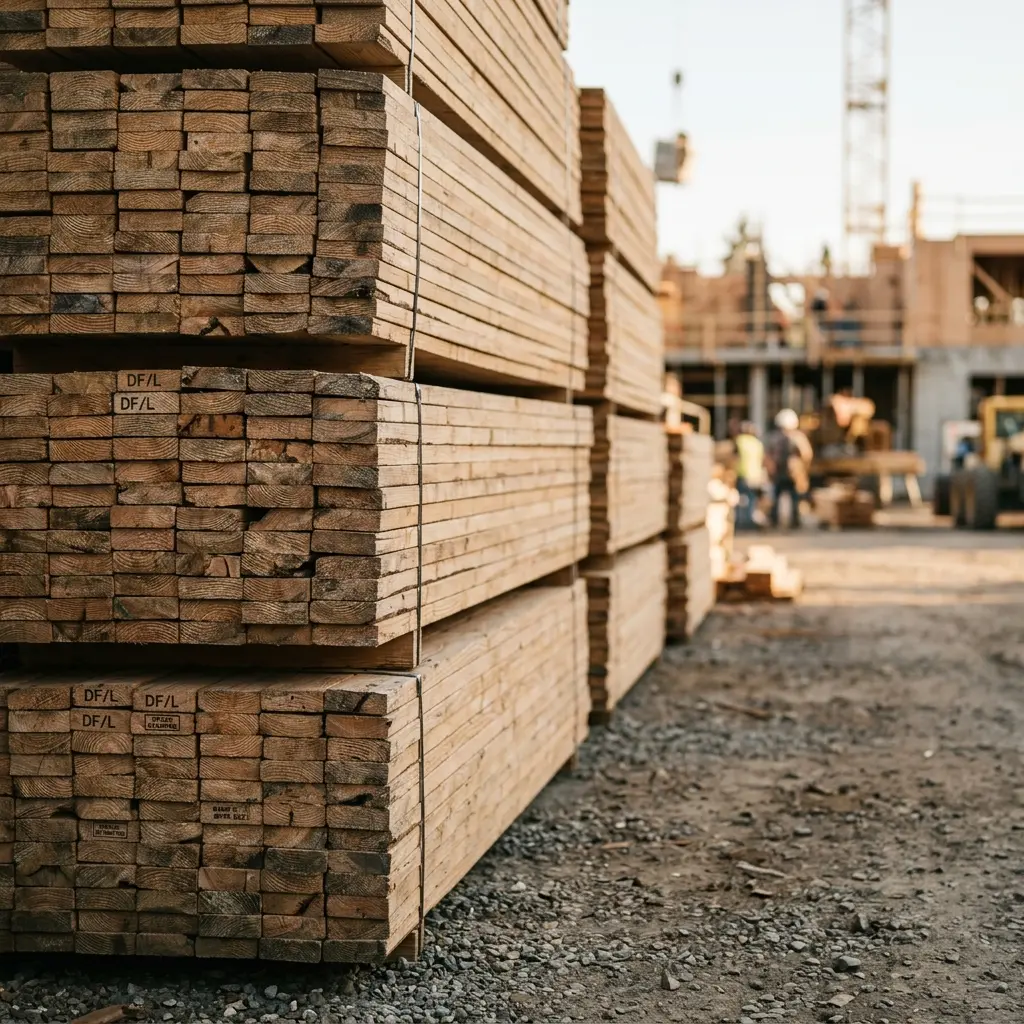
The size of the lumber you choose directly dictates your maximum deck joist span. A deeper joist can safely bridge a longer distance. Most deck joists are built using pressure-treated Southern Yellow Pine because of its durability and strength.
Here is a basic look at how far common pressure-treated lumber sizes can span when spaced at the standard 16 inches on center (assuming standard residential loads):
- 2x6 Lumber: Can typically span up to 9 feet. Best for low-level decks or very short spans.
- 2x8 Lumber: Can typically span up to 11 to 13 feet. A very common choice for standard backyard decks.
- 2x10 Lumber: Can typically span up to 15 to 16 feet. Ideal for larger, elevated decks requiring fewer support beams.
- 2x12 Lumber: Can span up to 18 feet. Used for massive decks to eliminate the need for extra structural posts in the middle of the yard.
Calculating Total Joists Needed
Where N is the total number of joists, L is the total length of the deck in inches, and S is your spacing in inches (e.g., 16).
Example: For a deck that is 144 inches (12 feet) long with 16-inch spacing: (144 / 16) + 1 = 10 joists needed.
Estimating Your Materials Like a Pro
Calculating the correct span and spacing guarantees safety, but you still need to buy the wood. Standing at the lumber yard trying to calculate exactly how many 2x8 beams and how many linear feet of decking you need can be stressful and lead to costly mistakes.
Instead of guessing, rely on our professional tools. Once you have determined your deck dimensions and chosen your joist spacing, simply use the Lumber & Wood Calculator. It will quickly provide you with a highly accurate material estimate, helping you order exactly what you need with the proper waste factor included.
A strong deck starts with perfect math. Take your time, check your local codes, and build a safe foundation that you and your family can enjoy for years to come.
References
Standards and data referenced in this guide. Building codes are adopted locally, so verify requirements with your jurisdiction before you build.
- IRC 2021, Chapter 5 — Floors (joist spans and decks, §R502, §R507) — International Code Council
- Span tables and the National Design Specification for Wood Construction — American Wood Council
About the Author

Zain Sheikh — With over 10 years of hands‑on experience in residential and commercial construction, Zain ensures that every calculator on our platform accounts for real‑world variables, waste factors, and site conditions. Contact our team for technical inquiries.